
A Simple Warning Letter is a straightforward document used to address issues or concerns in a professional setting. Its main purpose is to formally notify an employee or individual about a specific behavior or performance problem. This letter serves as a first step in resolving the issue and encourages the recipient to improve.
In this article, we will provide various templates and examples of Simple Warning Letters. These samples are designed to help you create your own letters quickly and easily. Whether you need to address attendance, performance, or behavior, our templates will guide you in writing a clear and effective warning letter.
By using our examples, you can save time and ensure your message is communicated properly. We aim to make the process easier for you, so you can focus on resolving the issue at hand. Let’s get started on finding the right letter for your needs.
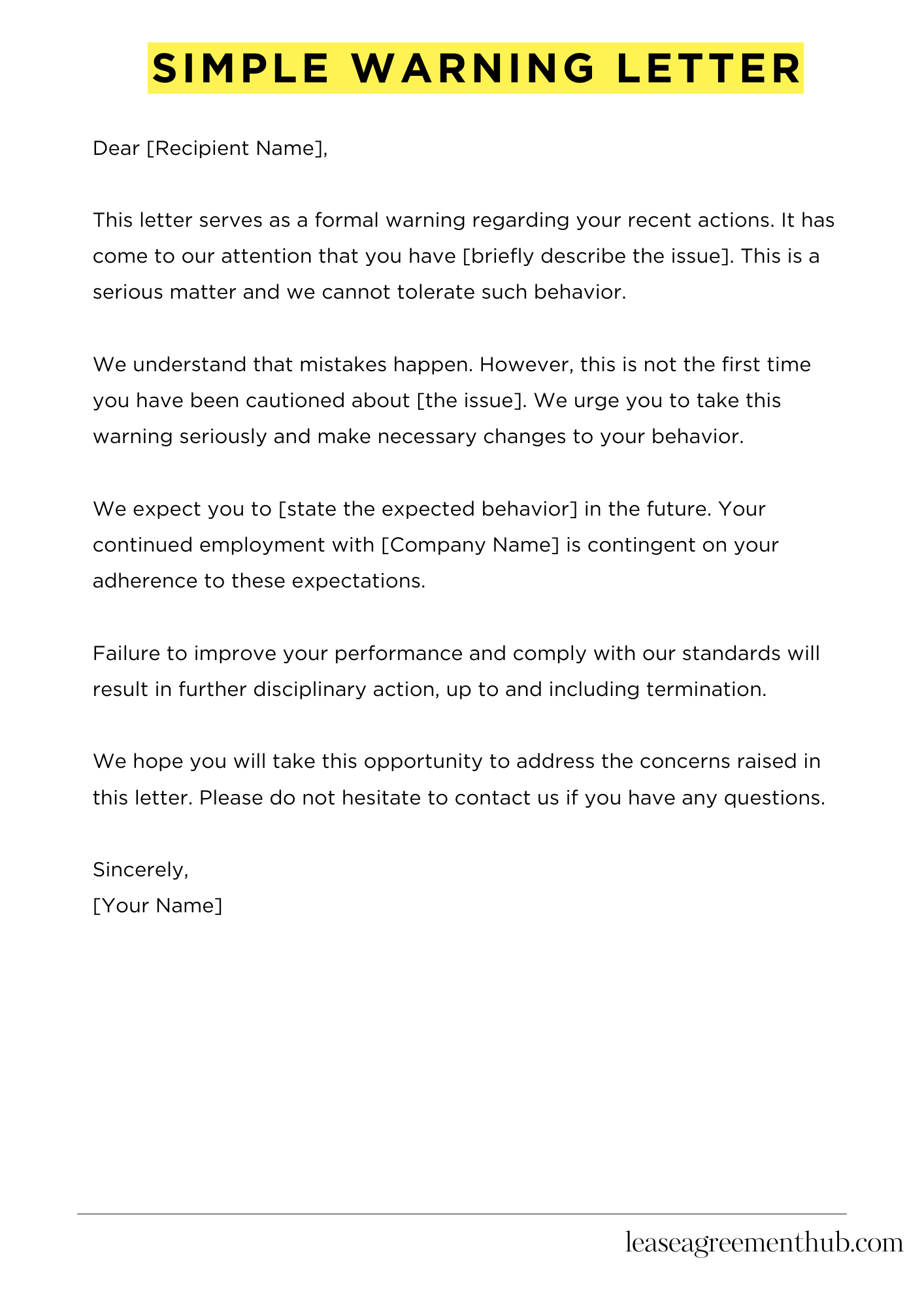
Simple Warning Letter
[Your Name]
[Your Address]
[Your Phone Number]
[Your Email]
[Date]
[Recipient Name]
[Recipient Address]
Dear [Recipient Name],
This letter serves as a formal warning regarding your recent actions. It has come to our attention that you have [briefly describe the issue]. This is a serious matter and we cannot tolerate such behavior.
We understand that mistakes happen. However, this is not the first time you have been cautioned about [the issue]. We urge you to take this warning seriously and make necessary changes to your behavior.
We expect you to [state the expected behavior] in the future. Your continued employment with [Company Name] is contingent on your adherence to these expectations.
Failure to improve your performance and comply with our standards will result in further disciplinary action, up to and including termination.
We hope you will take this opportunity to address the concerns raised in this letter. Please do not hesitate to contact us if you have any questions.
Sincerely,
[Your Name]
How to Write a Simple Warning Letter
A warning letter is a formal document that outlines a specific issue or behavior that needs to be addressed. It’s a serious matter, so it’s important to get it right. This guide will help you craft a clear and concise warning letter that effectively communicates your concerns.
1. Start Strong: The Opening
The opening paragraph should clearly state the purpose of the letter. Be direct and avoid beating around the bush. You’re not writing a novel, so get to the point. For example, you might say, “This letter is to formally warn you about your recent tardiness to work.”
2. Lay Out the Facts: The Body
The body of the letter should detail the specific issue. Be specific and provide concrete examples. Don’t just say, “You’re not meeting expectations.” Instead, say, “On three occasions this month, you arrived late to work, impacting the team’s workflow.”
You should also include the consequences of the behavior if it continues. This could be a suspension, demotion, or even termination. Make it clear that you’re serious about addressing the issue.
3. Offer a Solution: The Middle
After outlining the problem, offer a solution. This could be a plan for improvement, a deadline for change, or a specific action the recipient needs to take. Be clear about what you expect from them.
4. End with a Call to Action: The Closing
The closing paragraph should reiterate the seriousness of the situation and emphasize the need for improvement. End with a clear call to action, such as a request for a meeting to discuss the issue further.
5. Keep it Professional: The Tone
Throughout the letter, maintain a professional tone. Avoid using slang or informal language. Keep it concise and to the point. Remember, this is a formal document, not a casual conversation.
Writing a warning letter can be a challenging task, but it’s an important step in addressing serious issues. By following these tips, you can craft a letter that is clear, concise, and effective.
Related: