
A Professional Warning Letter is a formal document used by employers to address issues related to an employee’s performance or behavior. Its main purpose is to notify the employee of specific concerns and to outline the expectations for improvement. This letter serves as a crucial step in the disciplinary process and helps maintain a professional work environment.
In this article, we will provide various templates and examples of Professional Warning Letters. These samples will guide you in crafting your own letter, making it easier to address any concerns you may have. Whether you need a warning for attendance issues or performance problems, we have you covered.
By using our templates, you can ensure that your message is clear and professional. This will help you communicate effectively while also giving the employee a chance to improve. Let’s dive in and explore the different options available to you.
Professional Warning Letter
[Your Name]
[Your Address]
[Your Phone Number]
[Your Email Address]
[Date]
[Employee Name]
[Employee Address]
Dear [Employee Name],
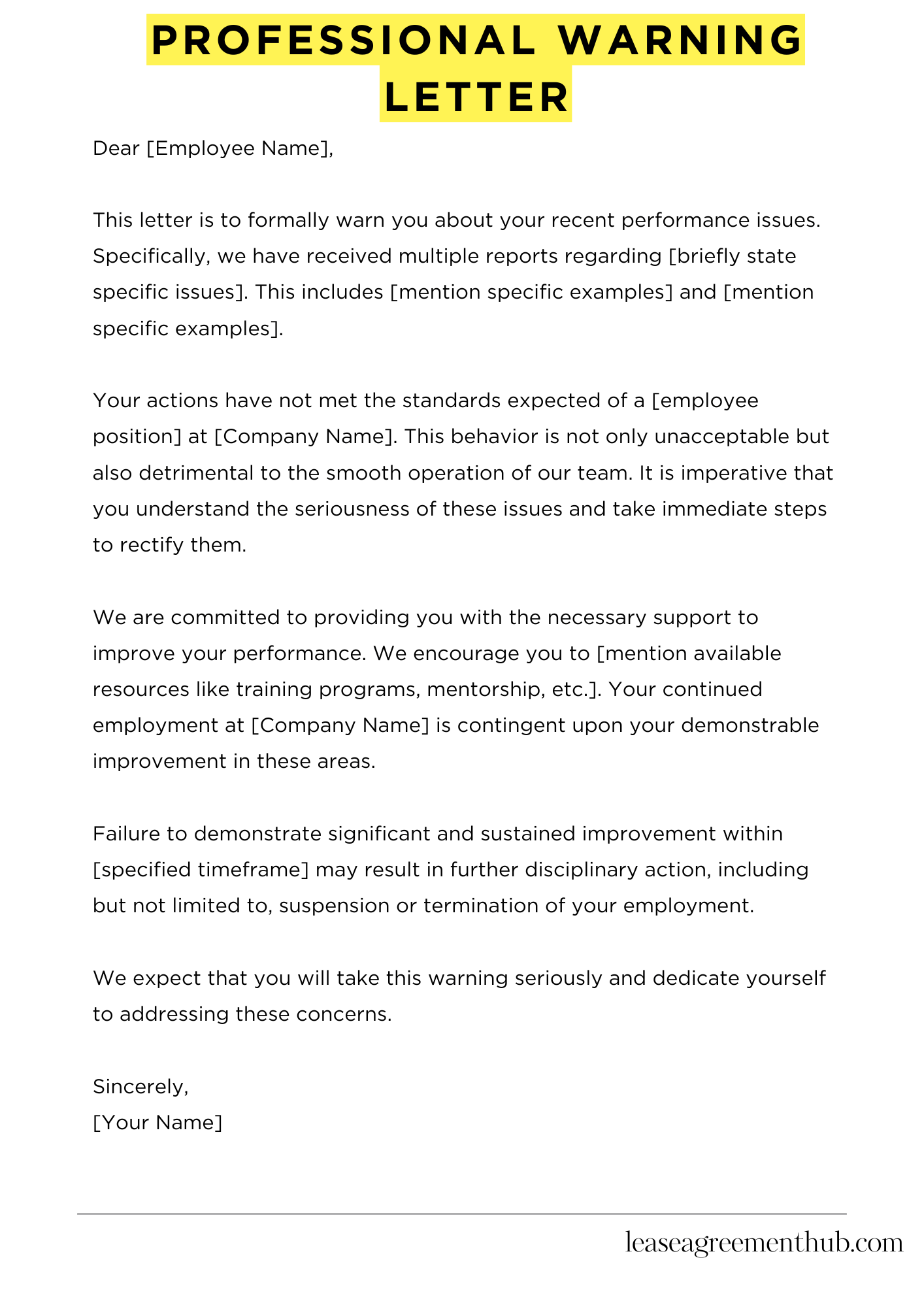
This letter is to formally warn you about your recent performance issues. Specifically, we have received multiple reports regarding [briefly state specific issues]. This includes [mention specific examples] and [mention specific examples].
Your actions have not met the standards expected of a [employee position] at [Company Name]. This behavior is not only unacceptable but also detrimental to the smooth operation of our team. It is imperative that you understand the seriousness of these issues and take immediate steps to rectify them.
We are committed to providing you with the necessary support to improve your performance. We encourage you to [mention available resources like training programs, mentorship, etc.]. Your continued employment at [Company Name] is contingent upon your demonstrable improvement in these areas.
Failure to demonstrate significant and sustained improvement within [specified timeframe] may result in further disciplinary action, including but not limited to, suspension or termination of your employment.
We expect that you will take this warning seriously and dedicate yourself to addressing these concerns.
Sincerely,
[Your Name]
How to Write a Professional Warning Letter
A warning letter is a formal document used to inform an employee of their misconduct and the potential consequences if the behavior continues. It serves as a record of the issue and a clear statement of expectations for improvement. While it can be a challenging task, writing a professional warning letter is crucial for maintaining a productive and respectful workplace.
1. State the Purpose Clearly
The first paragraph of your warning letter should clearly state the purpose of the letter. Be direct and concise. Avoid beating around the bush. For example, you could start with a sentence like, “This letter is to formally document a warning regarding your recent behavior.” This sets the tone for the letter and ensures the employee understands the seriousness of the situation.
2. Detail the Specific Issue
The next step is to clearly outline the specific issue that led to the warning. Be specific and provide concrete examples of the employee’s behavior. Avoid generalizations or subjective statements. For instance, instead of saying “Your performance has been unsatisfactory,” you could say “You have missed three deadlines in the past month, which has negatively impacted the team’s progress.” This provides clear evidence of the problem and leaves no room for misinterpretation.
3. Explain the Consequences
After outlining the issue, you need to explain the potential consequences if the behavior continues. This could include disciplinary action, such as suspension or termination. Make sure to clearly state the company’s policies regarding repeated offenses. This section should be firm but fair, leaving no doubt about the seriousness of the situation.
4. Offer a Solution
While a warning letter is a serious matter, it also presents an opportunity for improvement. Include a section outlining the steps the employee can take to correct the behavior. This could involve additional training, mentoring, or a specific action plan. By offering a solution, you demonstrate a commitment to helping the employee succeed.
5. End with a Clear Call to Action
Conclude the letter with a clear call to action. State that the employee is expected to comply with the outlined expectations and that failure to do so will result in further disciplinary action. This reinforces the seriousness of the warning and sets a clear path forward.
Remember, a warning letter should be written in a professional and respectful tone, even when addressing serious issues. It should be clear, concise, and factual, leaving no room for ambiguity. By following these steps, you can create a professional warning letter that effectively addresses the issue and helps to improve the employee’s performance.
Related: