
A Late Warning Letter is a formal communication sent to an employee who has not met deadlines or performance standards. Its purpose is to inform the employee of the issue and provide an opportunity for improvement. This letter serves as a crucial step in addressing performance concerns before more serious actions are taken.
In this article, we will share various templates and examples of Late Warning Letters. These samples are designed to help you craft your own letters easily and effectively. Whether you are a manager or an HR professional, these resources will guide you in addressing performance issues with clarity and professionalism.
We understand that writing these letters can be challenging. That’s why we’ve compiled a range of samples to suit different situations. With our templates, you can save time and ensure your message is clear and appropriate.
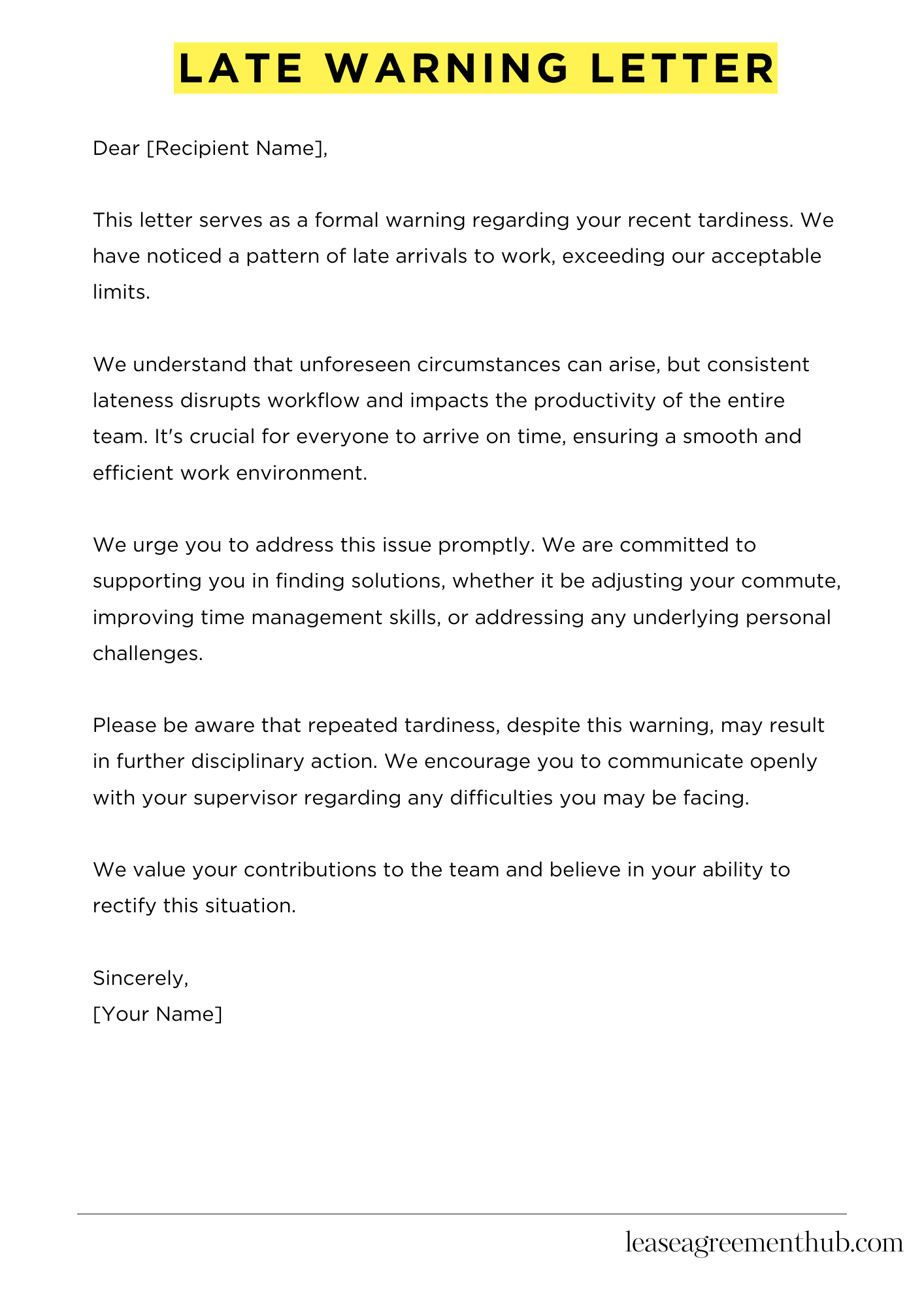
Late Warning Letter
[Your Name]
[Your Address]
[Your Phone Number]
[Your Email]
[Date]
[Recipient Name]
[Recipient Address]
Dear [Recipient Name],
This letter serves as a formal warning regarding your recent tardiness. We have noticed a pattern of late arrivals to work, exceeding our acceptable limits.
We understand that unforeseen circumstances can arise, but consistent lateness disrupts workflow and impacts the productivity of the entire team. It’s crucial for everyone to arrive on time, ensuring a smooth and efficient work environment.
We urge you to address this issue promptly. We are committed to supporting you in finding solutions, whether it be adjusting your commute, improving time management skills, or addressing any underlying personal challenges.
Please be aware that repeated tardiness, despite this warning, may result in further disciplinary action. We encourage you to communicate openly with your supervisor regarding any difficulties you may be facing.
We value your contributions to the team and believe in your ability to rectify this situation.
Sincerely,
[Your Name]
How to Write a Late Warning Letter
A late warning letter is a formal document that informs an employee of their unsatisfactory performance and the potential consequences if their performance doesn’t improve. It’s a crucial step in the disciplinary process, serving as a clear record of the issues and a chance for the employee to turn things around. This letter is not a casual conversation; it’s a serious document that lays the groundwork for potential future action.
1. State the Purpose Clearly
The first paragraph of your late warning letter should clearly state the purpose of the letter. Don’t beat around the bush. Be direct. Let the employee know that this letter is a formal warning about their performance. You can say something like, “This letter is to formally document concerns regarding your recent performance.” This sets the tone for the rest of the letter.
2. Be Specific and Detailed
Vague accusations won’t help anyone. Be specific about the employee’s shortcomings. Use concrete examples and dates to support your claims. For instance, instead of saying “You’re not meeting deadlines,” say, “You missed the deadline for the Jones project on March 15th, which caused delays in the project’s launch.” This level of detail leaves no room for misinterpretation.
3. Outline Expected Improvements
Don’t just point out the problems; provide a clear path forward. What specific actions do you expect the employee to take to improve their performance? Set realistic goals and deadlines. For example, you might say, “We expect you to complete all assigned tasks on time, with a minimum of 90% accuracy, by the end of the next quarter.” This gives the employee a clear understanding of what’s expected of them.
4. Explain the Consequences
The late warning letter should clearly outline the potential consequences if the employee’s performance doesn’t improve. This could include further disciplinary action, such as a suspension or even termination. While you don’t want to scare the employee, it’s important to be upfront about the seriousness of the situation.
5. End with a Positive Note
While the late warning letter is a serious document, it doesn’t have to be entirely negative. End the letter by expressing your belief in the employee’s ability to improve. You might say something like, “We believe in your ability to improve your performance and meet the expectations of your role.” This positive note can help to motivate the employee and encourage them to take the necessary steps to improve.
Related: