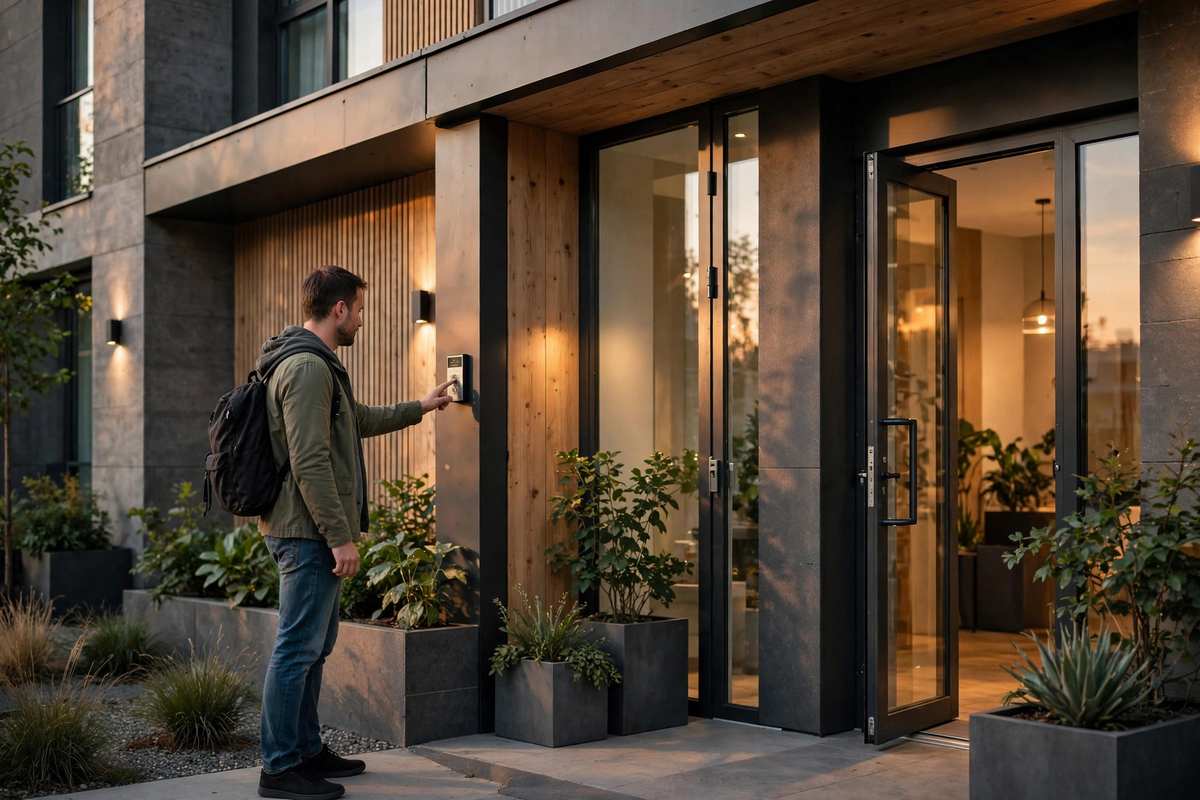
Having friends over should be one of the simplest pleasures of renting your own place. Yet in many apartment buildings, it comes with a rulebook. Guest policies in apartment leases set the boundaries for who can visit, how long they can stay, where they can park, and what happens when a guest starts looking less like a visitor and more like an extra roommate. Most tenants discover these rules only after a warning letter arrives, which is exactly the wrong time to learn them.
Landlords do not write guest policies to ruin your social life. They write them because unmanaged guests create real problems: overcrowded parking, noise complaints, extra wear on common areas, and unauthorized occupants living in units without being on the lease. Understanding the policy before you sign, and living within it afterward, keeps your visitors welcome and your tenancy secure. Here is how these policies work and what they mean for you.
What a Guest Policy Usually Covers
A guest policy is the section of your lease, or a separate addendum, that defines the rules for visitors. At minimum, it distinguishes between a guest and an occupant, sets limits on how long guests can stay, and outlines any registration or approval requirements. More detailed policies also cover guest parking, access to amenities like the pool or gym, noise expectations, and the consequences of violating the rules.
Policies range from relaxed to strict. A relaxed policy might simply ask that guests not disturb other residents. A strict one might limit overnight stays to a set number of nights per month, require visitors to sign in at the office, and prohibit guests from using amenities unless accompanied by the tenant. Neither style is inherently unreasonable, but you should know which kind you are signing up for before you commit to a year in the building.
Guests Versus Occupants: The Line That Matters
The most important concept in any guest policy is the distinction between a guest and an occupant. A guest is a temporary visitor. An occupant is someone who lives in the unit, whether or not they are on the lease. Landlords care deeply about this line because occupants affect everything from wear and tear to liability to compliance with occupancy limits set by local housing codes.
Most leases define the line with a specific number: guests may stay a certain number of consecutive nights, or a certain number of total nights per month or per lease term, before being considered unauthorized occupants. Common thresholds are seven to fourteen consecutive nights, or fourteen to twenty one nights in a given month, but the numbers vary widely. The apartment guest policy you sign is the controlling document, so read the exact figures rather than relying on what the leasing agent said during the tour.
Overnight Stays and Long Term Visitors
Overnight guests are where most tenants first bump into the policy. Having a friend crash on the couch for a weekend is fine in virtually every building. The issues start when visits stretch into weeks: a partner who effectively lives with you but is not on the lease, a relative staying between apartments, or a friend whose short visit quietly becomes a season. These are the situations guest policies are written for.
If someone is approaching the limit, talk to your landlord before you cross it. Many property managers will approve an extended stay if you ask in advance, and some will let you add the person to the lease, sometimes for a small fee or with an updated background check. What landlords will not tolerate is discovering an unauthorized occupant on their own, because at that point the conversation is about lease violations, not permission. An overnight guest who stays too long can legally become an unauthorized tenant, giving the landlord grounds for warnings, fines, or even eviction proceedings against you.
Guest Parking and Amenity Access
Guest policies rarely stop at the front door. Most extend to the parking lot, where guests are typically restricted to designated visitor spaces and limited to a set number of hours or days. Check the guest parking rules for your building before your visitors arrive, because a towed guest car makes for a miserable evening and an awkward conversation about who pays the impound fee.
Amenities are the other common extension. Pools, fitness centers, clubhouses, and courtyards often have their own guest rules, such as a limit on the number of guests per unit or a requirement that guests be accompanied by the tenant at all times. These rules protect the amenities from overcrowding and keep liability manageable for the property. If entertaining by the pool is part of your lifestyle, confirm the guest policy for amenities before you sign, not after your first barbecue gets shut down.
Noise, Conduct, and Your Responsibility for Guests
Nearly every lease makes you responsible for your guests’ behavior. If your visitors are loud late at night, damage common areas, or harass other residents, the violation goes on your record, not theirs. This is one of the least understood parts of renting: you are your guests’ keeper for lease purposes, and repeated problems can lead to fines or lease termination even though you personally did nothing wrong.
The practical takeaway is to set expectations with your visitors, especially around quiet hours, which most buildings set between 10 p.m. and 8 a.m. A quick word to your guests about keeping the volume down after ten costs you nothing and prevents the most common source of neighbor complaints. If you are hosting a larger gathering, giving your immediate neighbors a heads up in advance goes a long way toward goodwill.
What Happens When You Violate the Guest Policy
Enforcement usually follows a ladder. A first violation typically brings a written warning reminding you of the policy. Repeated violations can bring fines if the lease authorizes them, and persistent unauthorized occupancy can lead to a cure or quit notice, which demands that you fix the problem or face eviction proceedings. The severity of the response usually matches the severity of the violation, and landlords are far more aggressive about unauthorized occupants than about a guest who stayed one night too many.
If you receive a violation notice you believe is wrong, respond in writing and promptly. Provide evidence, such as travel records showing the guest has another primary residence, or registration confirmations proving you followed the rules. Keep copies of everything. Many disputes over guest policies come down to one person’s word against another’s, and documentation is what tips the balance. If the landlord is threatening eviction over a genuine misunderstanding, this is the point to consult a tenant rights attorney or local housing organization.
Reading the Policy Before You Sign
The best time to evaluate a guest policy is before you sign the lease, when you still have leverage and options. Read the guest section or addendum in full and ask yourself whether it fits your actual life. If your partner stays over four nights a week, a policy capping overnight guests at seven nights a month will not work for you, no matter how much you love the apartment. If you host family for the holidays, check the consecutive night limit.
Ask the leasing office direct questions and get the answers in writing. How is the overnight limit counted? Does the clock reset each month? What is the process for approving an extended stay? A leasing office that answers clearly and puts it in writing is a good sign. Evasive answers are a warning. The guest policy tells you a lot about how the building is managed, and a building that manages guests fairly usually manages everything else fairly too.
The Bottom Line on Guest Policies
Guest policies exist to keep apartment communities livable, and most of the time they only become a problem when tenants do not know the rules. Learn the line between guest and occupant, track overnight stays if your building has strict limits, register visitors when required, and take responsibility for how your guests behave. A little awareness goes a long way.
The core principle is simple. Your lease gives you the right to enjoy your home, and that includes sharing it with the people you care about, within reasonable bounds. Know the bounds, respect them, and communicate with your landlord when life does not fit neatly inside them. Do that, and your guests will remain what they should be: a joy, not a lease violation.