Parking rarely makes the highlight reel when you are touring apartments, but it has a way of becoming the thing you think about every single day after you move in. The spot you were promised is taken. A neighbor’s friend keeps blocking your car in. You get a tow notice for a vehicle that has been sitting in the same place for weeks. Most of these headaches trace back to the same source: the parking clause in your lease, which most renters skim once and never read again.
Your parking clause is the part of the lease that defines what you are actually entitled to when it comes to your car, and just as importantly, what you are not. It covers assigned spaces, guest parking, towing rules, fees, and what happens when someone violates the rules. Because parking disputes are among the most common sources of tenant conflict, understanding this clause before you sign can save you months of frustration. Here is what to look for and what your rights really are.
What a Parking Clause Typically Covers
A parking clause spells out the parking rights that come with your apartment. In its simplest form, it might be a single sentence saying the lease includes one parking space. In more detailed leases, it is a full section covering the number of spaces, whether they are assigned or first come first served, where guest parking is located, what vehicles are allowed, and the rules for towing and enforcement.
The key thing to understand is that parking rights vary enormously from one property to the next. Some buildings guarantee a specific numbered space steps from your door. Others give you access to an open lot where you park wherever you can find room. Some charge a separate monthly fee for parking, while others bundle it into rent. There is no standard package, which is exactly why the written clause matters more than anything the leasing agent told you on the tour.
Assigned Spaces Versus Open Parking
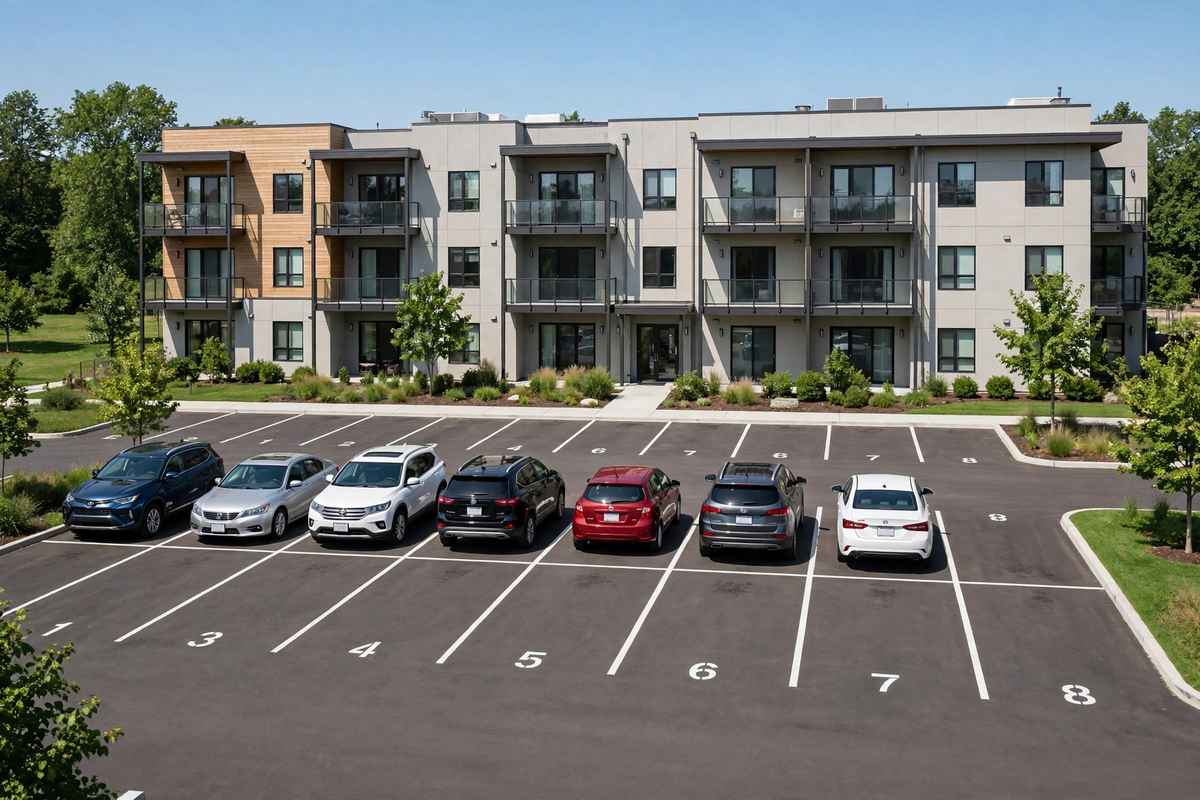
The most important distinction in any parking clause is whether your space is assigned. With assigned parking, the lease ties you to a specific spot, usually identified by number or location. Nobody else is supposed to use it, and if someone does, you have a clear basis for complaining to management. Assigned spaces are common in apartment complexes with structured parking and in buildings where parking is scarce.
Open parking works on a first come, first served basis. The lease gives you the right to park in the lot, but not to any particular space. This is typical of larger complexes with surface lots. The tradeoff is flexibility versus certainty. You never have to worry about someone stealing your spot, because nobody has a spot, but on a busy evening you may be parking at the far end of the lot. If the lease promises open parking, pay attention to whether it guarantees a minimum number of spaces per unit or simply grants access to whatever is available.
Parking Fees and What They Cover
Many leases charge for parking separately from rent, and this is where renters get surprised. A monthly parking fee of fifty to two hundred dollars is common in cities where parking is tight, and covered or garage spaces usually cost more than surface spots. The clause should state the fee clearly, whether it is mandatory or optional, and what happens if you do not own a car. You should not be paying for a parking space you will never use.
Also check whether the fee can increase during your lease term. Some clauses allow the landlord to adjust parking rates with thirty days notice, which effectively raises your housing cost mid lease. A fair clause locks the parking fee for the full lease term, just like your rent. If the lease is silent on increases, ask for that language in writing before you sign, because silence usually favors the landlord.
Guest Parking Rules You Need to Know
Guest parking is one of the most disputed parts of any parking clause, and it deserves its own careful read. Many complexes designate specific guest areas and limit how long visitors can park there, often to a set number of hours or days per month. Guest parking rules exist because without them, residents hand their spots to friends for weeks and the lot fills up with cars that do not belong to any tenant.
Common restrictions include requiring guests to register their vehicles with the office, displaying a temporary pass, and prohibiting overnight guest parking without prior approval. Some leases even limit the total number of guest vehicles per unit per month. Before signing, think honestly about how often you have visitors and whether the guest policy will actually work for your life. A strict guest policy can become a real problem if you have family nearby or a partner who stays over regularly.
Vehicle Restrictions and Condition Rules
Parking clauses often restrict what kinds of vehicles can be kept on the property. It is common to see bans on commercial vehicles, trailers, boats, RVs, and inoperable cars. Some leases prohibit vehicle repairs in the lot, require all vehicles to be currently registered and insured, and forbid storing vehicles that have not moved in a set number of days. These rules are designed to keep the lot from turning into a storage yard, and courts generally uphold them.
Where tenants run into trouble is with rules they did not know existed. If you drive a work truck with your company logo on it, a ban on commercial vehicles affects you directly. If you are restoring a project car, an inoperable vehicle rule could get it towed. Read the vehicle restrictions as they apply to your actual situation, not in the abstract, and get any exception you need in writing. Verbal promises from the leasing office mean nothing when the tow truck arrives.
Towing Rules and Your Rights
The towing section of the parking clause is the part most likely to cost you real money. Leases typically give the landlord or property manager the right to tow vehicles that violate the parking rules, and towing plus storage fees can easily reach several hundred dollars. Understanding the rules before your car disappears is far better than learning them at the impound lot.
In most states, the landlord must follow specific legal procedures before towing, such as posting warning signs in the lot, giving notice of the violation, or waiting a set period. A lease cannot override these state law protections, so even if your lease says the landlord can tow immediately, your state’s rules may require more process. If your vehicle is towed, you generally have the right to retrieve it promptly by paying the tow and storage charges, and you can dispute the tow afterward if the landlord failed to follow the rules. Parking spot disputes that escalate to towing are worth documenting from the start, with photos and written complaints to management.
What Happens When Someone Takes Your Space
If your lease guarantees you an assigned space and someone else keeps using it, the landlord has an obligation to enforce the clause. Start by notifying management in writing, with dates and photos. Most property managers will issue warnings and eventually tow repeat offenders, because they have a contractual duty to deliver the parking rights they promised you.
If management does nothing, you have options. Document every incident and every complaint, because a paper trail is what turns a frustrating situation into an enforceable one. In some states, a landlord’s failure to provide the parking promised in the lease can be treated as a partial breach, potentially giving you leverage to demand a rent reduction or to terminate the lease. Before taking that step, send a formal written demand and give the landlord a reasonable chance to fix the problem. Courts and mediators look much more favorably on tenants who followed the process.
The Bottom Line on Parking Clauses
Your parking clause defines one of the most practical parts of your daily life as a renter: where your car goes and what happens when something goes wrong. Read it before you sign, not after your first tow. Confirm whether your space is assigned, understand the fees and the guest rules, know the vehicle restrictions, and learn your state’s towing protections. Parking will never be the reason you chose an apartment, but a bad parking clause can easily become the reason you regret it.
The best approach is simple. Tour the lot at night, read the clause with your real life in mind, negotiate the terms that matter to you, and get everything in writing. Do that, and your parking spot becomes one less thing to worry about in a rental market that gives you plenty to worry about already.