A rock hits your windshield on the highway, and now there is a small chip staring back at you. If the car is leased, the question comes fast: does this chip matter at turn-in, and who pays to fix it? The answer depends on the size and type of the damage, your lender’s wear standards, and whether you fix it before the inspection.
Windshield damage is treated differently from body damage in most lease wear guides. A tiny chip that has been properly repaired often passes without a charge, while a crack above a certain length almost always gets billed. The good news is that windshield chips are among the cheapest problems to fix before turn-in, and many insurance policies cover the repair with no deductible.
Why Windshields Get Special Treatment in Lease Wear Guides
Unlike a dented fender, a damaged windshield is a safety issue. A chip or crack can spread without warning, distort the driver’s view, and weaken the glass in a collision. State inspection rules in many states treat cracked windshields as a safety failure, which means the leasing company has to repair the glass before it can resell or re-lease the car. Because the lender cannot pass a damaged windshield on to the next driver, they charge for it at turn-in.
Most wear guides draw a clear line. Small chips, often defined as damage smaller than a coin or under about a quarter inch in diameter, are acceptable if they have been professionally repaired. Cracks, even short ones, are usually billable once they exceed a few inches in length. Damage in the driver’s direct line of sight is judged more strictly than damage near the edges or on the passenger side. The pattern is the same as with other dents and scratches at lease return: the lender tolerates minor repaired flaws but bills for damage that needs real work.
The Types of Windshield Damage and How They Are Judged
Not all windshield damage is the same, and the type matters as much as the size. Knowing what you are looking at helps you decide whether a quick repair will do or a full replacement is needed.
Chips and Bullseyes
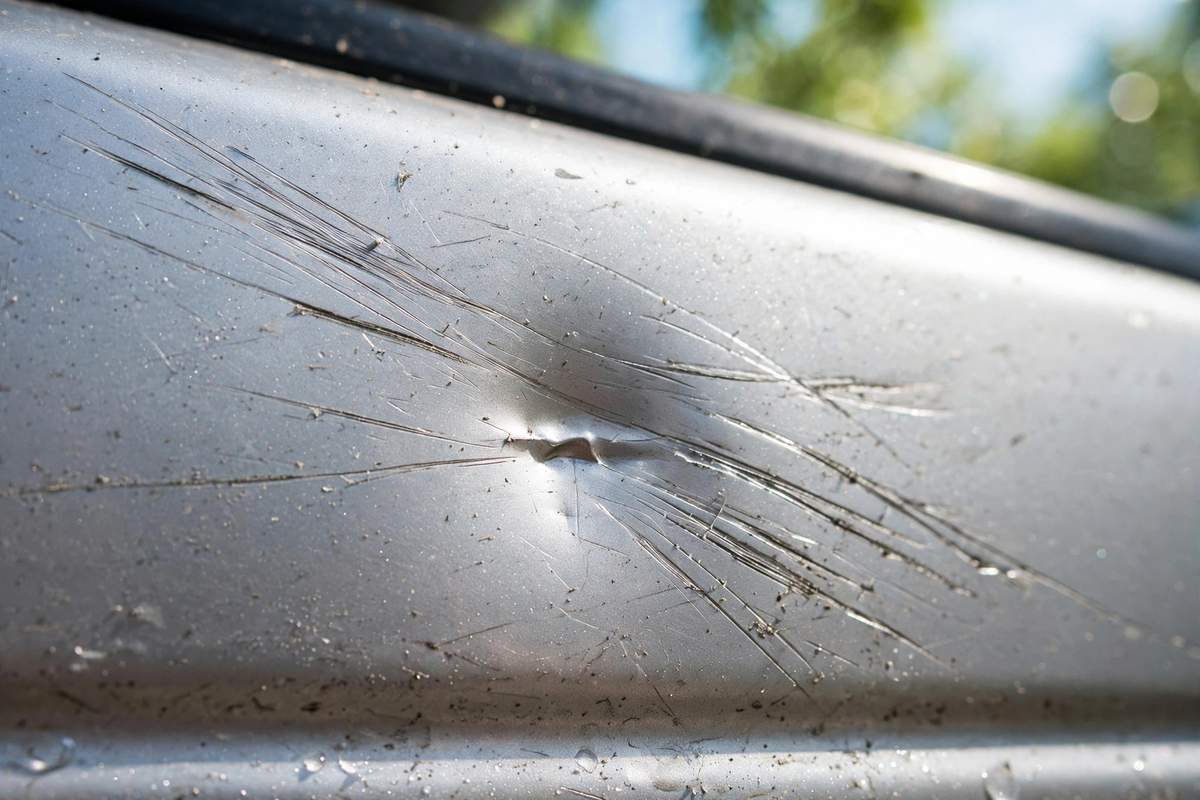
A chip is a small point of impact where a pebble or piece of debris struck the glass. Bullseyes are circular chips with a dark center, and star breaks are chips with small cracks radiating outward. These are the most common type of windshield damage, and they are also the easiest to fix. A professional resin injection repair fills the chip, restores the strength of the glass, and makes the mark nearly invisible. Repaired chips that meet the lender’s size limit almost always pass inspection.
Cracks
Cracks are linear breaks in the glass, and they are the most likely to be billed. A crack under a few inches that does not reach the edge of the glass or enter the driver’s field of vision might pass under some lenders’ standards, but most guides treat any crack over about six inches as excess damage. Cracks spread with temperature changes and road vibration, so a small crack at your self-check can become a long one by inspection day. Edge cracks, which start at the frame of the windshield, spread the fastest and are the hardest to repair.
Combination Breaks and Pitted Glass
Combination breaks mix chips and cracks in one spot. They are harder to repair than simple chips, and lenders usually treat them like cracks. Pitted glass, the fine sandblasting that appears on older windshields after years of highway driving, is usually considered normal wear as long as it does not distort vision. Deep pitting in the driver’s view can still be flagged, but light pitting across the glass is expected on a car that has been driven for three years.
What Windshield Damage Costs at Lease Return
Lenders bill windshield damage using contracted glass rates, and the numbers reflect whether the glass can be repaired or must be replaced. A chip that was never repaired is often billed at $75 to $150. A crack that requires a full windshield replacement typically runs $300 to $600 for standard cars, and it can exceed $1,000 for cars with advanced driver assistance systems.
That last point matters more every year. Modern cars mount cameras and sensors behind the windshield for lane keeping, automatic braking, and adaptive cruise control. After a replacement, these systems need calibration, which adds $200 to $400 to the job. A windshield replacement on a newer car with these features is one of the most expensive single items on a lease damage bill. If your car has these systems, fixing a chip early is not just smart, it is urgent, because a spreading crack turns a $60 repair into a $800 replacement.
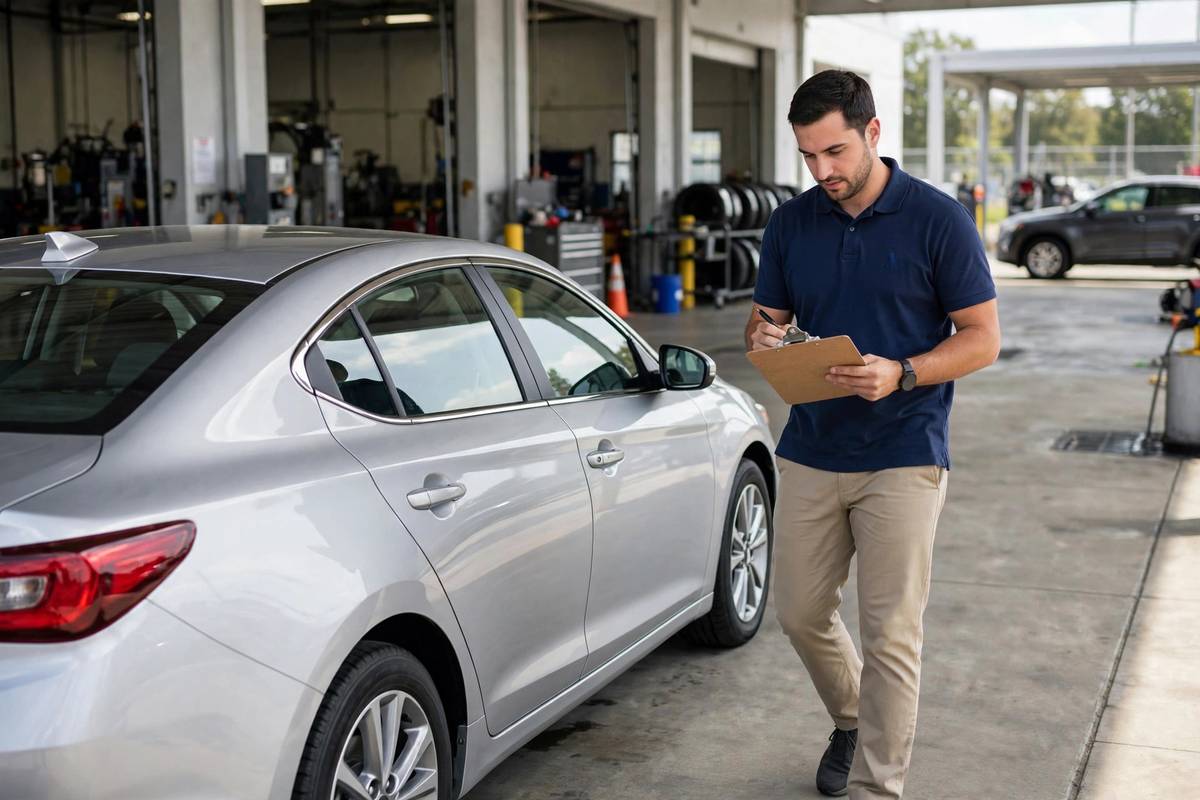
These charges follow the same logic as the rest of the lease-end inspection. The inspector notes the size, type, and location of the glass damage, photographs it, and applies the lender’s published rate. There is no negotiation at the inspection itself, which is why dealing with the glass beforehand gives you all the leverage.
Repairing Chips Before Turn-In: The Smart Move
A professional chip repair costs $50 to $100 at most auto glass shops, and mobile repair services will come to your home or office. The process takes about 30 minutes. The technician cleans the chip, injects clear resin under pressure, cures it with UV light, and polishes the surface. The repair restores the structural strength of the glass and is nearly invisible from the driver’s seat.
The best part is that many comprehensive auto insurance policies cover windshield chip repair with no deductible and no rate impact. Insurers would rather pay $60 for a repair than $500 for a replacement later, so they make the repair path easy. Call your insurer and ask specifically about glass repair coverage before you pay out of pocket. Some insurers even waive the deductible for full windshield replacement, though that varies by state and policy.
Do-it-yourself chip repair kits cost under $20 and can work on simple bullseyes, but they are risky for leased cars. A poor DIY repair can leave visible blemishes, trap air bubbles, or fail to stop the crack from spreading. An inspector can spot a bad DIY repair, and a failed repair can turn acceptable damage into billable damage. For a car you are about to return, pay a professional. The extra $40 buys a repair that passes inspection.
When Replacement Is the Only Option
Some windshield damage cannot be repaired. Cracks longer than about six inches, damage that reaches the edge of the glass, multiple cracks, or damage directly in front of the driver usually require a full replacement. In these cases, you have two options: replace the glass yourself before turn-in, or let the lender bill you.
Replacing it yourself is usually cheaper. Get quotes from two or three reputable auto glass shops, and ask specifically about calibration if your car has driver assistance cameras. An independent shop will typically charge less than the lender’s contracted rate for the same glass and calibration. Make sure the shop uses glass that meets the carmaker’s specifications, because some lease contracts require original equipment glass, and aftermarket glass with a slightly different tint or thickness can be flagged.
Keep the receipt and any calibration certificate. If the lender bills you for the windshield anyway, documentation of a professional replacement done to spec gives you a strong basis to dispute the charge. Photos of the finished work help too.
Preventing Windshield Damage in the First Place
You cannot avoid every rock, but you can reduce the odds. Leave extra following distance behind trucks and construction vehicles, which kick up the most debris. Avoid driving behind gravel haulers and uncovered dump trucks when you can. On highways, the center lanes often collect less debris than the far right lane, where trucks and merging traffic throw up stones.
When a chip does happen, act fast. Temperature swings and bumps in the road make chips spread, and a chip that could have been repaired for $60 becomes a crack that needs a $500 replacement. Many glass shops offer same-week mobile service, and as noted above, your insurance may cover the repair entirely. The same habit applies to all excess wear and tear: small problems are cheap, and waiting turns them into big bills.
Finally, check the windshield as part of your pre-inspection walkaround. Sit in the driver’s seat and look through the glass in daylight. Marks that are invisible from outside can be obvious from the driver’s view, and that is exactly the view the inspector cares about. Catch it early, repair it professionally, and the windshield becomes one less thing on your turn-in bill.