Dents and scratches are the most common reason lease customers get hit with surprise charges at turn-in. After months or years of daily driving, parking lots, and highway debris, almost every leased car shows some wear. The good news is that not every mark costs you money, and the ones that do are often cheaper to fix yourself before the inspection than to pay for through the lease company.
The key is knowing the difference between normal wear and tear, which the leasing company absorbs, and excess damage, which gets billed to you. Each lender publishes its own wear guidelines, and the inspection process is more predictable than most people expect. This guide walks through what inspectors look for, what charges you can expect, and how to handle repairs before you hand over the keys.
How Lease Companies Define Normal Wear and Tear
Every major lender, from captive finance companies to banks, publishes a wear and tear guide that sets the line between acceptable use and billable damage. These guides exist so that the inspection is objective. The inspector is not judging your car against showroom condition. They are measuring specific flaws against written standards.
For dents and scratches, normal wear generally means small, shallow marks that do not break the paint or change the shape of a panel in a noticeable way. A tiny door ding from a neighboring car, a faint scuff on a bumper from a shopping cart, or light swirl marks from car washes usually pass without a charge. The damage has to cross a size threshold before it becomes a billable item.
That threshold varies by lender, but a common rule is that dents larger than about two inches in diameter and scratches longer than about four inches that cut through the paint get flagged. Multiple small dents in one panel can also be flagged together even if each one alone would pass. Reading your lender’s wear guide before the inspection is the single best thing you can do to avoid surprises, and you can compare the standards in our overview of what counts as excess wear and tear on leases.
What Inspectors Measure on Dents and Scratches
At the lease-end inspection, the inspector walks around the car with a measuring tool and a paint meter, checking each panel against the lender’s standards. They photograph everything and note the location, size, and depth of each flaw. The process is methodical, and it covers the same points for every car.
Dents
Inspectors measure dents by diameter and note whether the paint is cracked. A shallow dent under the size limit with intact paint often passes as normal wear. A dent with cracked or chipped paint almost always fails, because exposed metal can rust and the repair is no longer cosmetic. Creases, which are sharp folds in the metal rather than smooth dents, fail at much smaller sizes because they are harder to repair.
Dents on edges, body lines, and aluminum panels draw extra attention. Aluminum body panels, common on newer trucks and luxury cars, cannot be repaired with traditional paintless dent repair in the same way steel panels can, so lenders tend to charge more when these panels are damaged. Hail damage is treated as a single event rather than a collection of individual dents, which can work in your favor if your insurance covers it.
Scratches
Scratches are judged by length, depth, and whether they penetrate the clear coat and paint. A surface scuff that only marks the clear coat and can be buffed out usually passes. A scratch that reaches the primer or bare metal fails, because a panel that exposes metal needs a proper repaint to prevent corrosion.
Inspectors also count the number of scratches per panel. Several small scratches clustered on one door or fender can be grouped into a single charge, or they can push the panel into the excess category even if each scratch is small on its own. Key scratches and deep gouges from road debris are always billable, and they are priced by the panel, not by the scratch.
Typical Charges for Dents and Scratches
Lease damage charges are set by each lender and are often higher than what an independent shop would charge for the same repair. Lenders use contracted rates that cover repainting, blending, and quality guarantees, and they pass those rates to you. A small dent repair might be billed at $75 to $150, while a panel that needs a full repaint can cost $300 to $600 or more.
Scratches follow a similar scale. A minor scratch that requires polishing might cost $50 to $100. A scratch through the paint that requires the panel to be sanded, repainted, and blended into adjacent panels can run $200 to $400 per panel. Luxury and aluminum-bodied vehicles sit at the high end of every range. These numbers are estimates, and your lender’s wear guide lists the exact schedule it uses.
The charges add up fast when damage is spread across the car. Three flagged panels can easily produce a bill of $500 to $1,000. That is why pre-inspection repairs usually save money. An independent body shop or a mobile dent repair service will often fix the same flaws for half of the lender’s rate, because their overhead is lower and they are not required to use the lender’s contracted pricing.
Fixing Dents and Scratches Before Turn-In
The smartest move is to fix damage before the inspection, not after. Schedule your inspection early, ideally four to six weeks before the lease ends, so you have time to handle repairs. Walk around the car yourself with a ruler and the lender’s wear guide, and flag anything near or above the thresholds. Our lease return checklist gives you a panel by panel routine for this self-audit.
For dents, paintless dent repair is the cheapest option when the paint is intact. Mobile technicians can remove small to medium dents for $75 to $150 per dent, and the results are invisible on most colors.
For scratches, a detailing shop can buff out clear coat scuffs for $50 to $100, and touch-up paint works for tiny chips if the color match is good. Deeper scratches that reach the primer need a body shop, where a panel repaint runs $200 to $400. Get quotes from two or three shops and compare them to the lender’s published charge schedule. If the independent quote is lower, repair it. If the lender’s charge is lower, which is rare, let the lender handle it.
Do not try to hide damage with cheap tricks. Inspectors see thousands of cars, and cover-ups like mismatched touch-up paint or stickers over dents are easy to spot. Attempted cover-ups can turn a minor charge into a larger one.
Should You File an Insurance Claim or Pay Out of Pocket?
For minor damage, paying out of pocket is almost always the better choice. A claim adds a record to your insurance history and raises your deductible against a bill that might be smaller than the deductible itself. If your deductible is $500 and the lender would charge you $300 for a dent, filing a claim makes no financial sense.
Insurance makes sense for larger damage. A creased door that needs a full repaint, hail damage across multiple panels, or a deep scratch down the side of the car can cost $1,000 or more to fix, and that is where comprehensive coverage earns its keep. If you carry comprehensive coverage on the leased car, which most lease contracts require, hail and vandalism damage is typically covered minus your deductible.
One caution about insurance: repairs have to meet the lender’s standards. A cheap repair that does not match the factory finish will still fail the inspection, and you will have paid the deductible on top of the lease charge. Use a reputable shop, and keep your receipts. If the lender bills you anyway, a receipt for a professional repair gives you grounds to dispute the charge.
Tips to Protect Your Car Near Lease End
The last few months of a lease are when most new damage happens, because people relax their guard. Parking at the far end of the lot, away from other cars, is the simplest habit that prevents door dings. Avoiding automatic car washes with brushes in favor of touchless washes keeps swirl marks and fine scratches off the paint.
If you live in a hail-prone area, watch the forecast and move the car under cover when storms threaten. A single hailstorm can produce more damage in twenty minutes than three years of normal driving. Portable car covers are cheap insurance for cars parked outside.
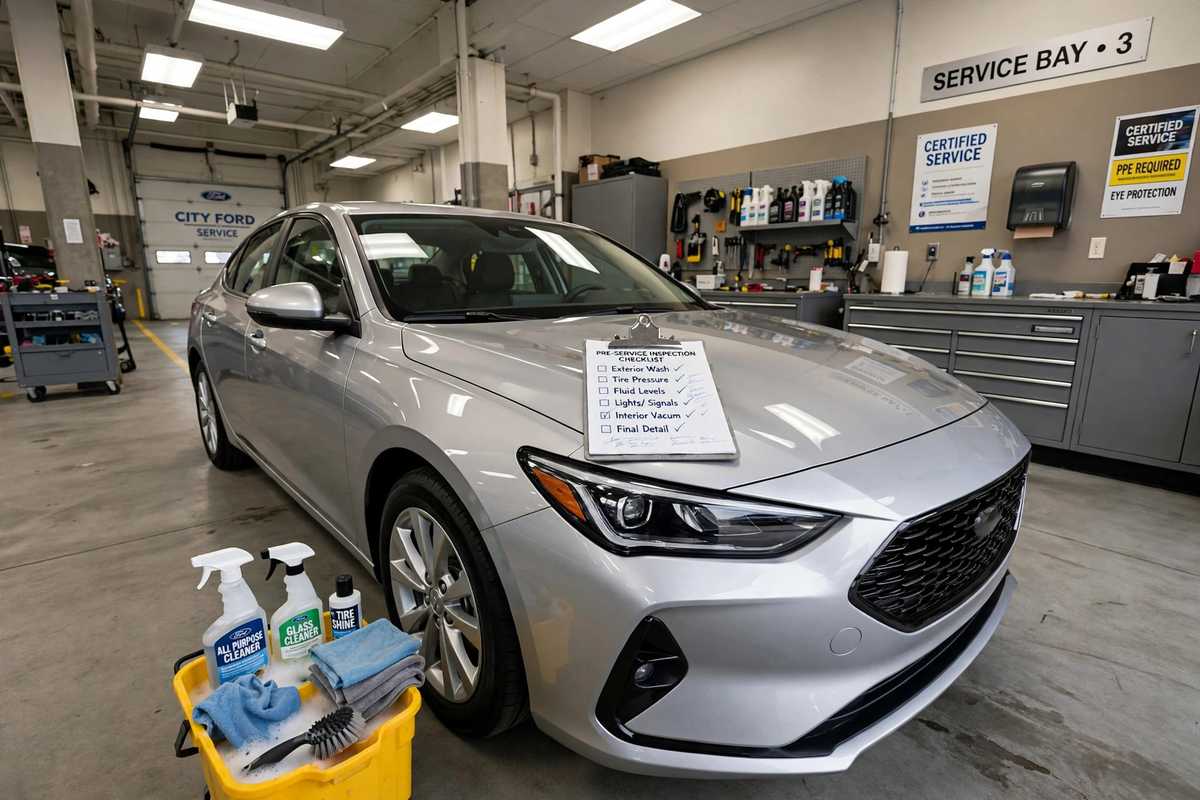
Finally, keep up with the maintenance schedule until the very end, and clean the car thoroughly before the inspection, inside and out. A clean car makes damage easier for you to spot in advance and gives the inspector no reason to look harder than they have to.