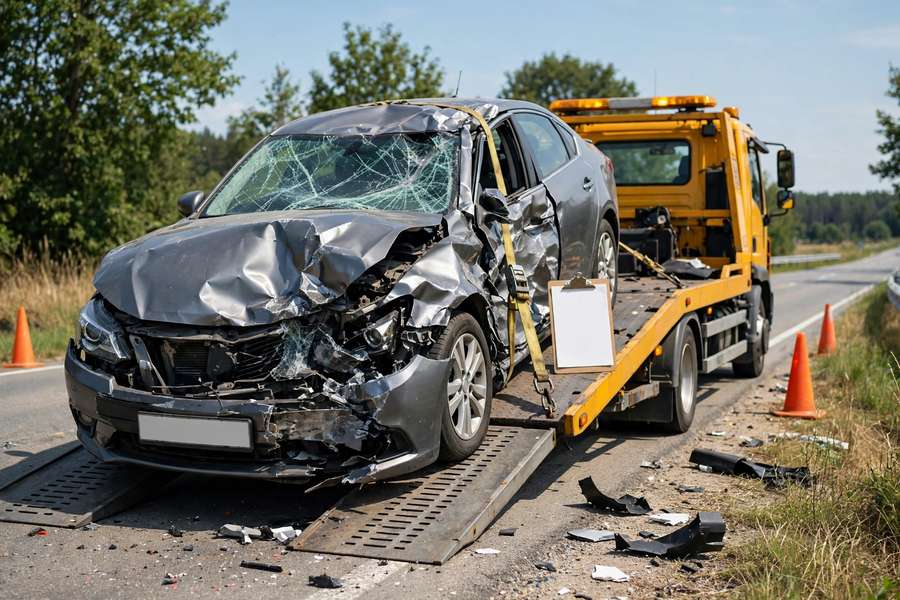
After a serious accident, the tow truck hauls your leased car away and an adjuster delivers the verdict: the car is a total loss. It will cost more to repair than the vehicle is worth, so the insurance company is writing it off. If the car were yours, the path forward would be fairly simple. Because it is leased, the process involves an extra party, extra paperwork, and a few outcomes that catch drivers off guard.
A totaled leased car ends your lease early, but it does not end it cleanly. Insurance pays the leasing company, gap coverage may or may not close the difference, and you are left to handle the details. This guide explains exactly what happens next, what you still owe, and how to protect yourself through the process.
What Total Loss Means for a Leased Car
An insurer declares a vehicle a total loss when the repair cost approaches or exceeds the car’s actual cash value. Actual cash value is the market value of the car just before the accident, not what you paid for it and not what a new one costs. The exact threshold varies by state and insurer, but it usually sits between 70 and 80 percent of the car’s value.
When the car is leased, the leasing company is the legal owner and the loss payee on your policy. The insurance settlement goes to the lessor, not to you. The lessor applies the payout against your lease balance, and whatever remains is your responsibility to resolve.
With a financed car, a total loss settlement can sometimes leave money in your pocket. With a lease, there is no equity to recover, so the best realistic outcome is walking away owing nothing, and that depends on gap coverage.
Your Immediate Steps After the Accident
Call emergency services if anyone is injured, and file a police report if the accident involved another driver or injuries. Photograph the scene, the damage, and the other vehicles, and exchange information with the other driver.
Notify your insurer promptly, and make clear the vehicle is leased so the claim is routed to the lessor as loss payee. Delays can complicate the claim, so make the call within a day or two.
Then call the leasing company so they can open a total loss file. Ask whether you keep making payments during the claim, what documentation they need, and how they handle the gap between the payout and your balance. Get the answers in writing if you can.
How the Payoff Is Calculated
Once the insurer declares the car a total loss, two numbers determine your fate. The first is the actual cash value of the car, which the insurer calculates from comparable sales, mileage, condition, and options. The second is your lease payoff amount, which is what you owe the leasing company under the contract at that point in time.
In the early and middle months of a lease, the payoff is almost always higher than the actual cash value. Cars depreciate fastest in their first years, while lease payoffs decline more slowly. The difference between these two numbers is the gap, and it is the central financial question of a total loss.
Your deductible is subtracted from the settlement before it goes to the lessor, which makes the gap bigger. A lower deductible is worth considering on a leased car for exactly this reason, since you never see the settlement yourself.
Gap Coverage: The Difference Between a Clean Exit and a Bill
Gap coverage pays the difference between the insurance settlement and your remaining lease balance. If your lease includes it, which many do, the gap is covered and the account closes with nothing further owed. You lose your down payment and any prepaid amounts, but you do not receive a surprise bill.
If your lease does not include gap coverage and you did not buy a separate policy, the gap is your bill. In the first year of a lease this can easily run several thousand dollars. The leasing company will send you a final statement for the deficiency, and you are contractually obligated to pay it.
Pull your lease agreement and look for gap coverage or a gap waiver. If it is not there, a standalone gap policy is inexpensive relative to the risk it covers. Drivers who skip this step learn about it at the worst possible moment.
What You Lose in a Total Loss
A total loss on a lease is financially unforgiving in ways that surprise many drivers. Your down payment is gone. Insurance pays the lessor for the car’s value, gap coverage handles the difference, and nobody refunds the money you put down at signing. The same applies to any prepaid amounts, such as multiple security deposits applied as a capitalized cost reduction, though refundable security deposits are a different story and should be returned.
You also lose any equity you might have built. If the car’s market value exceeded the buyout price before the accident, that positive equity disappears with the car. This is one of the hidden costs of leasing that only becomes visible in a total loss.
Prepaid maintenance plans are another gray area. If you bought a package you never used, check whether it is refundable or transferable. Some plans refund the unused portion, while others are tied to the vehicle and are lost.
Keep Making Payments Until the Claim Closes
This point deserves emphasis because it trips up so many people. You remain responsible for your lease payments until the insurance claim is settled and the leasing company closes your account. The process typically takes four to eight weeks from the accident to the final settlement.
Some lessors suspend billing once a total loss is reported, but many do not. If you stop paying on the assumption the wrecked car is the lessor’s problem, you can rack up late fees and negative marks on your credit. Clarify this on your first call, and if payments continue, keep paying.
The good news is that once the claim settles, any overpayment is typically refunded or credited. If you made two extra monthly payments during the claim process and the settlement covers the balance, the lessor should return that money. Track your payments and compare them against the final statement.
Getting the Final Settlement Right
When the claim is complete, the leasing company sends a final statement. Review it line by line against your contract and your own records. Confirm that the insurance payout was applied correctly, that gap coverage paid what it was supposed to, and that any payments you made during the claim process are accounted for.
Watch for charges that should not be there. Some lessors add disposition fees to a total loss settlement, and your contract determines whether those apply. Excess wear charges should not appear on a totaled car, since the vehicle no longer exists to be inspected. Dispute anything wrong in writing before you pay.
Once everything checks out, ask for written confirmation that the lease is closed with a zero balance. Keep this letter permanently. It is your proof that the account was resolved, and you will want it if any billing error surfaces later or if a future lender asks about the account.
Your Credit and Your Next Car
A total loss that is handled properly should not damage your credit. The account should report as closed and paid, which is neutral to positive. The danger comes from missed payments during the claim process or an unpaid deficiency balance, both of which are avoidable with attention.
Check your credit reports a few months after the settlement to confirm the account status is correct. If it shows late payments you did not make or a balance that was settled, dispute it with the bureaus using your closure letter as evidence.
When you are ready for your next vehicle, you are starting fresh. Some lessors offer loyalty incentives to customers whose leases ended through a total loss, so ask before shopping elsewhere. If you need wheels immediately, taking over an existing lease can be a smart bridge.
The Bottom Line
A totaled leased car triggers a chain reaction: the insurer values the car, pays the leasing company, and gap coverage closes the difference if you have it. Your down payment is gone, your payments continue until the claim settles, and the lease closes once the balance is resolved. The outcome is clean when you carry the right coverage and stay on top of the paperwork, and it turns expensive when gap coverage is missing or payments lapse during the process. Verify your coverage today, because after the accident is too late.