A fender bender in a car you own is annoying. The same accident in a car you lease comes with extra questions, because someone else owns the vehicle. Who pays for the repairs? What happens if the damage is not fully fixed? The leasing company has a financial interest in the car’s condition, and your lease contract gives them a say in how damage gets handled.
The good news is that a typical accident does not upend your lease. Insurance covers the repairs, you keep driving, and life goes on. But the details matter: repair quality requirements, diminished value, lease end inspections, and liability questions all have lease specific twists. Here is who pays for what when a leased car is in an accident.
Your Insurance Pays for Repairs, With Conditions
Repair costs after an accident are covered by auto insurance, just as they would be for a car you own. If another driver was at fault, their liability coverage pays. If you were at fault, or the other driver is uninsured, your own collision coverage pays, minus your deductible. Comprehensive coverage handles non collision damage like hail or vandalism.
Your lease requires these coverages at specified limits. The leasing company wants the car restored properly with a reliable payer behind the work. If you let coverage lapse, you violate the contract and expose yourself to the full repair bill. Keep your policy active at the required levels for the entire lease term.
You pay the deductible out of pocket in most cases. If the other driver was at fault and their insurer accepts liability, you may recover your deductible from them, but that process can take weeks or months. Do not count on it when budgeting for the repair.
Repair Standards: Why the Lessor Cares How It Gets Fixed
Here is where leasing differs from owning. When you own a car, you can fix it cheaply, skip cosmetic repairs, or live with a mismatched bumper. When you lease, the contract typically requires that all repairs restore the vehicle to its pre accident condition using proper parts and methods. The leasing company will inspect the car at lease end, and shoddy repairs can trigger excess wear charges.
Many lease contracts specify or strongly prefer original equipment manufacturer parts. Aftermarket parts may be cheaper, but they can affect fit, finish, and safety systems. If your contract requires OEM parts, using cheaper alternatives can be treated as a contract violation. Read the maintenance and repair section of your lease agreement to know exactly what standard applies to you.
You generally have the right to choose the repair shop, unless your contract says otherwise. Use a certified collision center, keep all receipts and repair orders, and ask for documentation of the parts used. This paper trail protects you at the lease end inspection if anyone questions the repair quality.
Do You Have to Tell the Leasing Company?
For minor damage fully repaired through insurance, most leases do not require notifying the lessor. For significant accidents, many contracts do require notification, and it is smart to tell them anyway, since major damage affects the value of their asset.
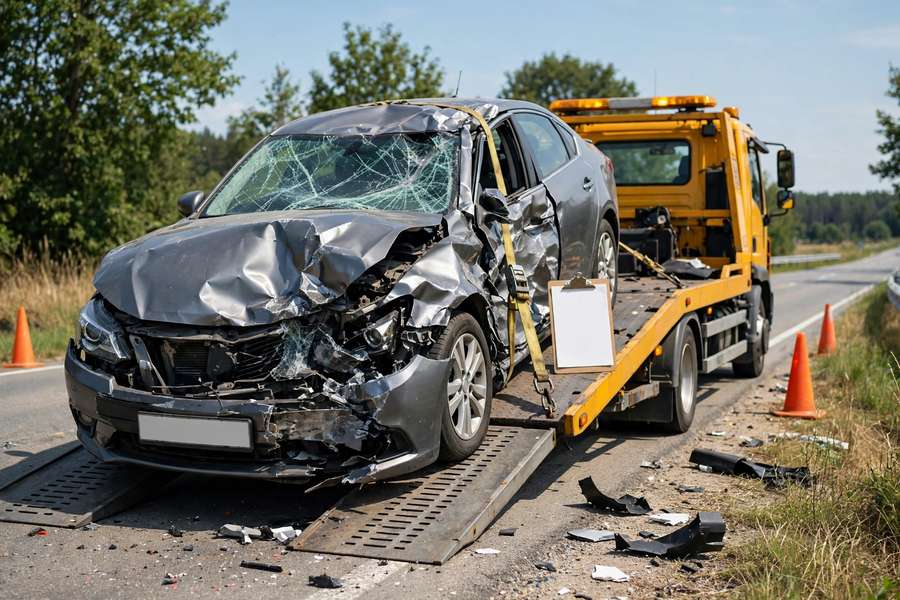
Call the leasing company if the car was towed, if airbags deployed, if there was frame or structural damage, or if the repair estimate runs into the thousands. They may want to inspect the car or approve the repair plan. Failing to notify them when the contract requires it can create problems at lease end, including disputes over whether the damage was properly repaired.
Keep your own records regardless. Save the police report, the insurance claim number, photos of the damage, and the final repair invoice. If the car is ever declared a total loss later, as explained in our guide to what happens when a leased car is totaled, this documentation becomes part of that process too.
Who Pays for What: The Full Breakdown
It helps to see the complete picture of accident costs and who bears each one.
The Deductible: You
Your collision or comprehensive deductible comes out of your pocket whenever you use your own coverage. Deductibles on leased cars typically range from 500 to 1,000 dollars. If the at fault driver’s insurer pays, you may avoid the deductible entirely or get it reimbursed later.
The Repairs: Insurance
The at fault party’s liability insurance or your own collision coverage pays for the repairs. Your lease requires the car to be restored properly, so make sure the estimate covers everything, including related items like wheel alignment, sensor recalibration, and paint blending. Advanced driver assistance systems often need recalibration after even minor collisions, and that cost belongs in the claim.
The Rental Car: Usually You, Unless Covered
While your car is in the shop, you need transportation. Rental reimbursement coverage, if you bought it, pays a daily amount up to a policy limit. Without it, the rental is your expense. The leasing company is not obligated to provide a loaner, though some dealers offer them as a courtesy. Check your policy now, before you need it.
Diminished Value: Complicated
Diminished value is the loss in market value a car suffers simply because it now has an accident history, even after perfect repairs. In many states you can claim it against the at fault driver’s insurer. But on a lease, the diminished value technically belongs to the leasing company as owner, not to you. Check your contract, and consider asking an attorney if the amount is significant.
Medical Bills and Liability: Insurance, Then You
If the accident caused injuries, your personal injury protection or medical payments coverage handles initial medical costs, and liability coverage handles claims from others. If damages exceed your policy limits, you are personally responsible for the rest. Lease contracts require minimum liability limits precisely to keep this risk contained.
Accident Damage and Your Lease End Inspection
Every lease ends with an inspection, and prior accidents get special attention. The inspector looks for unrepaired damage, poor quality repairs, and paint mismatches. Properly repaired damage that meets the contract standard should pass without charges. Unrepaired damage, even a minor scrape you lived with, will be billed as excess wear.
This is why fixing even small damage matters on a lease. A door ding you would ignore on a car you own can become a line item on your final bill. Our guide to dents and scratches on lease returns explains the thresholds inspectors use. When in doubt, get an estimate and compare it to the likely end of lease charge; sometimes paying for the repair now is cheaper than the penalty later.
If you disagree with inspection charges related to old accident damage, you have options. Our walkthrough of disputing excess wear charges covers how to challenge bills you believe are unfair, including using your repair records as evidence that the work met the contract standard.
Accidents, Mileage, and Lease Term Considerations
An accident does not change your mileage allowance or your lease end date. If the car spent three weeks in the shop, you do not get extra miles or extra time. Plan accordingly, especially if the repair period pushes your driving into a compressed window.
A serious accident near the end of your lease raises a strategic question: repair and return, or buy out the car? If the car was properly repaired, returning it is usually fine. But if the accident history has pushed the car’s value below your buyout price, buying it yourself can sometimes be the better move. Compare the buyout price against the car’s market value with an accident history before deciding.
Protecting Yourself Before Anything Happens
Confirm your insurance meets or exceeds the lease requirements, including collision, comprehensive, and liability limits. Consider rental reimbursement coverage, since being without a car for weeks is a real possibility. Keep your deductible at a level you can pay on short notice.
Read the repair and maintenance section of your lease agreement so you know the required standard. Save the leasing company’s claims number in your phone alongside your insurer’s number, and keep your policy number somewhere accessible in the car.
The Bottom Line
When a leased car is in an accident, insurance pays for the repairs, you pay the deductible, and the leasing company’s standards govern how the work gets done. Notify the lessor after serious accidents, keep thorough records, and make sure every repair meets the contract’s quality bar. Handle those details and an accident becomes an inconvenience rather than a financial problem; ignore them and the bill arrives at the lease end inspection.