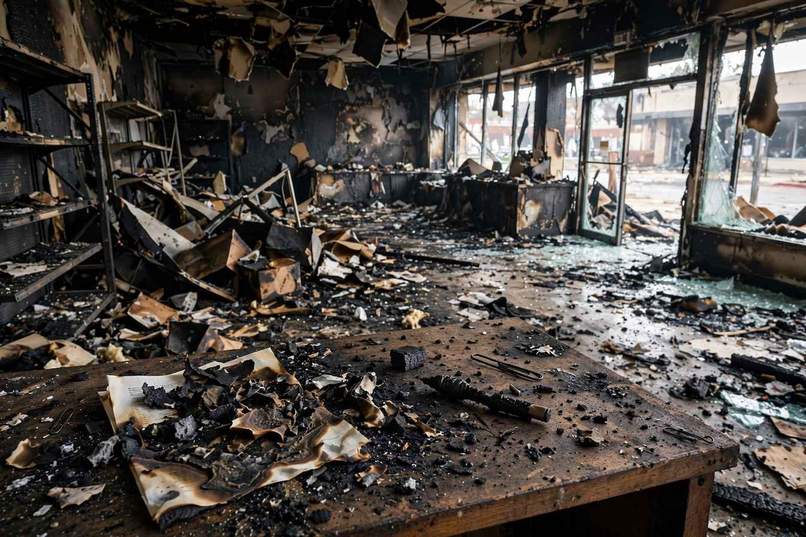
You have three years left on your lease when the landlord announces the building will be demolished for a mixed-use redevelopment. Your lease, you discover, contains a demolition clause giving the landlord the right to terminate with 12 months notice. Your business, built around this location, now has a one-year expiration date you never negotiated.
Demolition clauses give landlords the right to terminate a lease to demolish the building, usually for redevelopment. They are common in older buildings, transitional neighborhoods, and any property where the land may become more valuable than the structure. Tenants who do not negotiate these clauses can lose their location with limited compensation. Here is how they work and how to protect yourself.
What a Demolition Clause Does
A demolition clause allows the landlord to end the lease before its natural expiration so the property can be demolished. The clause typically requires written notice, often 6 to 18 months, and may or may not require the landlord to actually demolish or redevelop. Some clauses are pure termination rights dressed up as redevelopment provisions.
Tenants should distinguish genuine redevelopment clauses from unrestricted termination rights. A genuine clause ties termination to a real project: filed permits, approved plans, or a demolition contract. An unrestricted clause lets the landlord terminate for any reason after the notice period, which is effectively a landlord termination option, not a demolition provision.
Notice Periods: The Core Protection
The notice period is the tenant’s primary protection. Twelve months is a common minimum, and tenants should push for more, especially for businesses that are hard to relocate, like restaurants, medical offices, or manufacturers with specialized build-outs.
Tenants should also negotiate what the notice must contain. A bare termination notice gives the tenant no information to plan around. Better language requires the landlord to describe the redevelopment project, provide the expected demolition timeline, and certify that permits have been filed. These requirements make it harder for landlords to use the clause opportunistically.
Staged and Rolling Notice
Some sophisticated clauses use staged notice: an early warning when redevelopment becomes likely, followed by the formal termination notice. Tenants can propose this structure when the landlord resists a long single notice period. An 18-month early warning plus a 12-month formal notice gives the tenant 30 months of planning horizon without technically extending the notice period.
Compensation for Displaced Tenants
Standard demolition clauses often provide no compensation beyond the notice period. The tenant absorbs moving costs, lost business, and the write-off of improvements. Tenants should negotiate a termination payment: a lump sum, a multiple of monthly rent, or reimbursement of unamortized improvement costs.
A useful formula ties compensation to the remaining lease term. For example, the landlord pays the tenant’s unamortized tenant improvements plus six months rent if termination occurs in the first half of the term, and three months rent in the second half. This recognizes that early termination destroys more of the tenant’s investment. Tenants who funded major build-outs through work letters for tenant improvements should make sure the compensation covers those costs.
Relocation Assistance
Beyond money, tenants can negotiate practical relocation help: the landlord’s cooperation in assigning the lease to a new location the landlord owns, a right of first offer on space in the redeveloped project, or extended access for a phased move-out. For retail tenants, a right to return to the redeveloped property at market rent preserves the location’s goodwill.
Limiting When the Clause Can Be Used
Tenants can restrict demolition clauses in several ways. A time-based restriction bars termination during the first few years of the lease, protecting the tenant’s initial investment. A use-based restriction requires the landlord to actually demolish within a defined period after termination, with a penalty or a tenant right to reoccupy if demolition does not happen.
Another powerful limitation: require the landlord to offer the tenant space in the new development. This converts a pure loss into a relocation opportunity. Even if the tenant does not take the offer, the requirement disciplines the landlord’s use of the clause.
Demolition Clauses and Lease Renewals
Tenants often encounter demolition clauses for the first time at renewal. The landlord, now eyeing redevelopment, inserts the clause into the renewal lease. Tenants who held a demolition-free original lease should resist the addition or demand shorter renewal terms in exchange.
If the landlord insists, tenants should at least negotiate the protections described above: long notice, termination payments, and redevelopment commitments. A renewal is also the moment to address how to negotiate a renewal option, since renewal rights interact with demolition rights in complicated ways. A renewal option the landlord can defeat with a demolition notice is worth little without coordination between the two provisions.
What Counts as Demolition
Lease language matters here. Some clauses trigger on “demolition,” others on “substantial renovation” or “redevelopment.” Broader triggers give the landlord more termination opportunities. Tenants should narrow the trigger to actual demolition requiring a demolition permit, not cosmetic renovations the landlord could perform with the tenant in place.
Tenants should also address partial demolition. If the landlord demolishes only part of a multi-building property, does the clause terminate the whole lease or just the affected portion? Clear language prevents the landlord from using a small demolition to exit an unfavorable lease on the entire property.
Verification and Remedies
A demolition clause without verification is an honor system. Tenants should require the landlord to provide evidence of the redevelopment: permit applications, contractor agreements, or financing commitments. If the landlord terminates and then fails to demolish within, say, 24 months, the tenant should have a remedy, such as liquidated damages or a right to re-lease the space.
These provisions feel aggressive to landlords, but they address a real abuse: landlords invoking demolition clauses to remove tenants, then re-leasing at higher rents without demolishing anything. Documented redevelopment commitments keep the clause honest.
Demolition vs Condemnation
Tenants sometimes confuse demolition clauses with condemnation, but the two are distinct. Condemnation involves government action and constitutional compensation rights. Demolition is a private contractual right the landlord negotiated into the lease. The tenant has no constitutional protections against a demolition clause, which is why the contractual protections matter so much.
Both situations displace the tenant, so the planning overlaps: document your investment, understand your termination rights, and know your compensation. Our guide to condemnation clauses in commercial leases covers the government-takings side of displacement.
Negotiation Strategy by Tenant Type
Anchor tenants and large occupants have the most leverage and should push for the full package: long notice, termination payments, relocation rights, and redevelopment verification. Small tenants have less leverage but can still win the essentials: at least 12 months notice and a modest termination payment.
Tenants in rapidly developing areas should treat demolition clauses as likely to be exercised, not theoretical. In these markets, the clause deserves the same negotiation attention as rent. Tenants in stable areas can accept leaner protections but should still insist on genuine redevelopment triggers rather than open-ended termination rights.
A demolition clause transfers the redevelopment upside to the landlord and the displacement cost to the tenant. That allocation is only fair if the tenant negotiated compensation, notice, and verification in return. Before signing any lease on a property that could be redeveloped, assume the clause will be used, price the risk, and negotiate accordingly. The expansion options in your commercial lease may also offer alternative paths to stay in a growing property, worth exploring alongside demolition protections.