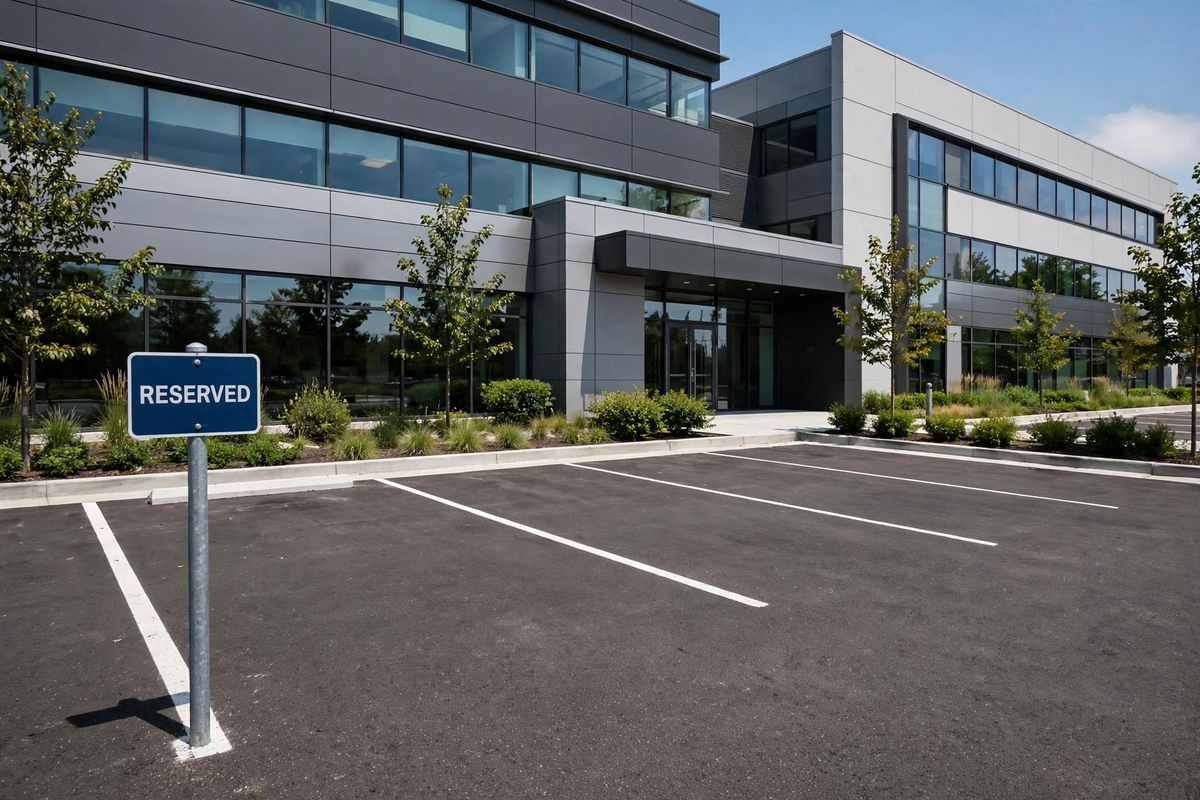
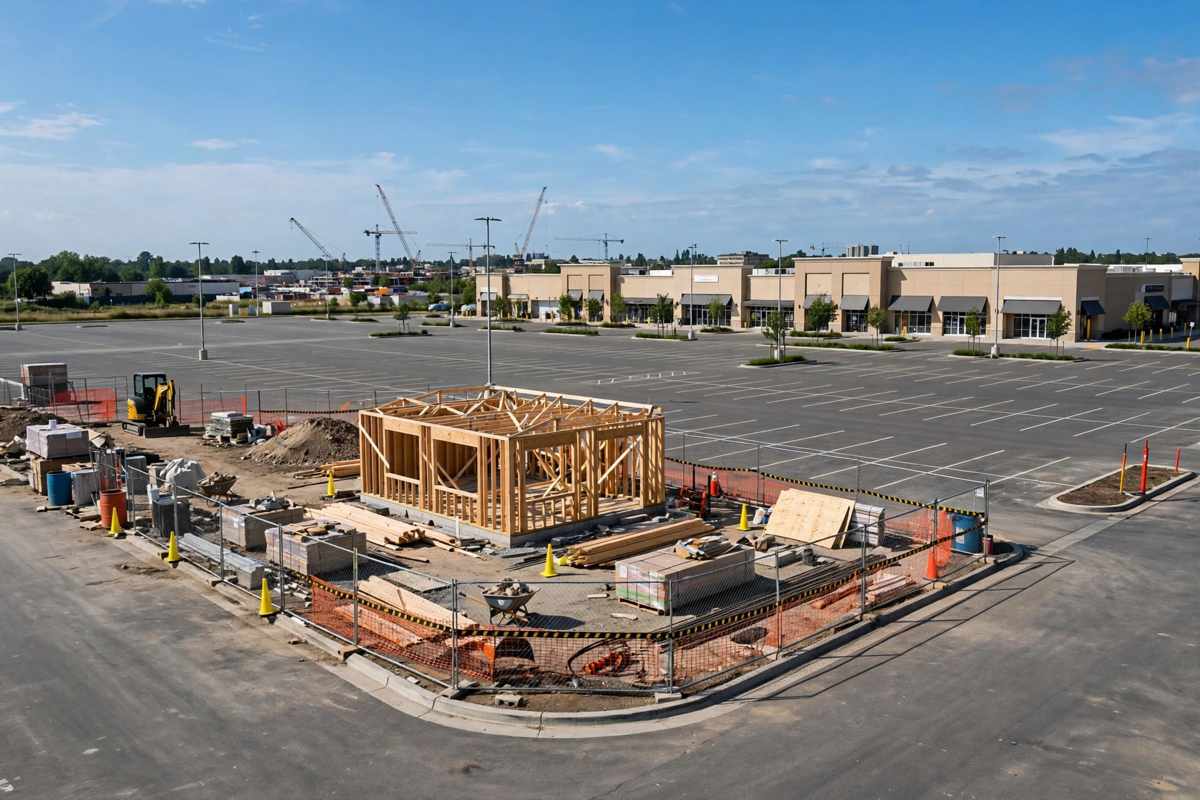
Outparcels, the freestanding lots along the perimeter of a shopping center, are some of the most valuable pieces of retail real estate. Banks, restaurants, and coffee shops pay premium rents for these high visibility pad sites with direct street access. But developing or leasing an outparcel involves a web of rights held by the center’s owner, existing tenants, and sometimes the anchor stores, making outparcel development rights a critical topic in retail leasing.
Whether you are a landlord looking to monetize unused perimeter land, a tenant seeking an outparcel location, or an inline tenant worried about losing parking to new development, the rules governing outparcels affect your bottom line. This article explains who controls outparcel development, what rights are typically involved, and how to protect your interests.
What Outparcels Are
An outparcel is a separate lot within or adjacent to a shopping center, usually along the street frontage, that is developed independently of the main buildings. Common outparcel users include fast food restaurants, banks, gas stations, pharmacies, and coffee shops. They benefit from the center’s traffic while operating with their own entrances, drive thrus, and signage.
Landlord Development Rights
The landlord generally holds the underlying right to develop outparcels it owns. This includes selecting users, negotiating ground leases or sales, and designing the site plan. Outparcel development is a key value creation strategy for center owners, since perimeter land that once served as excess parking can generate substantial new income.
However, the landlord’s development rights are rarely unfettered. Anchor leases, inline tenant protections, reciprocal easement agreements, and municipal zoning all constrain what can be built. A landlord that ignores these constraints invites litigation from tenants and rejection from planning authorities.
Reciprocal Easement Agreements
Many shopping centers operate under a reciprocal easement agreement, or REA, that governs shared parking, access drives, utilities, and maintenance across separately owned parcels. The REA may restrict outparcel development by limiting building sizes, requiring setbacks, or mandating shared parking ratios.
Anyone developing an outparcel must review the REA before committing. Violating its terms can trigger enforcement actions by other parcel owners, including the anchor tenants that typically hold the strongest REA rights. Title review should always include the REA and any amendments.
Anchor Approval Rights
Anchor tenants frequently hold veto or approval rights over outparcel development. An anchor that depends on visibility from the street or on convenient customer parking will resist an outparcel building that blocks its sight lines or consumes parking spaces. These approval rights are among the most powerful provisions in anchor leases.
Landlords planning outparcel development should identify every approval right in the center’s leases before designing the project. Discovering an anchor veto after spending money on plans and permits is an expensive mistake. Early engagement with anchor tenants, presenting the project as traffic enhancing rather than traffic stealing, improves the odds of approval.
Inline Tenant Protections
Inline tenants have fewer direct rights over outparcels, but they are not powerless. Many inline leases include parking ratio guarantees that effectively limit outparcel development, since new buildings cannot reduce parking below the guaranteed ratio. Our guide to parking ratios for tenants explains how these guarantees work.
Inline tenants may also hold exclusivity rights that block certain outparcel users. A sandwich shop with center wide exclusivity can prevent the landlord from leasing an outparcel to a competing sandwich concept. Tenants negotiating new leases should confirm whether their exclusivity extends to outparcels or is limited to inline space. Similar use protections are discussed in our guide to permitted use clauses.
Visibility and Access Concerns
Even without formal approval rights, inline tenants can sometimes challenge outparcel development that materially impairs their visibility or access. Leases often contain covenants of quiet enjoyment or specific promises about sight lines and access drives. A landlord that builds an outparcel directly in front of an inline tenant’s storefront may face a breach claim.
Tenants concerned about future development should negotiate specific protections, such as minimum setback distances for outparcel buildings or a prohibition on development within a defined area in front of their premises. Vague reliance on general lease covenants is weaker than explicit language.
Ground Leases for Outparcel Users
Outparcel users typically occupy under ground leases rather than standard retail leases. The user leases the land, often for 20 years or more, and constructs its own building. At the end of the term, the building usually reverts to the landowner.
Ground lease tenants should negotiate carefully around rent escalations, permitted uses, assignment rights, and end of term obligations. Because the tenant invests heavily in improvements it will ultimately surrender, the lease must provide a long enough term to amortize that investment. Financing is also more complex, since lenders take a leasehold mortgage rather than a fee mortgage.
Exclusive Parking and Drive Thru Rights
Outparcel users, particularly restaurants and banks, often require dedicated parking areas and drive thru lanes. These must be reconciled with the center’s shared parking and circulation. The ground lease or REA amendment should define exactly which spaces are exclusive, how the drive thru queue is routed, and who maintains the improvements.
Conflicts over drive thru stacking that blocks access drives are common. Detailed site planning, reviewed by traffic engineers and approved by all affected parties, prevents operational disputes after opening.
Zoning and Municipal Approvals
Outparcel development must comply with local zoning, including permitted uses, setbacks, height limits, signage regulations, and traffic impact requirements. Drive thru uses face particular scrutiny in many municipalities, with some jurisdictions restricting or prohibiting new drive thrus.
Developers should confirm zoning early and budget time for the approval process. Conditional use permits, variances, and site plan approvals can take months. Anchor approval rights and municipal approvals should be pursued in parallel, since either can kill the project.
Signage Rights on Outparcels
Signage is a primary motivation for outparcel users, who pay premium rents partly for monument signs visible from the street. The ground lease should specify the size, location, and illumination of permitted signs, and confirm that municipal sign codes allow what the lease promises.
Center owners must balance outparcel signage with the signage rights of inline and anchor tenants. Pylon signs with multiple tenant panels are a common solution. Our guide to signage rights in commercial leases covers the broader framework.
Negotiating Outparcel Rights as a Tenant
Tenants seeking outparcel locations should negotiate for the same protections they would demand inline, adapted to the ground lease context. Key points include exclusivity against competing uses elsewhere in the center, approval rights over future outparcel development that affects visibility or access, and clear definitions of common area maintenance obligations.
Outparcel tenants should also consider what happens if the main center declines. A restaurant on a thriving outparcel can survive a struggling inline center, but provisions addressing the landlord’s maintenance obligations and the tenant’s termination rights provide important downside protection. The leverage dynamics with center ownership resemble those in our guide to anchor tenant rights in shopping centers.
Due Diligence Checklist
Before developing or leasing an outparcel, review the REA, all anchor leases for approval and exclusivity rights, inline leases with parking or visibility protections, zoning and sign codes, traffic and access easements, and utility capacity. Each of these can independently block or reshape the project.
Outparcel development rewards careful preparation. The sites are valuable precisely because they are scarce and contested, and the parties that do their diligence close deals while others litigate over rights they should have identified at the start.