Tires are the single most common surprise on a lease return bill. Drivers watch their mileage, dodge door dings, and keep the interior clean, then get hit with a 600 to 1,200 dollar tire charge because the tread wore a little too thin. The frustrating part is that this charge is almost always avoidable with a little planning and some basic math.
So do you have to replace tires before returning a lease? The honest answer is that it depends on your tread depth, your tire condition, and the numbers. Sometimes replacing them yourself saves hundreds of dollars. Sometimes the leasing company charge is actually the cheaper option. Here is how to figure out which situation you are in.
The Short Answer
You do not have to return the car with brand new tires. You have to return it with tires that meet the standards in your lease contract. For most leasing companies, that means a minimum tread depth, commonly 4/32 of an inch, with no damage, and a matching set of the correct size, type, and speed rating.
If your tires meet those standards, you owe nothing for tires at turn in. If they fall short, you will be charged, and the charge is based on dealership retail pricing. The smart move is to measure your tires a month or two before the lease ends and run the numbers before the inspector does it for you.
What Lease Contracts Say About Tires
The wear section of your lease contract sets the tire standard, and it is worth reading the exact wording. Most contracts require tires to be safe, serviceable, and of the original size and speed rating. Many name a specific minimum tread depth. Some require the tires to be a matching set, meaning the same brand and model on all four corners, or at least matching across each axle.
A few contracts go further and require the replacement tires to be the same brand as the originals, though this is less common. If your contract is strict about matching brands, mixing a budget tire with three originals can still trigger a charge even if the tread depth is fine. When in doubt, call the leasing company and ask. A five minute phone call beats a surprise line item.
How Inspectors Judge Your Tires
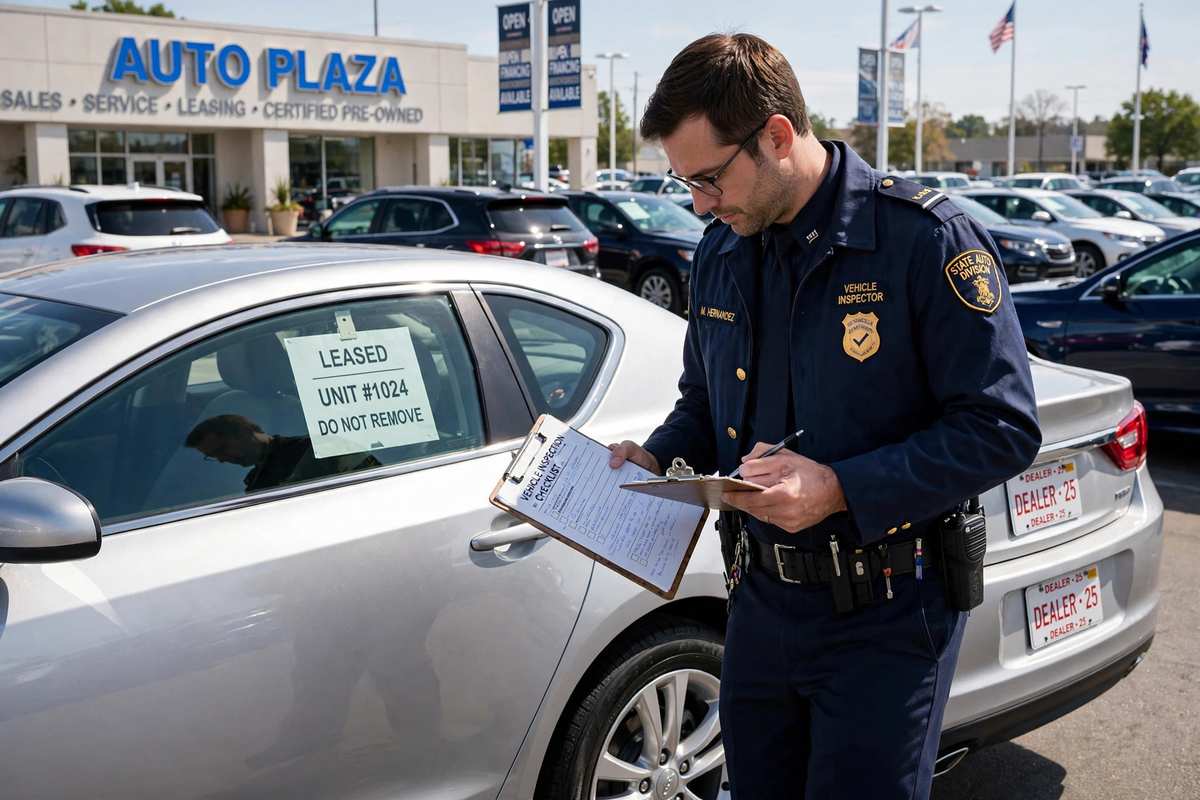
The inspector checks four things on every tire, and a failure on any one of them can generate a charge.
Tread Depth
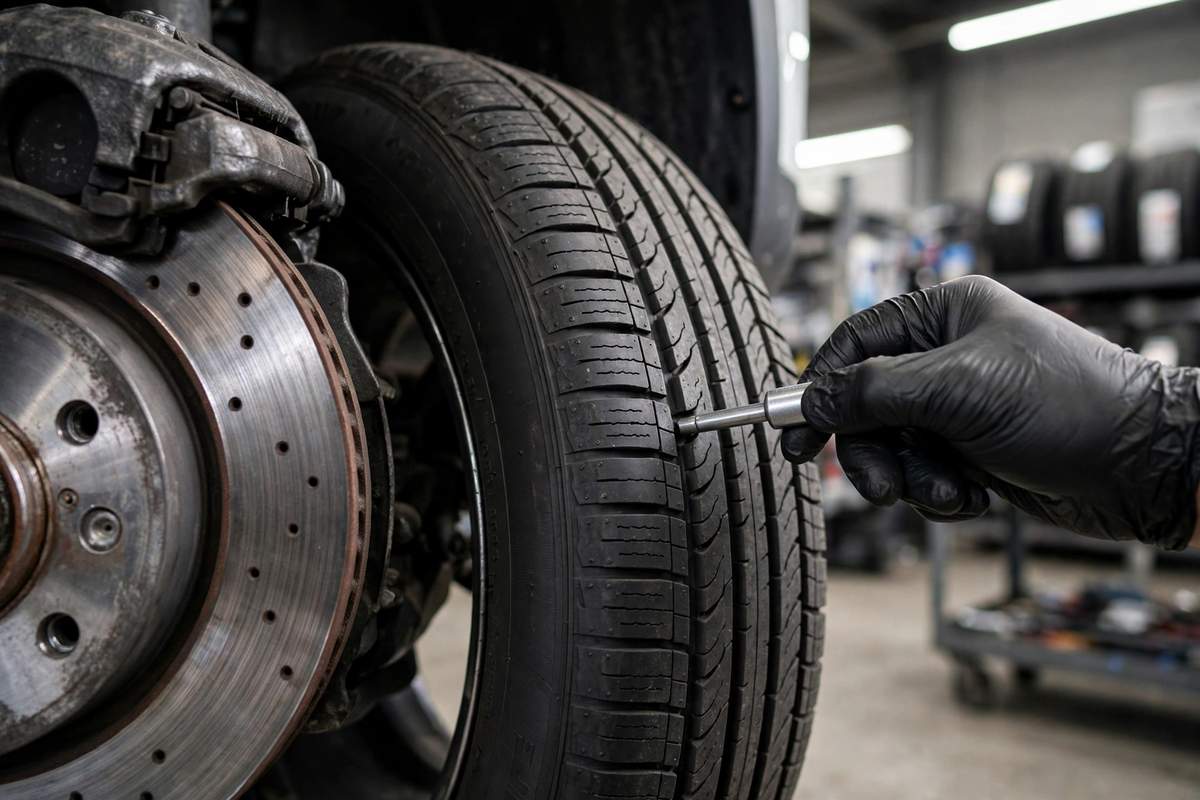
The inspector measures tread depth with a gauge at several points across each tire. The common pass mark is 4/32 of an inch, which is twice the legal minimum in most states. Tires at 3/32 or below will almost certainly be written up. Uneven wear matters too. A tire with plenty of tread in the center but worn edges from bad alignment can fail the check.
You can check this yourself with a tread depth gauge from any auto parts store for a few dollars, or with the classic quarter test. Insert a quarter upside down into the tread. If you can see the top of Washington’s head, you are at or below 4/32 and should start pricing replacements. This is also one of the key items on any lease return checklist, so check it early enough to act.
Matching Tires
All four tires generally need to match in size, type, and speed rating, and many inspectors want the same brand and model as well. A common failure is the single replaced tire. You got a flat in year two, the shop installed whatever was in stock, and now one tire does not match the other three. Even with perfect tread, that mismatch can be written up.
Damage
Sidewall cuts, bulges, large plugs, and punctures in the sidewall all count as damage regardless of tread depth. A bulging sidewall is also a safety issue, so replace that tire immediately for your own sake, not just for the lease. Curb damage to the tire itself, as opposed to the wheel, is judged the same way.
The Spare
Do not forget the spare. If your car came with one, it needs to be present, inflated, and serviceable. A missing spare, jack, or lug wrench shows up as missing equipment on the lease end inspection report, and the charge is rarely small.
The Math: Replace Them Yourself or Pay the Charge
This is where most lessees can save real money. Leasing company tire charges typically run 150 to 300 dollars per tire, based on dealership retail prices for original equipment tires. A full set of four can easily reach 600 to 1,200 dollars on the final bill.
Now price the alternative. A set of four reputable tires in the correct size and speed rating often costs 400 to 800 dollars installed at an independent tire shop or warehouse club, and budget friendly options that meet the spec can run even less. If your tires fail the standard, buying a set yourself usually saves you 200 to 500 dollars compared to the lease charge.
The math flips in a few cases. If only one tire is marginal and the rest pass, replacing just that one tire with a matching model might cost 120 to 200 dollars, still cheaper than the per tire charge. If your car uses an unusual size or run flat tires that cost 300 dollars each at retail, the leasing company charge might be close to what you would pay anyway. Always get a real quote before deciding. The excess wear and tear standards explain how tire charges fit into the overall final bill so you can weigh the total picture.
Which Tires to Buy If You Replace
You do not need the most expensive tire on the shelf. You need a tire that meets the contract spec: correct size, correct load index, correct speed rating, and the right type for the season you are returning the car in. A quality mid range tire from a known brand satisfies every inspector.
Match all four if you are replacing the set, and match the odd one out as closely as possible if you are replacing a single tire. Keep the receipt. If any question comes up about the tires, a receipt showing the correct size and speed rating ends the discussion. Avoid used tires unless you can verify the tread depth and confirm they match your existing set, because a mismatched used tire just trades one problem for another.
Tire Situations That Always Cost You
A few tire scenarios have no cheap escape. Driving on a mismatched spare or a donut for weeks wears the other tires unevenly and can damage the drivetrain on all wheel drive cars, which creates charges far beyond tires. Ignoring a bad alignment for the last year of the lease wears the inside edges bald while the centers look fine, and the inspector measures the worn spots.
Aftermarket wheels and tires are another trap. If you swapped the originals for a custom setup, the original size wheels and tires need to go back on before turn in. Returning the car on aftermarket wheels, even expensive ones, is treated as missing original equipment plus nonconforming tires.
Smart Moves Before Turn In
Check your tires 60 days before the lease ends, not six. That gives you time to shop for deals, watch for rebates, and schedule the installation without rushing. Rotate your tires if they are wearing unevenly and there is still time to even them out. Keep them properly inflated, since underinflation accelerates edge wear in the final months.
When you get the pre inspection, ask specifically about the tires and write down the tread measurements. Then get one quote from an independent shop and compare it against the leasing company’s tire charge schedule. In most cases the independent shop wins by a comfortable margin, and you drive to the final inspection knowing the tire question is already settled.