A Final Reminder Letter is a written notice sent to remind someone about an outstanding obligation. This could be a payment, a deadline, or any other important task that needs attention. Its purpose is to prompt action and ensure that the recipient understands the urgency of the situation.
In this article, we will provide various templates and examples of Final Reminder Letters. These samples will help you craft your own letter quickly and easily. Whether you need to remind a client or a colleague, you will find the right words here.
Using our templates, you can save time and avoid stress. Each example is designed to be clear and effective. You can customize them to fit your specific needs and make your reminders more impactful.
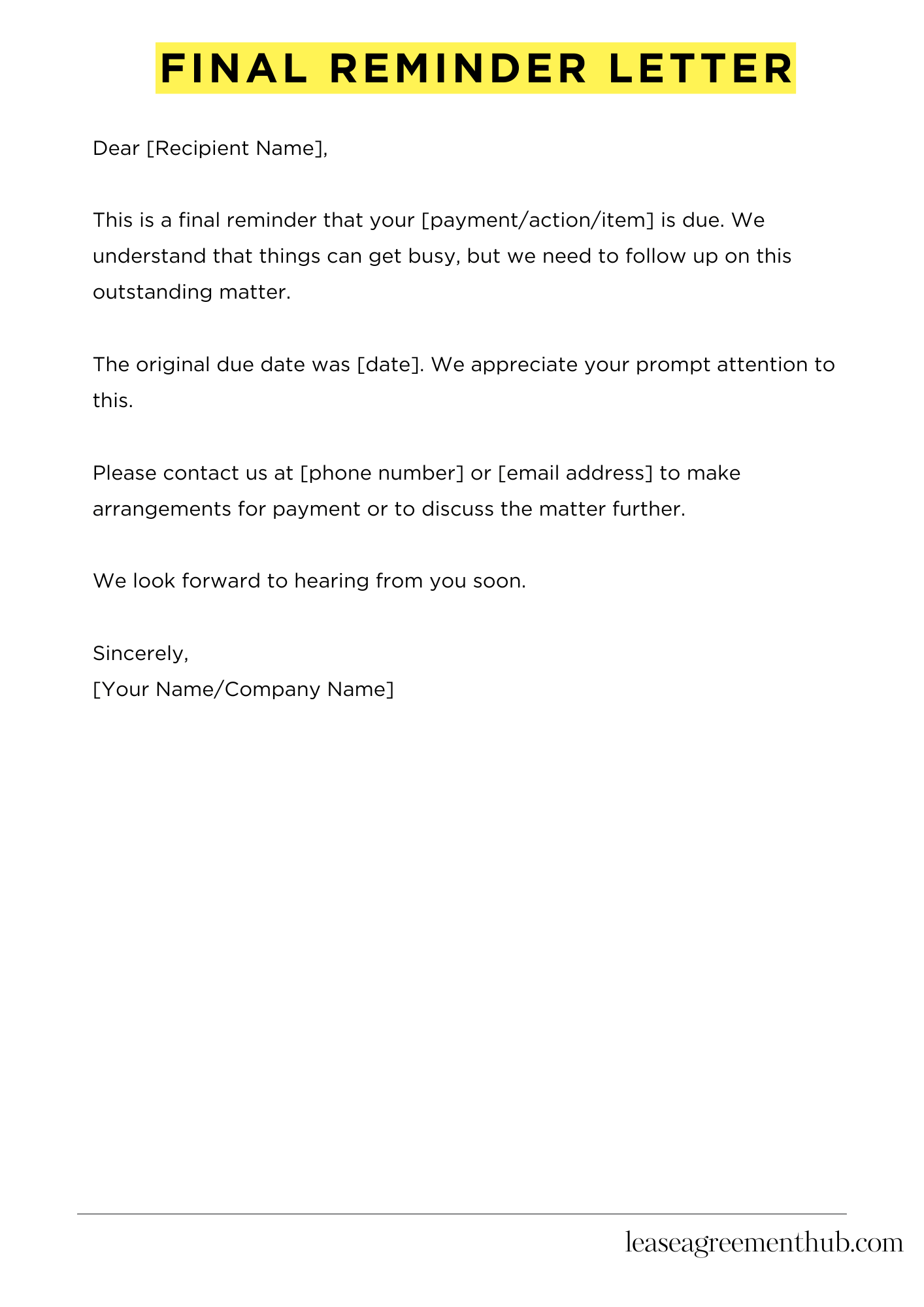
Final Reminder Letter
Dear [Recipient Name],
This is a final reminder that your [payment/action/item] is due. We understand that things can get busy, but we need to follow up on this outstanding matter.
The original due date was [date]. We appreciate your prompt attention to this.
Please contact us at [phone number] or [email address] to make arrangements for payment or to discuss the matter further.
We look forward to hearing from you soon.
Sincerely,
[Your Name/Company Name]
How to Write a Final Reminder Letter
Sending a final reminder letter is a crucial step in the debt collection process. It signifies that you’ve exhausted all other options and are prepared to take further action. This letter should be clear, concise, and persuasive, leaving no room for ambiguity. It’s your last chance to encourage the debtor to settle their outstanding balance before you move forward with more aggressive measures.
1. Start with a Professional Greeting
Begin your letter with a formal salutation, addressing the debtor by name. This establishes a professional tone and shows that you are taking their situation seriously. Avoid using informal language or slang. Stick to a clear and concise writing style.
2. Clearly State the Purpose of the Letter
Don’t beat around the bush. State the purpose of the letter upfront. This is your final reminder about the outstanding balance. Be specific about the amount owed, the invoice number, and the due date. This ensures that the debtor understands exactly what they are being asked to pay.
3. Highlight the Consequences of Non-Payment
This is where you need to be firm but fair. Explain the consequences of continued non-payment. Outline the next steps you will take, such as sending the debt to a collection agency or pursuing legal action. Be specific about the timeline and the potential impact on the debtor’s credit score.
4. Provide a Clear Call to Action
Don’t leave the debtor guessing. Tell them exactly what you want them to do. Provide clear instructions for making payment, including the payment method, contact information, and deadline. Make it easy for them to take action.
5. End with a Professional Closing
Conclude your letter with a professional closing, such as “Sincerely” or “Best regards.” Include your name and contact information. This provides the debtor with a way to reach you if they have any questions or need further clarification.
Remember, a well-written final reminder letter can be a powerful tool in the debt collection process. By following these steps, you can increase your chances of receiving payment without resorting to more drastic measures.
Related: