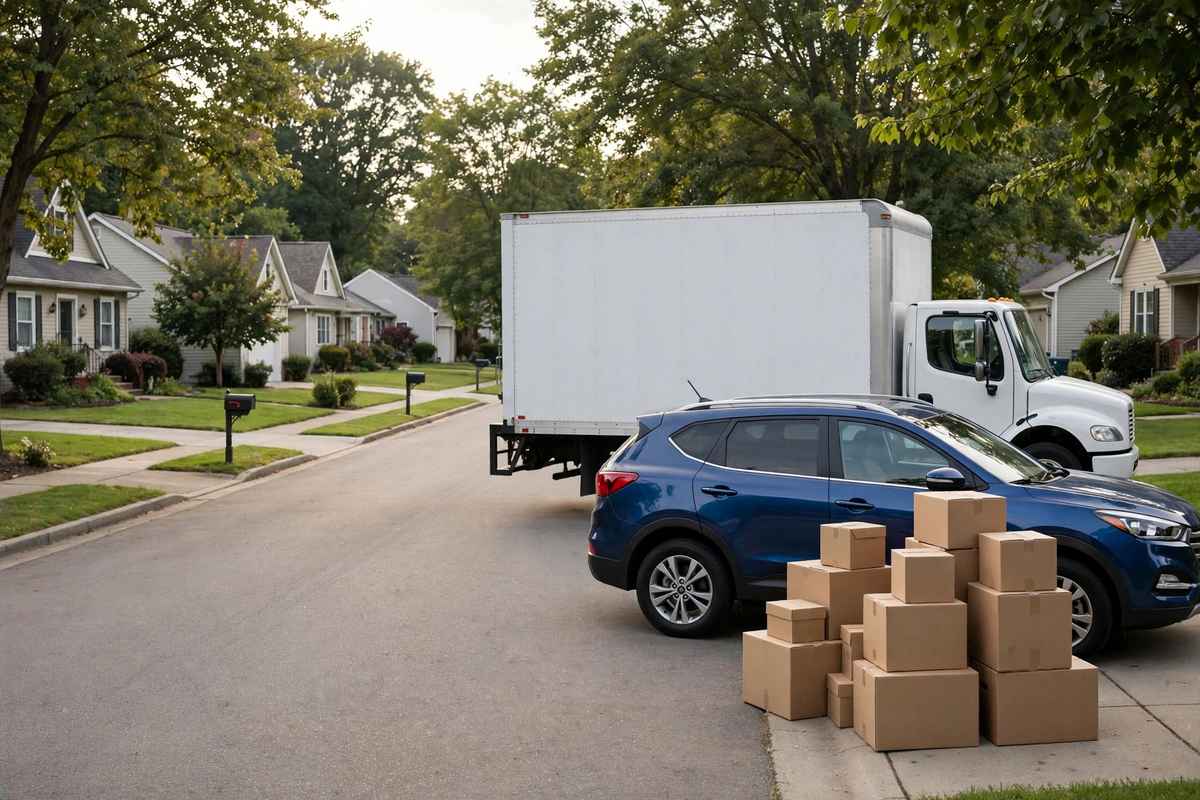
A new job, a family move, or just a change of scenery: relocating to another state is complicated enough without your car lease adding to the stress. The good news is that moving with a leased car is a solved problem. Leasing companies handle it every day, and as long as you follow the right sequence, the move is mostly paperwork.
The bad news is that doing it in the wrong order can cost you money and create real headaches. Registering in the wrong state, missing a tax bill, or letting your old registration expire before the new one is ready are all avoidable mistakes. Here is the step by step process for moving to another state with a leased car, in the order you should actually do things.
Step One: Call Your Leasing Company Before You Move
This is the single most important step, and it should happen weeks before moving day. Your leasing company holds the title to your leased car, and your new state’s motor vehicle agency will need that title, or documentation from the title holder, to register the vehicle. Only the lessor can provide it, so they have to be in the loop from the start.
When you call, ask three specific questions. First, what is their process for out of state moves, and what paperwork will they send to the new state’s agency? Second, do they charge an administrative fee for the transfer? Third, does your lease restrict moves to certain states? Most major lessors allow moves anywhere in the country, but a few have restrictions, and discovering one after you have already relocated is a terrible surprise. Get the answers in writing or note the representative’s name and the date of the call.
Re-Registering the Car in Your New State
Every state requires you to register your vehicle within a certain window after establishing residency, typically thirty to ninety days. With a leased car, the process has one extra layer: because you do not hold the title, the new state’s agency usually works directly with the leasing company’s title department. In many cases the lessor mails the title to the new state’s agency or provides a certified copy.
Start this process as soon as you have a new address. You will generally need your lease agreement, proof of insurance with the new address, your new driver’s license or proof of residency, and whatever title documentation the lessor provides. Some states also require a vehicle inspection or emissions test before registration. Do not let your old state’s registration lapse while you wait. Keep it current until the new plates are in your hands.
How Taxes Change When You Move
Taxes are where interstate moves get expensive if you are not prepared. States handle car lease taxation very differently. Some tax the monthly payment, some tax the full vehicle price upfront, and a few charge annual personal property tax on vehicles on top of everything else. Moving from one system to another can create new bills you did not expect.
The most common surprise is states that levy property tax on leased vehicles. Virginia, for example, is well known for annual car taxes that surprise newcomers. Your new state may also require you to pay sales tax on the remaining lease payments, even if your old state already collected tax upfront. There is no national rule here, which is why our guide to sales tax on car leases by state is worth reading before you move. A quick call to the new state’s department of revenue can also clarify exactly what you will owe.
Updating Your Insurance for the New Address
Your auto insurance follows the car, and the car is moving, so your policy needs to move too. Insurance rates are based heavily on where the vehicle is garaged, and your new zip code will change your premium, sometimes significantly. Update your address with your insurer as soon as you know your move date, and get a quote for the new location in advance so there are no budget surprises.
Remember that the lease’s insurance requirements travel with you. Full coverage, the contract’s liability limits, and the deductible cap all still apply in the new state, and the leasing company must remain listed on the policy. Review the requirements in our guide to full coverage insurance rules for leased cars before you shop for a new policy, especially if you are switching insurers as part of the move. A lapse in coverage during the transition can trigger the same penalties as a lapse at any other time.
What If the Leasing Company Objects to the Move
Outright refusal is rare with major lessors, but restrictions do exist. Some leases, particularly from smaller banks or special programs, limit where the vehicle can be registered. Military members have additional protections here: the Servicemembers Civil Relief Act generally allows active duty service members to keep their home state registration when relocating on orders, which sidesteps the whole transfer process.
If your lessor does restrict the move, you have options, but none are free. You may be able to transfer the lease to someone else, buy out the lease early, or in the worst case, terminate early and pay the associated costs. This is why the advance phone call matters so much. Finding out about a restriction with months of lead time gives you room to plan. Finding out at the DMV counter does not.
Timing Tips to Avoid Double Costs
A little timing strategy saves real money. If your old state’s registration renewal is coming due right around your move, check whether you can get a partial refund for unused months; some states offer them, some do not. Similarly, find out whether your new state prorates its registration fees or charges a full year regardless of when you register.
Insurance timing matters too. Do not cancel the old policy until the new one is active, and make sure the garaging address change takes effect on the right date. Overlapping coverage for a few days is cheap insurance against a gap. And if your move coincides with the end of your lease term, consider whether it makes more sense to handle the next lease from your new state rather than moving a car you are about to return.
Paperwork Checklist for the Move
Keep all of these together in one folder, physical or digital, until the move is complete. You will need your lease agreement, the lessor’s contact information and your account number, proof of insurance showing the new address, your new driver’s license or residency documents, the title transfer paperwork from the leasing company, and receipts for any fees paid. If your new state requires an inspection or emissions test, keep that certificate too.
It also helps to keep a simple log: the date you notified the lessor, who you spoke with, the date you applied for new registration, and confirmation numbers for every fee. If anything goes sideways, a paper trail turns a frustrating phone call into a quick resolution. Most moves go smoothly, but the ones that do not are almost always the ones with missing documentation.
The Bottom Line on Moving With a Leased Car
Moving to another state with a leased car is a paperwork project, not a crisis. Notify your leasing company early, re-register within the new state’s deadline, budget for the new state’s tax treatment, update your insurance address, and keep your documents organized. Follow that sequence and the car fades back into the background of the move, which is exactly where it belongs.