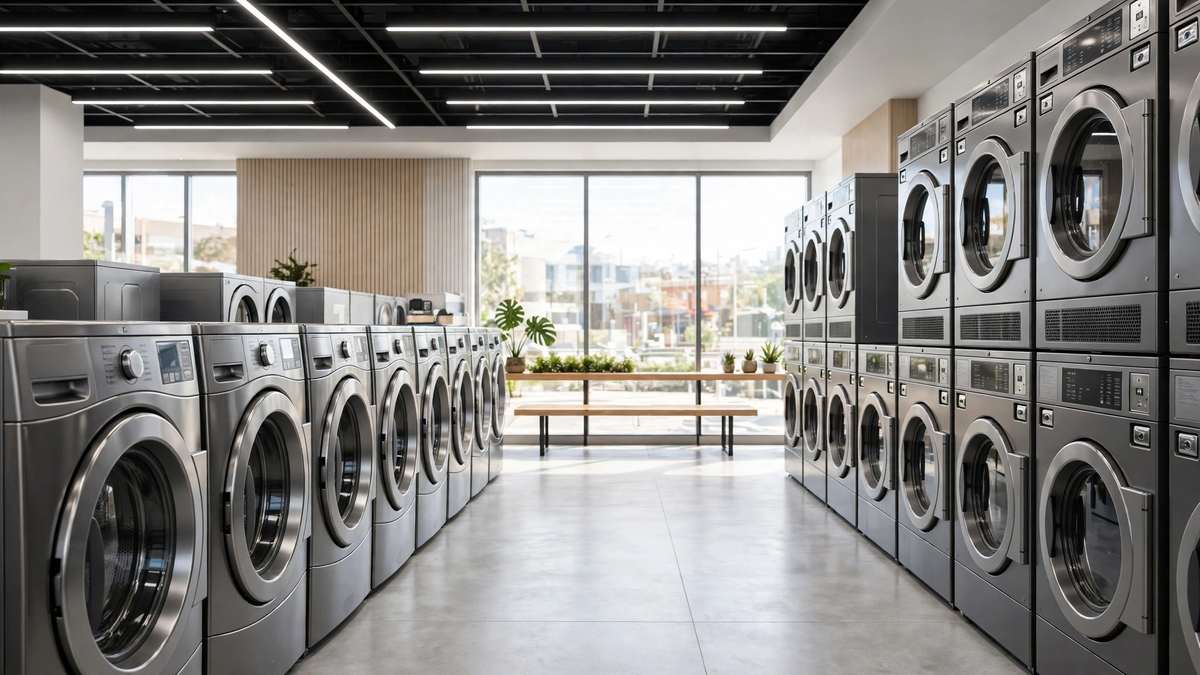
Commercial washers and dryers are among the most expensive equipment in any small business. A single commercial washer-extractor can cost $5,000 to $20,000, and a full laundromat build-out with 20 to 40 machines can easily run $200,000 to $500,000. Few owners pay that in cash, which is why equipment leasing is so common in this industry.
Leasing lets you open with modern, efficient machines without draining your capital before the first customer walks in. Newer machines also use less water and energy, which directly lowers your utility bills, the largest operating expense in most laundromats. This guide explains how laundromat equipment leasing works, what it costs, and how to structure a deal that protects your cash flow.
We will walk through the lease process from quote to installation, compare the main lease structures, cover qualification and negotiation, and flag the mistakes that hurt laundromat owners most. The same principles apply whether you are building a new store or replacing aging machines in an existing one.
What Equipment Laundromats Typically Lease
The core of any laundromat lease is the washers and dryers. Top-load washers, front-load washer-extractors, and stacked dryer units make up the bulk of the financed amount. Vendors usually quote the full package, including delivery, installation, and sometimes the card or coin payment systems.
Water heating equipment is another common lease item. High-efficiency water heaters or boiler systems cost thousands of dollars and are essential to the operation.
Payment and management systems are increasingly bundled into leases. Card readers, mobile payment terminals, and remote monitoring systems that track machine usage and revenue can be financed alongside the machines.
How Laundromat Equipment Leasing Works
You start by getting a quote from an equipment distributor. Laundromat equipment is sold through specialized distributors who also handle installation and service. The leasing company pays the distributor, and you sign a lease agreement covering the equipment, delivery, and installation.
Terms for laundromat equipment typically run 60 to 84 months, longer than most other small business equipment. The machines have long useful lives, often 10 to 15 years, so lessors are comfortable stretching payments. Longer terms mean lower monthly payments, which helps during the ramp-up period.
Installation coordination is critical. Washers need proper plumbing, drainage, gas or electrical hookups, and venting for dryers. The distributor usually manages the installation, but you need the store build-out ready on schedule.
Because the equipment serves as collateral, laundromat leases are often easier to obtain than other forms of business financing.
Operating Leases for Laundromat Equipment
An operating lease lets you use the machines for a fixed term, then return, renew, or buy them at fair market value. This structure is less common in laundromats than in other industries because the machines hold value so well. Still, it can make sense if you want the option to upgrade to newer, more efficient models in five years.
The trade-off is cost. Operating lease payments may be lower month to month, but buying the machines at fair market value at the end often erases the savings. Only choose this structure if you genuinely plan to refresh the equipment rather than keep it.
Finance Leases and Dollar Buyouts
Most laundromat owners choose a finance lease with a dollar buyout. You make monthly payments over 60 to 84 months, and at the end the equipment is yours for a nominal amount.
Confirm the buyout terms before you sign. A clear dollar buyout clause for leased equipment should spell out the exact amount and any conditions. Put it in writing, because verbal promises from salespeople do not hold up at the end of a seven-year term.
What Laundromat Leasing Costs
Monthly payments on a 60 to 84 month finance lease typically run 1.5 to 2.5 percent of the equipment value. A $300,000 machine package might cost $4,500 to $7,500 per month. The longer term keeps payments manageable, but you pay more in total finance charges than on a shorter lease.
Watch for soft costs folded into the lease. Freight, rigging, installation labor, and sales tax can add 10 to 15 percent to the financed amount.
Utility efficiency should factor into your cost comparison. Newer washer-extractors use significantly less water per cycle than machines from 15 years ago. The monthly savings on water and sewer bills can offset a meaningful part of the lease payment. Ask the distributor for projected utility costs for the specific models you are considering.
As with any equipment deal, compare the total of all payments plus fees and the buyout against the cash price. Then weigh that premium against the value of keeping your capital free. For most laundromat owners, the ability to open with modern machines and a cash cushion is worth the financing cost.
Advantages and Drawbacks for Laundromat Owners
The biggest advantage is opening with efficient, reliable machines. New equipment breaks down less, which means fewer emergency service calls and happier customers. In a business where a broken washer is lost revenue, reliability has a direct dollar value.
Leasing also aligns your costs with your revenue. Instead of spending $300,000 before you earn a dollar, you pay monthly as customers come through the door. This matching of cost to cash flow is the core reason leasing dominates laundromat financing.
The drawbacks are the total cost premium and the long commitment. A seven-year lease is a long time in a business that depends on location demographics and competition. If a competitor opens nearby or the neighborhood changes, you still owe every payment.
Tax treatment matters here too, since the amounts are large. Lease payments are generally deductible, but the structure of the lease changes how and when you claim the deduction. A good lease versus buy tax write-off comparison will help you and your accountant choose the structure with the best after-tax cost.
Qualifying for a Laundromat Equipment Lease
Lessors look at personal credit, business history, the store location, and projected cash flow. Because the equipment holds its value well, laundromat leases are approved more readily than many other equipment types. Strong applications can get approved in a few days.
New owners should be ready for a personal guarantee. This is standard for small business equipment leases, and laundromats are no exception. Before signing, understand exactly what the guarantee covers. Learning the basics of a lease guaranty versus a surety bond can clarify which type of security the lessor is actually asking for.
Prepare a complete application package. Bring personal tax returns, bank statements, the equipment quote, your store lease, and a simple business plan with revenue projections. Distributors who work with lessors regularly can tell you exactly what a particular finance company wants to see.
If your credit is weak, a larger down payment can salvage the deal. Putting 10 to 20 percent down reduces the lessor’s risk and often unlocks better terms. It also lowers your monthly payment, which helps the store’s cash flow from day one.
Negotiating Terms That Protect Your Cash Flow
Negotiate the payment start date around your opening. Many lessors offer 60 to 90 day deferred starts, which means no payments while the build-out finishes and the store ramps up. This is one of the most valuable concessions you can get, so ask for it explicitly.
Confirm the maintenance and warranty terms. Commercial washers need periodic service, and someone has to pay for it. Manufacturer warranties usually cover the first year or two, but after that you need a service plan or a reliable local technician. Get service costs in writing before you sign the lease.
Check the insurance requirements early. The lessor will require coverage on the equipment with them named as loss payee. Standard insurance requirements for commercial leases usually cover what the equipment lessor will ask for.
Get competing quotes from at least two or three lessors or distributor finance programs. Laundromat distributors often have relationships with multiple finance companies, and the pricing varies.
Mistakes Laundromat Owners Should Avoid
The most expensive mistake is buying the wrong machine mix. Too many small washers and not enough large-capacity machines leaves money on the table, since big machines command higher vend prices. Study the demographics of your location and size the mix to what your customers actually wash.
Underestimating utility costs is another common error. Water, sewer, gas, and electric bills are the largest expense in most laundromats. Model them carefully with the distributor’s efficiency figures, and build a cushion into your projections.
Skipping the end-of-term review is a quiet money loser. Know whether your lease renews automatically, what notice is required, and what the buyout costs. Mark the key dates when you sign, because after seven years nobody remembers the notice window without a reminder.
Finally, do not sign a lease tied to a single service provider without comparing alternatives. Some distributors bundle financing with exclusive service contracts at above-market rates. You can often get better service pricing by separating the equipment lease from the maintenance agreement, so price them independently before you bundle.