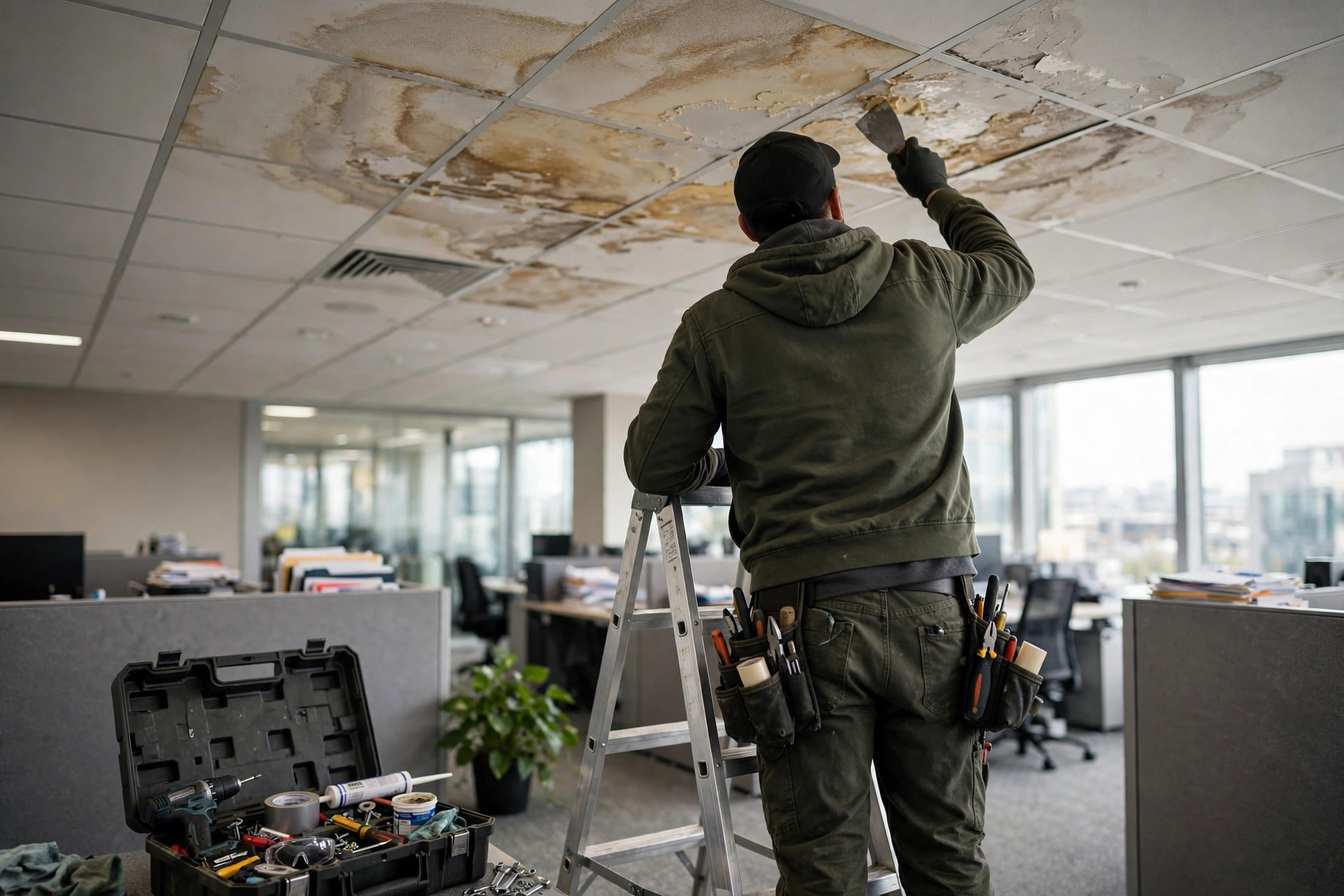
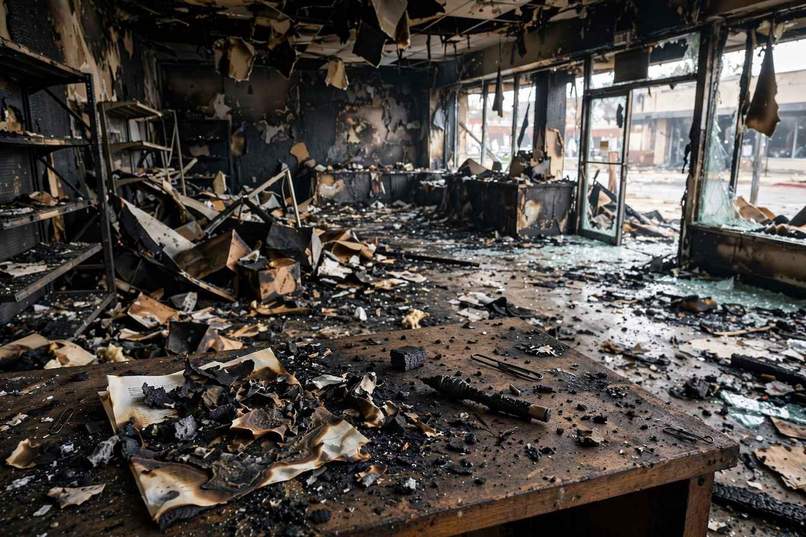
The roof leaks over your inventory every time it rains. You have sent four written repair requests over two months. The landlord promises to get to it, but nothing happens. Your goods are getting damaged, and you are wondering: can you just hire a roofer yourself and deduct the cost from next month’s rent?
In many cases, yes. Self-help repair rights let commercial tenants fix problems the landlord neglects and recover the cost, sometimes by deducting it from rent. But these rights come from specific lease language or state statutes, and using them incorrectly can trigger default notices or eviction proceedings. This guide explains how self-help works, when tenants can use it, and how to exercise it safely.
What Self-Help Repair Rights Are
Self-help means the tenant takes action the lease assigns to the landlord: hiring contractors, making repairs, and billing the landlord or offsetting the cost against rent. The right can come from an express lease provision, from a state repair-and-deduct statute, or from common law in limited circumstances.
Commercial leases differ from residential leases here. Residential tenants in most states have statutory repair rights that cannot be waived. Commercial tenants generally have only what the lease gives them, plus whatever their state’s commercial statutes provide, which is often nothing. That makes the lease negotiation critical: if the right is not in the lease, the tenant probably does not have it.
Lease-Based Self-Help Provisions
Well negotiated commercial leases include a self-help clause with a clear procedure. The typical structure: the tenant gives written notice of the needed repair, the landlord has a defined cure period, often 30 days, or a shorter period for emergencies, and if the landlord fails to act, the tenant may perform the repair and recover the cost.
Tenants should negotiate four elements. First, a cure period that fits the problem: 30 days for routine repairs, but 48 to 72 hours for emergencies affecting health, safety, or business operations. Second, a clear cost recovery mechanism: direct reimbursement within a set time, rent offset, or both. Third, a reasonable cap on the tenant’s spending authority, high enough to cover real repairs. Fourth, protection against retaliation: exercising self-help cannot be deemed a lease default.
Emergency vs Routine Repairs
The distinction between emergency and routine repairs drives the entire self-help process. Emergencies, like burst pipes, electrical hazards, or security failures, justify immediate action with minimal notice. Routine repairs, like cosmetic issues or non-urgent maintenance, require the full notice and cure procedure.
Tenants should define emergencies in the lease rather than leaving the term vague. A good definition covers conditions threatening health or safety, risking significant property damage, or preventing the tenant’s business operations. Our guide to emergency maintenance responsibilities helps tenants classify problems correctly before acting.
The Notice and Cure Process
Self-help rights are procedural rights: skipping the steps forfeits the protection. The standard process has five steps. First, deliver written notice to the landlord describing the problem and the repair needed, sent to the notice address in the lease. Second, allow the cure period to run, documenting the landlord’s inaction.
Third, if the landlord has not acted, send a second notice stating the tenant’s intent to exercise self-help. Fourth, hire licensed, insured contractors and keep every receipt. Fifth, submit the costs to the landlord with a demand for reimbursement or a notice of rent offset, depending on what the lease allows.
Documentation at every step is essential. Photos of the problem, copies of notices with delivery proof, contractor bids showing reasonable pricing, and receipts for completed work form the record that justifies the tenant’s actions if the landlord later disputes them. Tenants should follow the same discipline recommended in our guide to writing maintenance requests that work, since the paper trail starts with the first request.
Rent Offset as a Recovery Method
When the lease permits it, rent offset is the most practical recovery method: the tenant deducts the repair cost from the next rent payment. It avoids chasing the landlord for reimbursement and gives the tenant immediate recovery. But it must be authorized, either by the lease or by statute.
Unauthorized rent deductions are dangerous. A tenant who withholds rent without a clear right risks a default notice, late fees, and eviction proceedings. The deduction must also be reasonable in amount: inflated or unnecessary repairs invite disputes. Tenants considering offset should review the repair and deduct remedy to understand how courts evaluate these claims.
Caps and Limitations
Most self-help provisions cap the tenant’s spending, commonly at one month’s rent or a fixed dollar amount per incident. Caps protect landlords from open-ended tenant spending, but tenants should make sure the cap covers realistic repair costs. A 2,500 dollar cap is useless against a 15,000 dollar roof repair.
Tenants should also check whether the cap applies per incident or per year, and whether emergency repairs have a higher cap or none at all. For major building systems, tenants may want the right to perform repairs above the cap with the landlord’s consent, which cannot be unreasonably withheld.
Statutory Self-Help Rights
Some states give commercial tenants statutory repair rights, but these are the exception. Where they exist, they usually mirror residential protections: notice, a cure period, and a capped deduction. Tenants should research their state’s commercial landlord-tenant statute before assuming any statutory right exists.
Even where statutes are silent, tenants may have common law options. If the landlord’s failure to repair breaches the lease or the implied covenant of quiet enjoyment, the tenant may have damage claims. But common law self-help, repairing without clear authorization and deducting the cost, is risky and should only follow legal advice.
Repairs Tenants Should Never Self-Help
Self-help has boundaries. Tenants should not perform structural repairs, modify building systems like electrical panels or fire suppression, or do work requiring permits in the landlord’s name, without explicit authorization. These actions create liability and code compliance risks that dwarf the original problem.
Tenants should also avoid self-help for problems they caused. If the tenant’s negligence or misuse created the condition, the repair is the tenant’s obligation anyway, and no offset right applies. Honest assessment of causation prevents disputes where the tenant bills the landlord for its own damage.
Negotiating Self-Help Into Your Lease
Tenants negotiating a new lease should treat self-help as a standard ask, not an adversarial demand. Frame it as a business continuity provision: both parties benefit when urgent problems get fixed quickly. Propose the five-step procedure above with reasonable cure periods and caps, and most landlords will engage.
Key fallback positions if the landlord resists rent offset: direct reimbursement within 30 days of invoicing, with interest on late payment. If the landlord resists any self-help right, the tenant should at least negotiate shorter landlord cure periods and a clear statement of landlord repair deadlines, so that failure to act is documented and actionable.
Self-help is a powerful tool, but it is a procedural one. The tenants who use it successfully are not the ones who act fastest, but the ones who document best: written notices, running cure periods, licensed contractors, and clean accounting. Build the right into your lease, follow the process exactly, and self-help becomes what it should be, a practical remedy for landlord inaction rather than a gamble with your tenancy.