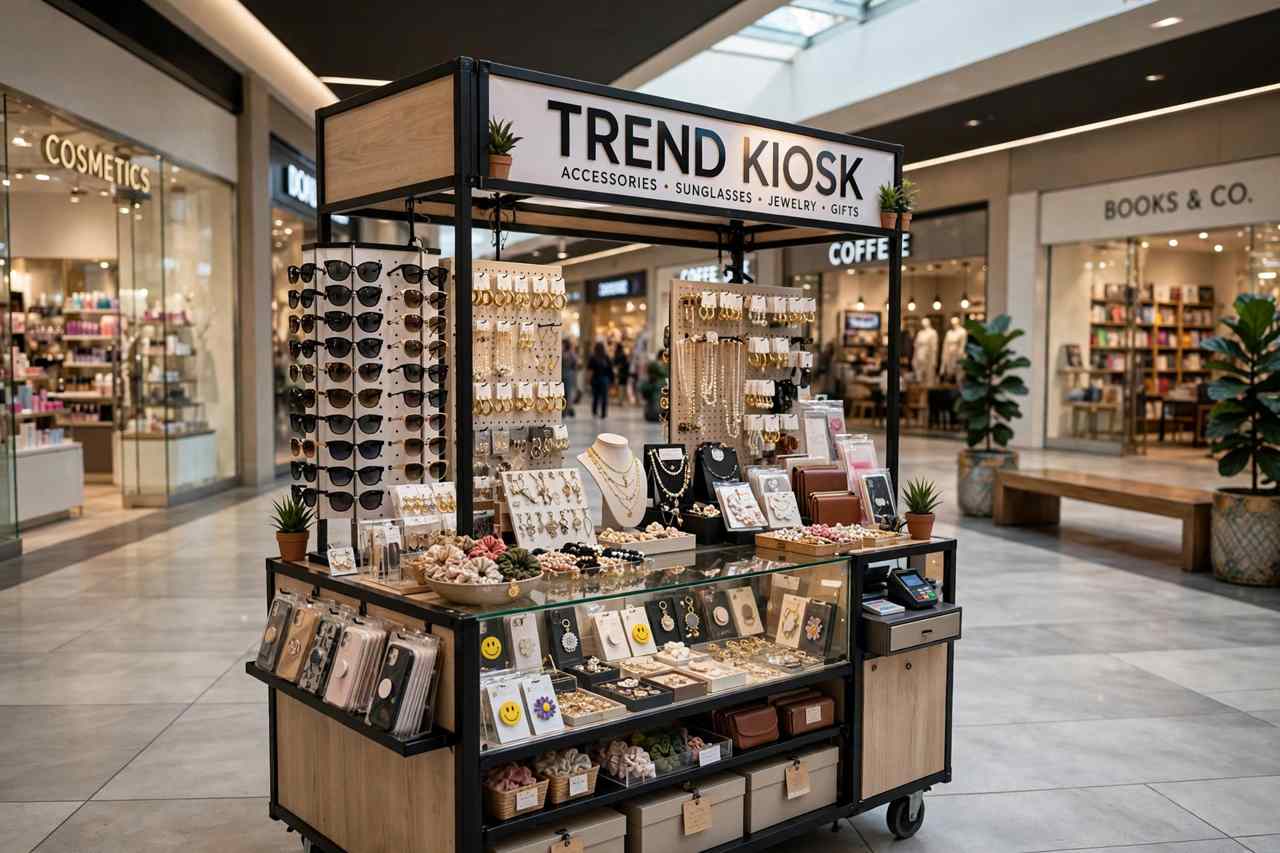
Walk through any regional mall and you will see them: small kiosks and carts selling phone accessories, jewelry, pretzels, and seasonal gifts from the middle of the walkways. For mall owners, these specialty leasing units generate significant income from otherwise unused common area. For inline store tenants, they can be a source of friction, especially when a kiosk sells products that compete with the stores paying full rent.
Kiosk restrictions in mall leases attempt to balance these interests. Landlords want the freedom to license carts and kiosks. Inline tenants want protection from direct competition steps from their doors. The resulting lease provisions are among the most negotiated in mall leasing, and both sides need to understand how they work.
Why Malls License Kiosks
Common areas in malls, the walkways, courts, and corridors, represent leasable space that traditional storefronts cannot use. Kiosk licenses convert that space into revenue, often at high rents per square foot because the kiosks benefit from the mall’s full foot traffic. For many centers, specialty leasing is a meaningful line item in the operating budget.
Why Inline Tenants Want Restrictions
Inline tenants pay base rent, common area charges, and often percentage rent for their storefronts. When a kiosk selling similar merchandise opens directly in front of their store, they see a competitor that pays a fraction of their occupancy cost for superior visibility. The resentment is understandable.
Beyond competition, kiosks can create operational issues: crowds blocking storefronts, noise, cooking odors, and visual clutter that cheapens the center’s image. Upscale tenants are particularly sensitive to cart programs that feel like a flea market. Restrictions give tenants a say in how the common areas in front of their stores are used.
Typical Kiosk Restriction Provisions
The most common restriction is a competitive use limitation. The lease may prohibit the landlord from licensing kiosks within a certain distance of the tenant’s store that sell the tenant’s protected product categories. A jewelry store might block jewelry kiosks within 100 feet of its storefront, for example.
Distance based restrictions are a compromise. The landlord keeps the right to license kiosks elsewhere in the center, and the tenant gets a buffer zone around its entrance. The buffer distance is negotiable, and tenants with strong leverage sometimes secure center wide restrictions on their core product categories.
Product Category Definitions
As with exclusivity clauses generally, the definition of the restricted category determines the provision’s value. A shoe store that blocks only “shoe kiosks” has less protection than one that blocks “footwear and accessories.” Tenants should define categories to match their actual merchandise mix.
Landlords resist broad definitions because they shrink the pool of potential kiosk operators. The negotiation typically produces a list of specific product categories, sometimes with a primary business test similar to the one used in exclusivity clauses. Our guide to enforcing exclusivity against landlords covers the enforcement mechanics that apply here as well.
Common Area Rights and Kiosk Placement
Tenants sometimes assume they control the common area in front of their stores. They do not. Common areas belong to the landlord, and the lease typically reserves the landlord’s right to use them for kiosks, seating, displays, and events. Kiosk restrictions are exceptions to that reserved right, and they apply only as written.
Tenants negotiating new leases should read the common area provisions carefully and understand exactly what the landlord retains. Our overview of common area rights for tenants explains the baseline from which kiosk negotiations start.
Sight Lines and Access
Even when a kiosk does not compete directly, its placement can harm an inline tenant by blocking sight lines to the storefront or impeding customer access. Some leases give tenants approval rights over kiosk placement within a defined zone, or require the landlord to maintain clear sight lines and minimum corridor widths.
These provisions are worth negotiating for tenants whose storefront visibility drives sales. A kiosk parked directly in front of your entrance during the holiday season can cost more in lost sales than any rent concession is worth.
Signage and Appearance Standards
Many kiosk restrictions address appearance rather than competition. Leases may require kiosks near the tenant’s store to meet design standards, limit signage size and lighting, or prohibit certain types of merchandise displays. Upscale centers often impose detailed cart design guidelines across the whole property.
Tenants can also negotiate restrictions on kiosk signage that mimics their branding or creates customer confusion. A cart with a large sign advertising a competing service can divert customers who think it is affiliated with the inline store. Signage issues in the broader lease context are covered in our guide to signage rights in commercial leases.
Temporary vs Permanent Kiosks
Leases often distinguish between permanent kiosk installations and temporary carts. Restrictions may apply differently to each. A tenant might successfully block permanent competing kiosks while the landlord retains the right to allow seasonal or promotional carts.
Tenants should pay attention to how temporary is defined. A cart that operates eleven months a year under renewable 30 day licenses is temporary in name only. Negotiate a cap on the total days per year that excepted temporary kiosks can operate near your store, or require that temporary exceptions not include your protected categories at all.
Remedies When Restrictions Are Violated
Like exclusivity clauses, kiosk restrictions need remedies to be meaningful. Common remedies include rent abatement while the violating kiosk operates, the right to terminate if the violation continues beyond a cure period, and injunctive relief. Tenants should negotiate specific, self executing remedies rather than relying on general breach provisions.
Landlords should keep accurate records of kiosk licenses, including operator names, product categories, and locations. When a tenant complains, the landlord needs to determine quickly whether a violation occurred. Good records turn disputes into short conversations instead of long arguments.
Notice and Cure
Most leases require the tenant to give written notice of the alleged violation and allow the landlord a cure period, often 30 days, to remove or relocate the kiosk. Tenants should send notice promptly when a problematic kiosk appears. Waiting months to complain weakens the tenant’s position and can be treated as waiver.
Negotiating Kiosk Restrictions
Anchor and large inline tenants have the most leverage and often secure the strongest restrictions. Smaller tenants can still obtain meaningful protections by focusing on a narrow list of core product categories and a reasonable buffer zone rather than asking for sweeping prohibitions.
Timing matters. Kiosk restrictions are far easier to negotiate in the initial lease than to add later. Tenants renewing should review how the cart program evolved during the prior term and adjust the restrictions to address actual problems experienced, not just theoretical ones.
Practical Advice for Both Sides
For tenants, walk the mall before signing and note existing kiosks near the proposed space. Ask for the landlord’s specialty leasing plan and get key restrictions in writing. For landlords, administer kiosk restrictions consistently and communicate with inline tenants before placing carts near their stores. A quick heads up prevents most conflicts.
Kiosk programs work best when both sides see them as part of a healthy tenant mix rather than a zero sum fight. Clear lease language, consistently applied, lets landlords monetize common areas while giving inline tenants the protections their rent levels justify.