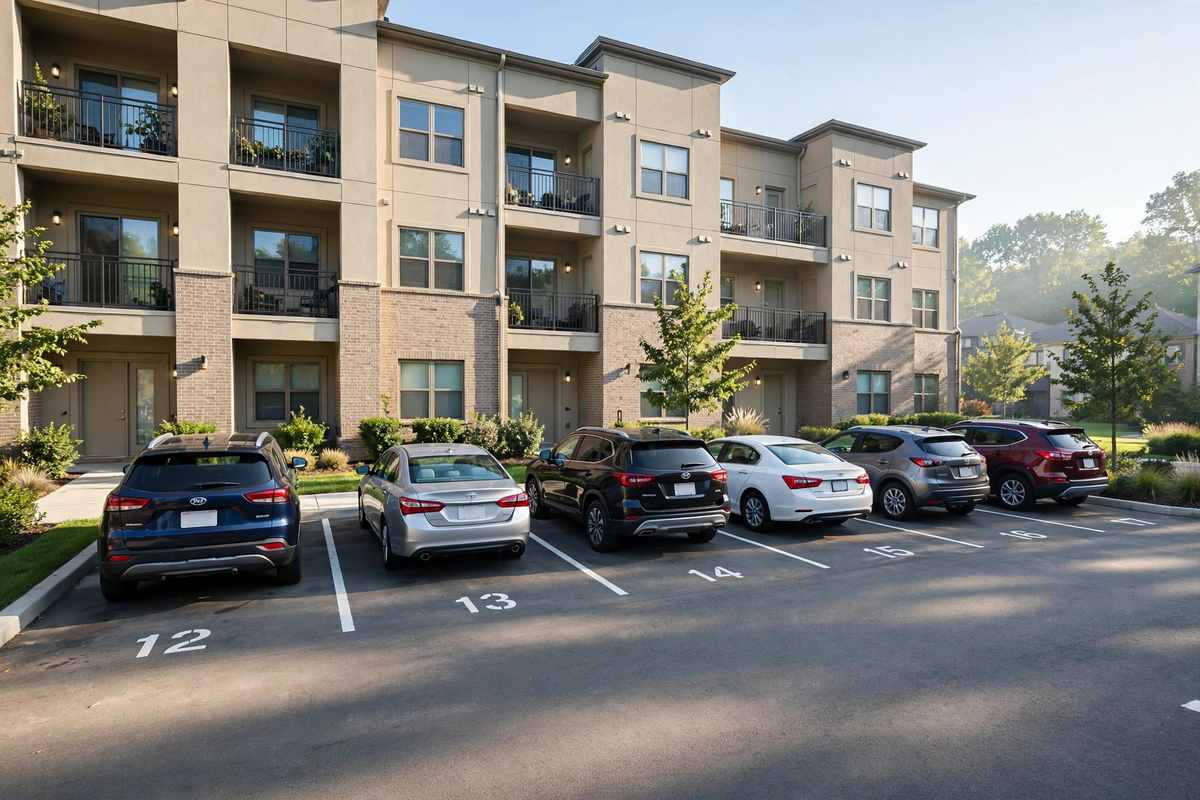
Parking can make or break a commercial location. Employees need reliable spaces every morning, customers need convenient access throughout the day, and delivery vehicles need room to maneuver. When parking falls short, a great space can become a daily frustration for everyone who uses it.
Parking ratios are the standard way landlords and tenants measure whether a property offers enough parking. Expressed as spaces per thousand square feet of leased area, these ratios give tenants a quick benchmark for comparing properties. Understanding them helps tenants negotiate for the parking they actually need.
What Is a Parking Ratio?
A parking ratio describes the number of parking spaces available relative to the amount of leased space, usually stated as spaces per 1,000 square feet. A ratio of 4 per 1,000 means a 10,000 square foot tenant is entitled to roughly 40 parking spaces. The ratio is typically calculated on rentable square footage rather than usable square footage.
Ratios can be stated in the lease or simply implied by the property’s existing parking supply. When the lease is silent, the tenant has no guaranteed number of spaces and must compete with other tenants for whatever is available. Savvy tenants ask for the ratio in writing before they sign.
Parking ratios also interact with local zoning codes, which set minimum parking requirements based on property use. A city may require a certain number of spaces per square foot for office, retail, or restaurant uses. These minimums create a floor, but market expectations often demand more than the code requires. For a broader look at how parking rights are handled in leases, see our guide to parking spot disputes and lease rights.
Typical Parking Ratios by Property Type
Office buildings generally offer between 3 and 5 spaces per 1,000 square feet in suburban markets, with urban and downtown properties often offering less due to land constraints and transit access. A ratio of 4 per 1,000 is a common benchmark for suburban office space in the United States.
Retail properties need higher ratios because customers turn over frequently. Shopping centers typically provide 4 to 6 spaces per 1,000 square feet, and grocery-anchored centers may exceed 6. Restaurants are the most parking-intensive retail use, with some cities requiring 10 or more spaces per 1,000 square feet for sit-down dining.
Industrial and warehouse properties usually have the lowest ratios, often 1 to 2 spaces per 1,000 square feet, because most of the floor area is dedicated to storage and operations rather than people. Medical office buildings sit at the other end of the office spectrum, frequently needing 5 or more spaces per 1,000 square feet to handle patient volume.
Why Ratios Vary by Market
Local transit access changes everything. A downtown office near a subway station can operate comfortably with a ratio of 2 per 1,000, while a suburban office park with no transit may need 5 per 1,000 to keep employees happy. Tenants should compare ratios against comparable properties in the same submarket rather than national averages.
Shift schedules and density also matter. A call center that seats 200 people in 20,000 square feet needs far more parking than a law firm with 40 attorneys in the same footprint. The standard ratio assumes average density, so tenants with unusually dense operations should negotiate additional spaces or reserved allocations.
How Parking Is Allocated in Multi-Tenant Properties
In most multi-tenant buildings, parking is shared on a first-come, first-served basis. The lease states a ratio or a number of spaces, but those spaces are not marked or reserved for any particular tenant. This arrangement works when the building is not fully occupied, but it can break down at peak hours in a full building.
Some tenants negotiate reserved spaces near the building entrance. Reserved spaces are often numbered or signed with the tenant’s name. Because they are scarce, landlords may charge extra for them or offer them only to larger tenants. The lease should specify the number, location, and cost of any reserved spaces.
Employee and visitor parking are sometimes separated. Visitors may be directed to a front lot while employees park in a rear lot. This split protects customer access during busy periods. Tenants should understand these rules before signing, since assigned parking rules show how allocation disputes play out in practice across property types.
Unbundled Parking and Separate Parking Charges
Some landlords unbundle parking from base rent, charging tenants a separate monthly fee per space. Unbundling is common in dense urban markets where parking is scarce and valuable. It lets tenants pay only for the spaces they need and lets landlords monetize excess capacity.
Unbundled parking can also be a surprise expense. A tenant who assumed parking was included may discover a significant monthly charge during lease negotiations. Always ask whether the quoted rent includes parking and get the parking economics in writing.
Conversely, some leases guarantee a set number of spaces at no additional charge. This is more common in suburban markets where parking is plentiful. Even when parking is free, the lease should still state the guaranteed ratio so the landlord cannot reallocate spaces later.
Guest and Customer Parking Rules
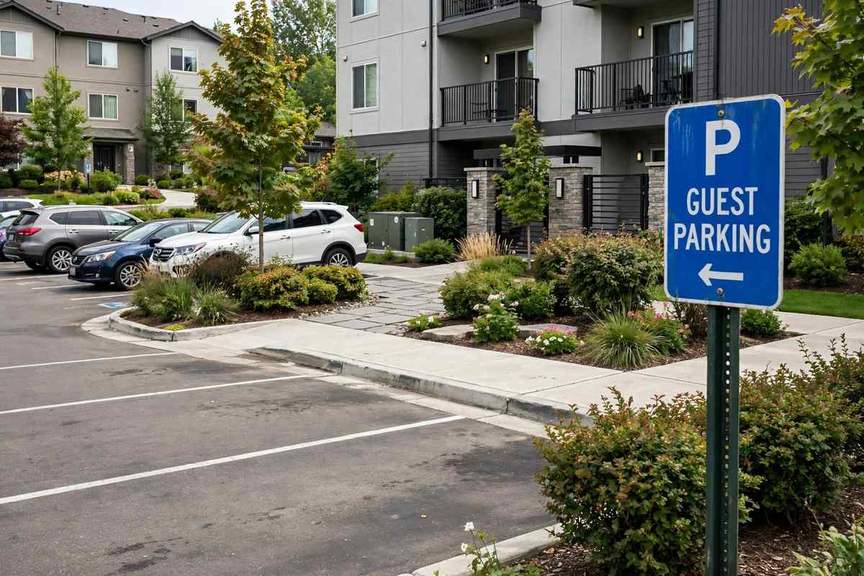
Guest parking policies affect businesses that depend on walk-in traffic. Retail and restaurant tenants need short-term spaces near the entrance that turn over frequently. Office tenants need visitor spaces for clients and job candidates. The lease should address how guest parking is managed.
Time limits, enforcement, and towing policies all matter. A shopping center that tows customer cars too aggressively can scare away business, while a center with no enforcement can fill up with employee cars from nearby offices. Tenants should review the property’s parking rules exhibit carefully.
Our article on guest parking rules in apartment complexes illustrates how enforcement disputes arise, and the same principles apply in commercial settings. Clear written rules, consistent enforcement, and fair appeal procedures protect everyone.
Parking During Construction and Special Events
Parking supply can shrink temporarily during building renovations, lot resurfacing, or adjacent construction. A lease that guarantees a ratio should also address what happens when spaces are taken offline. Tenants can negotiate for temporary replacement parking or rent abatement during extended disruptions.
Special events at neighboring properties can also flood a shared lot. Shopping centers near stadiums or event venues sometimes lose customer parking to event attendees. Tenants in these locations should ask about event-day parking management before signing.
The best leases include a landlord obligation to maintain the parking areas in good condition, including lighting, striping, drainage, and security. Poorly maintained lots create liability exposure and drive customers away, so maintenance standards deserve the same attention as the ratio itself.
Negotiating Better Parking Terms
Tenants should start by calculating their actual parking need. Count employees per shift, estimate peak visitor traffic, and add a buffer for growth. Compare that number against the property’s stated ratio. If the property falls short, negotiate for additional spaces before signing rather than hoping the problem solves itself.
Ask whether the ratio is exclusive or shared with other tenants. An exclusive allocation of 50 spaces is worth far more than a shared pool of 200. Also confirm whether the landlord can reduce the parking supply by developing part of the lot in the future, and negotiate protections against that outcome.
Finally, consider future flexibility. A growing business may need more spaces in year three than in year one. An option to lease additional spaces at a fixed rate gives the tenant room to grow without renegotiating the entire lease. Parking may seem like a minor detail next to rent and term, but for many businesses it is a daily operational necessity that deserves hard negotiation.
The Bottom Line on Parking Ratios
Parking ratios give tenants a simple, comparable measure of whether a property can support their operations. Typical ratios range from 1 per 1,000 for industrial space to 6 or more per 1,000 for retail, with office properties falling in between. Tenants should verify the ratio in the lease, understand whether spaces are reserved or shared, clarify the cost structure, and negotiate protections against future reductions. Getting parking right at the start prevents one of the most common sources of tenant frustration.