An Ownership Transfer Letter is a formal document used to transfer ownership of an asset or property from one party to another. Its purpose is to provide clear evidence of the transfer, ensuring that both parties understand the terms and conditions involved. This letter protects the interests of both the seller and the buyer by documenting the transaction.
In this article, we will share various templates and examples of Ownership Transfer Letters. These samples will help you create your own letter with ease. Whether you are transferring a vehicle, real estate, or any other asset, these templates will guide you through the process.
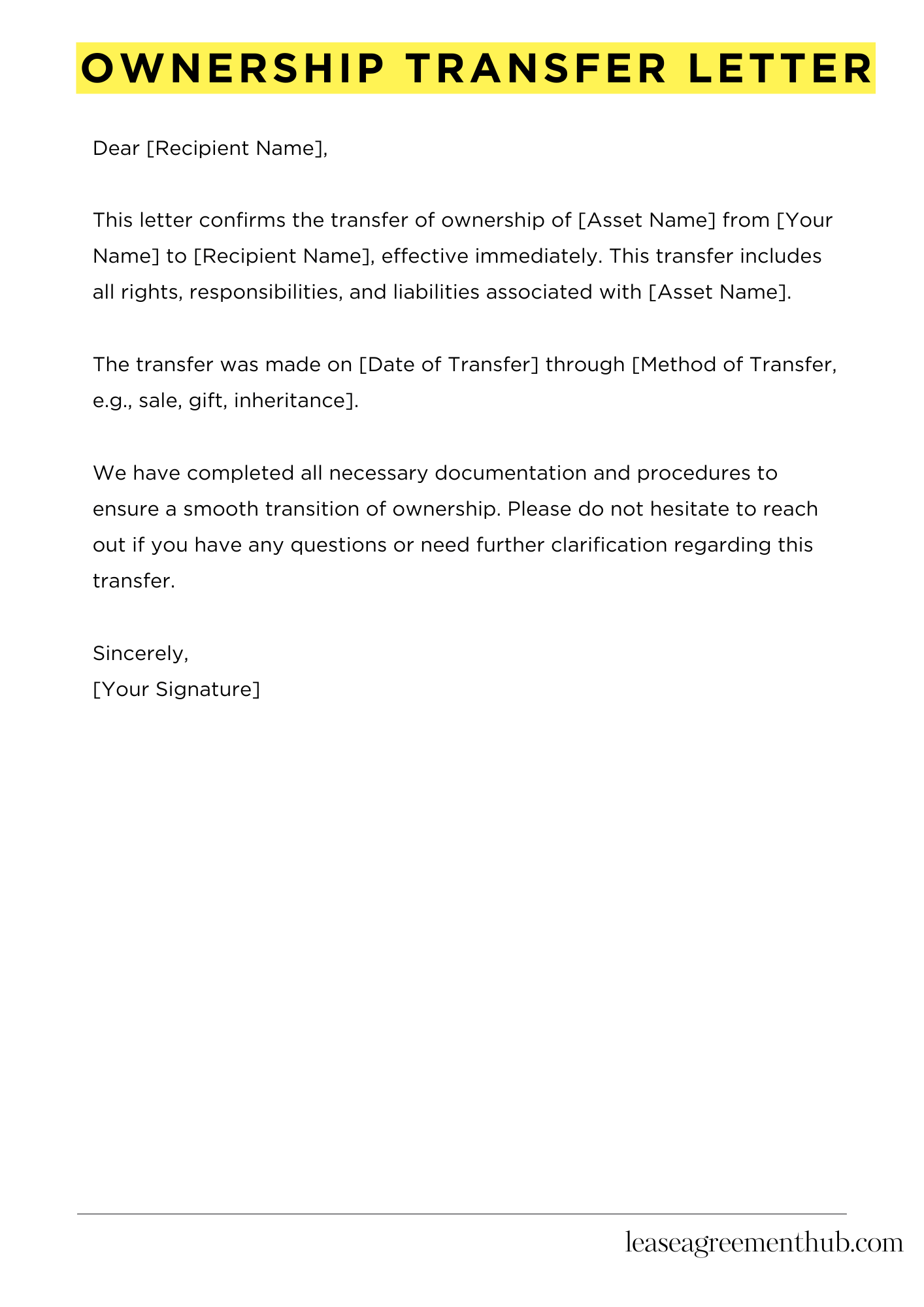
Ownership Transfer Letter
[Your Name]
[Your Address]
[Your Phone Number]
[Your Email Address]
[Date]
[Recipient Name]
[Recipient Address]
Dear [Recipient Name],
This letter confirms the transfer of ownership of [Asset Name] from [Your Name] to [Recipient Name], effective immediately. This transfer includes all rights, responsibilities, and liabilities associated with [Asset Name].
The transfer was made on [Date of Transfer] through [Method of Transfer, e.g., sale, gift, inheritance].
We have completed all necessary documentation and procedures to ensure a smooth transition of ownership. Please do not hesitate to reach out if you have any questions or need further clarification regarding this transfer.
Sincerely,
[Your Signature]
How to Write an Ownership Transfer Letter
Transferring ownership of something, whether it’s a car, a house, or a business, is a serious matter. It involves legal documentation and clear communication. A well-written ownership transfer letter is crucial to ensure a smooth transition and avoid any potential disputes. This guide will walk you through the essential steps of crafting a comprehensive ownership transfer letter.
1. Start with the Basics
Begin your letter by clearly stating the purpose. Identify the item being transferred, the date of the transfer, and the names and addresses of the parties involved. This sets the stage for a clear and concise document. For example, you might start with: “This letter confirms the transfer of ownership of [Name of item] from [Seller’s name] to [Buyer’s name] effective [Date].”
2. Provide Detailed Information
The heart of your ownership transfer letter lies in the details. Include a detailed description of the item being transferred. For a car, this would include the make, model, year, VIN number, and any other relevant information. For real estate, you’d provide the property address, legal description, and any relevant deed information. Be thorough and specific to avoid any ambiguity.
3. Include Payment Details
If the transfer involves a financial transaction, clearly state the purchase price, payment method, and any agreed-upon terms. This could include details about a down payment, financing arrangements, or any outstanding balances. Be precise and transparent to ensure both parties understand the financial aspects of the transfer.
4. Address Legal Considerations
Ownership transfer often involves legal implications. It’s essential to acknowledge any relevant legal documents, such as a bill of sale, deed, or other agreements. You might state, “This letter is in conjunction with the Bill of Sale dated [Date] and signed by both parties.” If there are any specific legal requirements or conditions, clearly outline them in the letter.
5. Conclude with Signatures
End your ownership transfer letter with a clear statement of intent. Confirm that both parties agree to the terms outlined in the letter. Include spaces for signatures, dates, and contact information for both the seller and the buyer. This ensures a clear record of the transfer and the parties involved.
Remember, a well-written ownership transfer letter is a crucial step in the process. It provides a clear record of the transaction and helps avoid future disputes. By following these steps, you can create a comprehensive and legally sound document that protects both parties.
Related: