A payment reminder letter is a written notice sent to a customer or client to remind them about an overdue payment. Its main purpose is to prompt the recipient to settle their outstanding balance. This letter helps maintain cash flow and ensures that businesses get paid for their services or products.
In this article, we will provide various templates and examples of payment reminder letters. These samples are designed to make it easier for you to create your own reminder letters. Whether you need a gentle nudge or a firm request, we have options for every situation.
Using our templates, you can quickly draft a professional payment reminder letter. This will save you time and help you communicate effectively. You will find that writing these letters can be straightforward and stress-free.
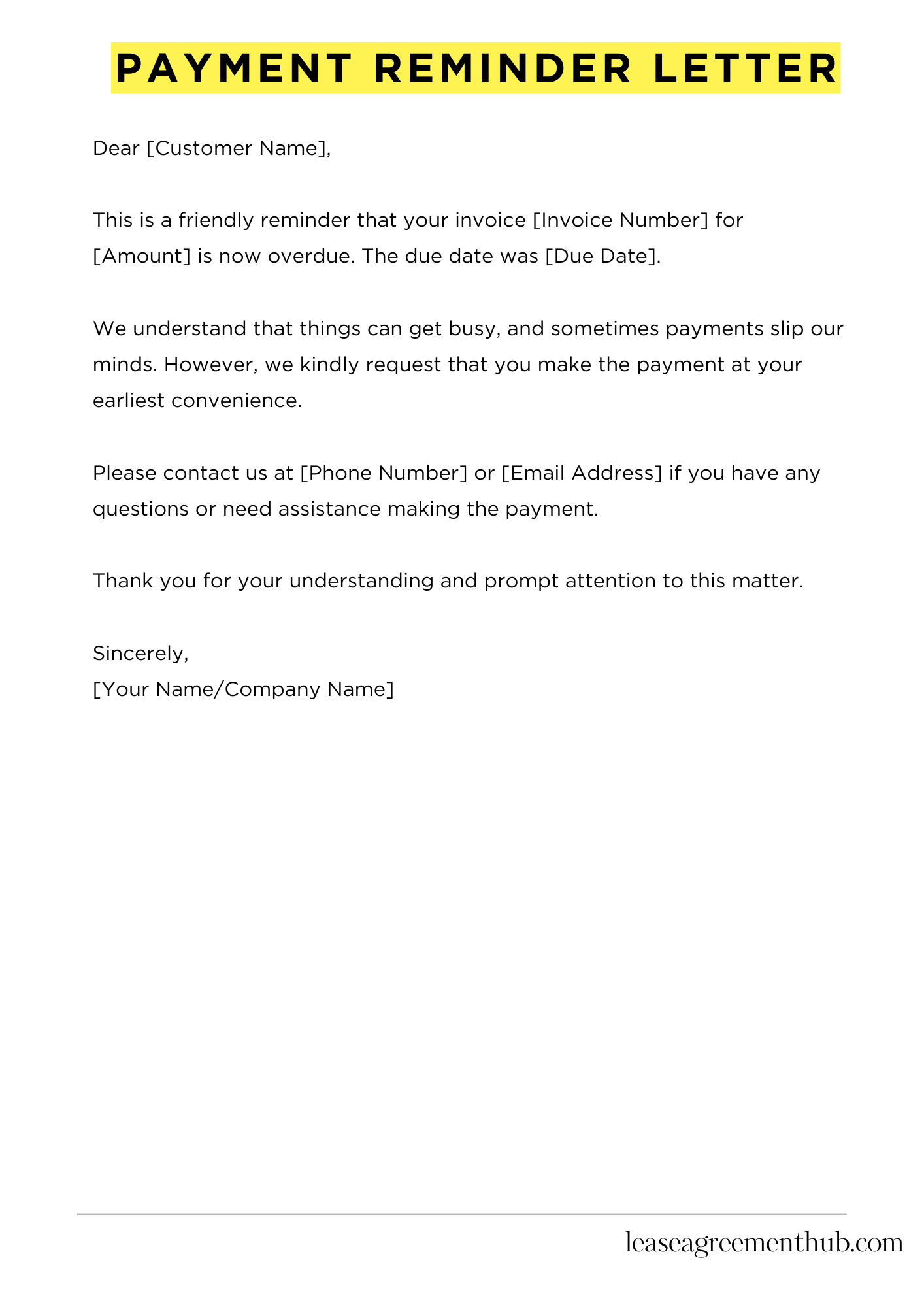
Payment Reminder Letter
Dear [Customer Name],
This is a friendly reminder that your invoice [Invoice Number] for [Amount] is now overdue. The due date was [Due Date].
We understand that things can get busy, and sometimes payments slip our minds. However, we kindly request that you make the payment at your earliest convenience.
Please contact us at [Phone Number] or [Email Address] if you have any questions or need assistance making the payment.
Thank you for your understanding and prompt attention to this matter.
Sincerely,
[Your Name/Company Name]
How to Write a Payment Reminder Letter
Sending a payment reminder letter is a crucial step in the accounts receivable process. It helps you maintain a healthy cash flow and avoid unnecessary financial strain. A well-crafted reminder letter can be effective in prompting late payers to settle their outstanding balances. This article will guide you through the process of writing an effective payment reminder letter.
1. Start with a Professional Greeting
Begin your letter with a polite and professional greeting. Use the recipient’s name if you have it. For example, “Dear [Customer Name],” or “Dear [Company Name],” is appropriate. A formal greeting sets the tone for a professional communication.
2. State the Purpose of the Letter
Clearly and concisely state the purpose of your letter. Inform the recipient that you are writing to remind them of an outstanding payment. Be specific about the invoice number, the amount due, and the due date. For example, “This letter is a reminder that payment for invoice number [Invoice Number] in the amount of [Amount Due] was due on [Due Date].”
3. Provide a Brief Explanation
If there are any specific reasons for the delay in payment, you can briefly explain them. For example, you might mention that you haven’t received a response to a previous inquiry. Be polite and avoid accusatory language. This section is optional and should be used sparingly.
4. Outline the Consequences of Non-Payment
While it’s important to be polite, it’s also essential to establish the consequences of non-payment. Inform the recipient of any late payment fees or penalties that may apply. You can also mention that further action may be taken if payment is not received within a specified timeframe. This section should be written in a firm but professional tone.
5. End with a Call to Action
Conclude your letter with a clear call to action. Request the recipient to make the payment as soon as possible. Provide contact information for any inquiries or to arrange payment. For example, “Please make payment by [Date] to avoid further action. You can reach us at [Phone Number] or [Email Address] if you have any questions.” End the letter with a professional closing, such as “Sincerely,” or “Regards.”
Remember, the goal of a payment reminder letter is to encourage payment without alienating the customer. By following these steps, you can write an effective reminder letter that helps you collect outstanding payments and maintain healthy financial relationships with your clients.
Related: