When the air conditioning dies in August or the furnace gives out in January, the first argument is about comfort. The second argument, and the more expensive one, is about money: who pays to repair or replace the HVAC system. In residential rentals the answer is usually the landlord. In commercial leases it depends on the lease language, the type of system, and whether the work counts as a repair or a capital replacement.
HVAC disputes are among the most common and most costly maintenance fights in leasing. A full system replacement can run from five thousand dollars for a small residential unit to six figures for a commercial rooftop system. This guide explains how responsibility is typically allocated, the difference between repair and replacement, how commercial leases handle HVAC costs, and what to negotiate before you sign.
The Default Rule: Residential vs Commercial
In residential leases, the landlord almost always bears HVAC responsibility. The implied warranty of habitability in most states requires landlords to maintain heating and, where provided, cooling in working order. A landlord who refuses to fix a dead furnace in winter is violating that warranty, and the tenant has the standard habitability remedies: notice, repair and deduct in many states, rent abatement, and code enforcement complaints.
Routine tenant duties in residential units are narrow: changing filters, keeping vents clear, and reporting problems promptly. Some leases make tenants responsible for minor servicing, like annual filter changes or keeping the thermostat at a minimum temperature in winter to prevent frozen pipes. Major repairs and full replacements remain the landlord’s duty, and lease clauses that try to shift that duty to residential tenants are unenforceable in many jurisdictions.
Commercial leases are a different world. There, HVAC responsibility is whatever the lease says it is, and leases say many different things. A gross lease may leave HVAC entirely with the landlord. A triple net lease may push nearly all HVAC cost and responsibility to the tenant. Most deals land somewhere in between, with the lease drawing lines between routine maintenance, major repairs, and capital replacement. The exact wording of those lines decides five-figure disputes.
Repair vs Replacement: Why the Distinction Matters
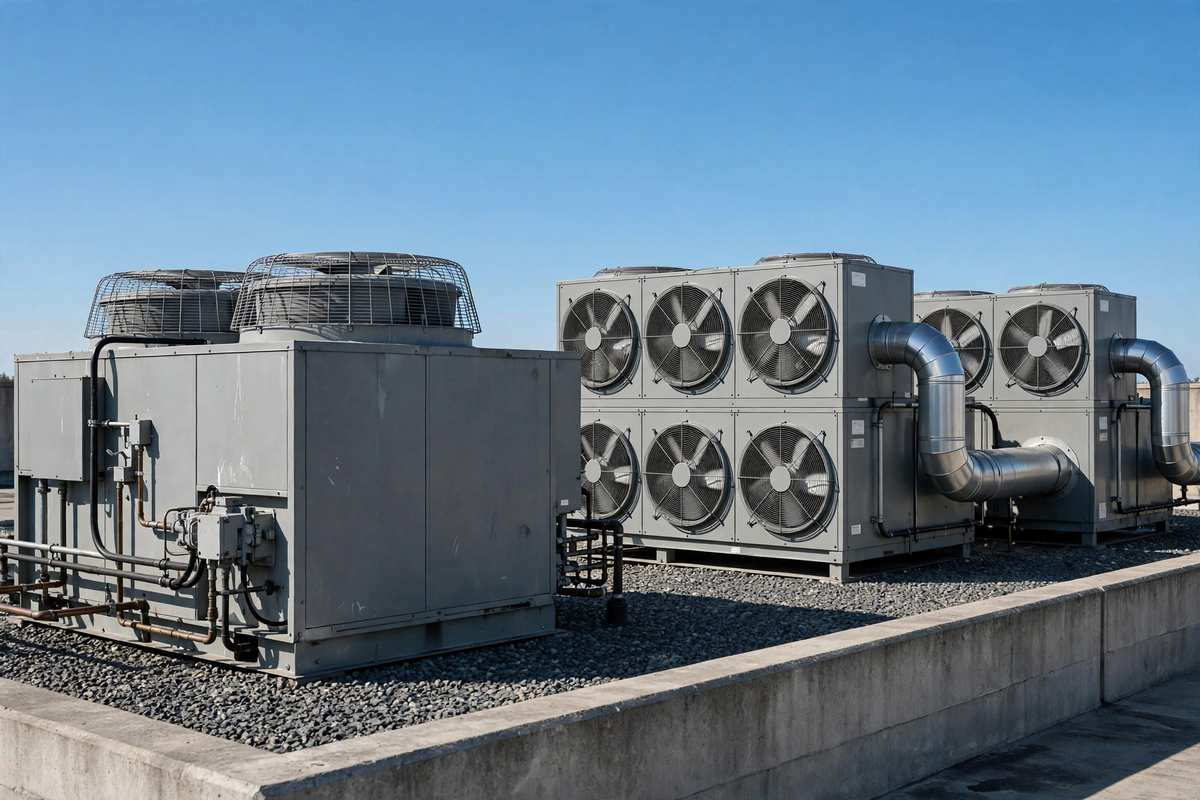
Leases often assign routine HVAC maintenance to the tenant while reserving capital replacements to the landlord. That makes the repair-versus-replacement distinction the hinge of most disputes. Replacing a capacitor, a thermostat, or a fan motor is a repair. Replacing the entire condenser unit, the furnace, or the rooftop package unit is generally a replacement, which courts and leases usually treat as a capital expenditure.
The gray zone is where fights happen. Is replacing a failed compressor in a fifteen-year-old system a repair or a partial replacement? What about a coil replacement that costs half the price of a new unit? Leases rarely define the boundary precisely, so disputes turn on the system’s age, the cost relative to a new unit, and whether the work extends the system’s useful life. As a rule of thumb, work that restores the existing system to working order is a repair, while work that effectively gives the landlord a new system is a replacement.
Why it matters: in many commercial leases, the tenant handles repairs but the landlord handles capital replacements, sometimes with the cost amortized and passed through over the equipment’s useful life. Misclassifying a replacement as a repair can wrongly stick the tenant with the full cost of a new system. If your lease uses these categories, push during negotiations for a dollar threshold or a clear definition, so a ten-thousand-dollar compressor job does not become a surprise tenant expense.
How Commercial Leases Allocate HVAC Duty
Commercial HVAC allocation usually follows the lease structure. In a full-service gross lease, the landlord typically maintains the base building HVAC and the tenant pays for it indirectly through rent. In a triple net lease, the tenant often maintains everything serving its premises, including the HVAC units, and bears replacement cost at the end of equipment life. Modified gross leases split the difference in endless variations.
Watch for the supplemental unit trap. Many commercial leases make the tenant responsible for any HVAC equipment serving only its space, even in otherwise landlord-maintained buildings. A restaurant’s makeup air unit, a server room’s dedicated cooling, or a retailer’s supplemental rooftop unit often falls to the tenant for both maintenance and replacement. Tenants who assume the landlord covers all HVAC get an unpleasant surprise when the unit dedicated to their space fails.
The division between landlord’s work and tenant’s work should be mapped explicitly in the lease or an exhibit. List the specific units, who maintains them, who replaces them, and what happens at replacement time. Ambiguity here is expensive, because HVAC contractors bill by the hour while the parties argue about the lease.
Capital Replacements and Pass-Throughs
When the landlord replaces a major HVAC system in a multi-tenant building, the cost often flows back to tenants through operating expense pass-throughs. How much flows back depends on the lease. Some leases exclude capital expenditures entirely, leaving the full replacement cost with the landlord. Others allow capital costs to be amortized over the equipment’s useful life and passed through as part of operating expenses, so tenants pay a yearly slice rather than the lump sum.
Review your capital expense pass-through provisions before assuming the landlord absorbs a replacement. Key questions: does the lease permit amortization of capital replacements, over what useful life, and at what interest rate? A fifteen-year amortization of a ninety-thousand-dollar rooftop unit adds six thousand dollars a year to operating expenses before interest, and every tenant in the building shares it.
Tenants can negotiate protections: exclude HVAC replacements from pass-throughs entirely, cap the amortized amount, require the landlord to prove the replacement was necessary rather than an upgrade, or insist that replacements required by the landlord’s deferred maintenance are not passed through. Each of these has real dollar value over a long lease term.
After-Hours HVAC and Special Uses
Standard commercial HVAC runs during defined building hours, often 8 a.m. to 6 p.m. on weekdays. Tenants who need heating or cooling outside those hours usually pay extra, and the charges can be steep. Review the after-hours HVAC charges in your lease before assuming weekend or evening climate control is included. Some leases bill a flat hourly rate for the whole floor or zone, which makes occasional after-hours use surprisingly expensive.
Special uses change the calculus. Restaurants, data rooms, medical suites, and gyms place demands on HVAC far beyond standard office use. Leases often require these tenants to install and maintain supplemental systems at their own cost. If your business is HVAC-intensive, negotiate the supplemental equipment provisions explicitly: who installs it, who maintains it, who replaces it, and what happens to it at lease end.
Emergency Failures: Who Acts First
When the system fails completely, speed matters more than the ultimate allocation of cost. Most leases require the responsible party to respond within a defined window, and many give the other party step-in rights if there is no response. A tenant facing a dead furnace in a cold snap should not wait weeks for the landlord to accept responsibility.
The practical sequence: notify the landlord in writing immediately, describe the failure and its consequences, and state a deadline for response. If the lease gives you self-help rights after the landlord fails to act, follow that procedure exactly. Your emergency maintenance responsibilities and rights depend on acting promptly and documenting everything, because emergency spending gets scrutinized later when the bill is allocated.
Negotiating HVAC Terms Before You Sign
The cheapest HVAC dispute is the one you prevent at the lease table. Commercial tenants should negotiate five points: a clear allocation of maintenance, repair, and replacement for each unit serving the space; a definition or dollar threshold separating repairs from capital replacements; limits on pass-through of replacement costs; a landlord warranty that base building systems are in good working order at delivery; and response-time standards for failures.
Ask for an HVAC inspection before signing, especially in older buildings. A ten-year-old rooftop unit has a predictable remaining life, and you can negotiate who bears the replacement when it fails in year three of your lease. Without that diligence, you are gambling on equipment you did not choose.
Residential tenants have less to negotiate but should still confirm the lease does not sneak in unusual HVAC duties, like requiring the tenant to pay for annual professional servicing or to replace the system at lease end. Those clauses are red flags in a residential lease. The heating and cooling system is part of the habitable dwelling the landlord is renting you, and keeping it running is part of the landlord’s job.