In a commercial lease, your share of operating expenses depends on how full the building is. That sounds strange at first, but the logic is simple. Many building costs stay roughly the same whether the property is half empty or nearly full, and a gross-up clause exists to account for that reality.
Without this clause, a tenant who moves into a half-empty building could end up paying an inflated share of the building’s costs. A gross-up clause adjusts the operating expense numbers upward so they reflect what costs would be if the building were fully or nearly fully occupied. For tenants, understanding this provision is essential to keeping your real estate budget predictable.
What a Gross-Up Clause Actually Does
A gross-up clause is a lease provision that adjusts variable operating expenses to reflect a higher occupancy level, usually 95 percent or 100 percent. It applies most often to the base year in a base year lease or to any year used to calculate your share of expense increases.
The key distinction is between variable and fixed expenses. Variable expenses are costs that rise and fall with occupancy, such as janitorial services, utilities for common areas, and management fees tied to rent. Fixed expenses, like property taxes and building insurance, do not change with occupancy and are never grossed up. A well-drafted clause names exactly which expenses can be adjusted.
Grossing up does not change the total dollars the landlord actually spent. It changes the baseline number used to calculate what you owe. That baseline matters because your lease charges you either a share of total expenses or the increase in expenses above a base year. If the base year building was only 60 percent occupied, expenses looked artificially low, and every later increase would look artificially large.
Why Gross-Ups Exist in the First Place
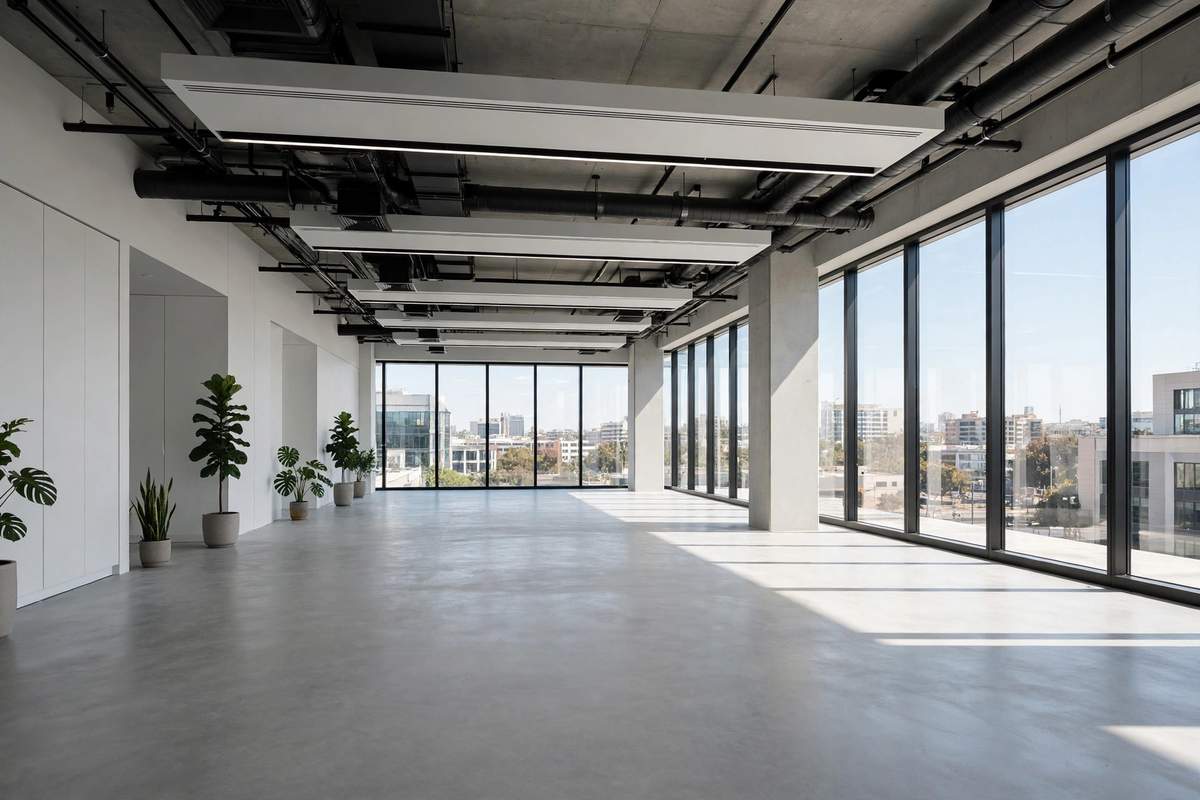
Imagine you sign a lease in a new office building that is only half leased. The landlord’s janitorial bill is lower because half the floors are empty. Utilities are lower too. If your base year gets set using those depressed costs, the base looks like a bargain that will never repeat.
As the building fills up, janitorial costs and utility bills rise naturally. Without a gross-up, those increases would show up in your operating expense bill even though the cost per occupied square foot barely moved. You would be paying for the building’s lease-up, not for real cost inflation. Landlords accept gross-ups because the adjustment is fair. It measures their real operating efficiency rather than rewarding them for a building that happened to be empty when you signed.
How the Gross-Up Calculation Works
The math is straightforward once you see it. The landlord takes the variable expenses actually incurred, divides them by the actual occupancy, and multiplies by the deemed occupancy in the clause. This produces the grossed-up expense figure that your lease payments are measured against.
For example, suppose janitorial services cost 120,000 dollars in a year when the building was 60 percent occupied. The grossed-up figure at 95 percent occupancy would be 120,000 divided by 0.60, multiplied by 0.95, which equals 190,000 dollars. That 190,000 dollar figure, not the 120,000 actually spent, becomes the baseline for calculating your share.
A Simple Numerical Example
Consider a tenant paying a pro-rata share of expense increases above a base year. The building was 70 percent occupied in the base year, and variable expenses were 350,000 dollars. With a gross-up to 95 percent, the base year figure becomes 350,000 divided by 0.70 times 0.95, or 475,000 dollars.
Now the building fills to 95 percent in year two, and variable expenses rise to 500,000 dollars. The tenant pays its share of the 25,000 dollar increase, not the 150,000 dollar increase that would apply without the gross-up. That difference, spread over every year of the lease, can be worth tens of thousands of dollars to a tenant. It also protects the landlord, because the baseline reflects a realistic operating picture rather than an anomaly.
Which Expenses Typically Get Grossed Up
Variable expenses are the only costs that should be adjusted. These usually include janitorial and cleaning services, common area utilities, trash removal, landscaping, security, and management fees calculated as a percentage of collections. Each of these genuinely fluctuates with how many tenants occupy the building.
Fixed expenses should be excluded explicitly. Property taxes, building insurance premiums, and debt service do not depend on occupancy, so grossing them up would inflate your baseline for no reason. You can read more about the costs landlords should never pass through in our guide to operating expense exclusions tenants should know.
Semi-variable expenses create gray areas. Some costs, like elevator maintenance, have both fixed and variable components. A sharp lease will either categorize these clearly or state that only the variable portion gets grossed up. If your lease is silent on this point, ask your landlord to define the categories in an exhibit.
Negotiating Better Gross-Up Terms
Start with the deemed occupancy percentage. Institutional leases commonly use 95 percent, and some go as high as 100 percent. As a tenant, a higher deemed percentage raises the base year baseline, which reduces your exposure to future increases. Pushing for 95 or 100 percent is one of the simplest wins in operating expense negotiations.
Second, insist that the clause applies to the base year. Some landlord forms gross up only the current year expenses used in annual reconciliations, leaving the base year unadjusted. That defeats much of the purpose. The gross-up should apply to every year that feeds into your calculation, including the base year, so the comparison is always apples to apples.
Third, define the expense categories. Attach an exhibit listing exactly which expenses are variable and therefore subject to gross-up. Anything not on the list stays at actual cost. This prevents disagreements later when the landlord’s accountant decides that a questionable cost should be adjusted upward.
Fourth, consider the interplay with expense stops and caps. A gross-up protects your baseline, while a cap on controllable expenses limits how fast your share can grow. Together they give you a much more predictable budget. Before you sign, review the full lease with the same care described in our guide to reading your lease before signing.
Common Gross-Up Pitfalls to Avoid
One frequent trap is the clause that grosses up the base year but not subsequent years. When the building fills up, the landlord’s actual costs rise toward the grossed-up base year level, and the tenant’s increases look small. But if occupancy later falls, the landlord applies no downward adjustment, and the tenant keeps paying against the high baseline. Symmetry matters.
Another pitfall is vague language about which expenses count. Phrases like “expenses that vary with occupancy” sound precise but invite argument. Without a defined list, every annual reconciliation can become a negotiation. Get the list in writing, and make sure your auditor has the right to review the underlying books.
A third issue involves management fees. When management fees are calculated as a percentage of collected rent, landlords sometimes gross them up by assuming full rent collection. That inflates the fee artificially. Your clause should state that management fees are grossed up only to the extent the underlying expenses are grossed up, or exclude management fees from the adjustment entirely.
Frequently Asked Questions
Is a gross-up clause standard in commercial leases?
Yes. Gross-up language appears in most institutional office and retail leases, and experienced landlords expect tenants to ask for it. If your landlord resists, that is a warning sign, especially in a building with low current occupancy.
Does gross-up raise or lower what I pay?
It usually lowers what you pay over the life of the lease. By raising the base year baseline to reflect realistic occupancy, it shrinks the increases you are charged for in later years. The exception is a one-sided clause that applies only to comparison years and never to the base year.
What occupancy percentage should I negotiate?
Ninety-five percent is the most common standard, and 100 percent is even better for tenants. Anything below 90 percent weakens your protection noticeably. The exact right number depends on the building’s realistic stabilized occupancy, which your broker can help you assess.
Can I audit the gross-up calculation?
You should secure that right in the lease. Most leases give tenants a limited window, often 30 to 60 days after receiving the annual expense statement, to review the landlord’s books. Without audit rights, you have no way to verify that the gross-up math was done correctly.
A gross-up clause is one of the most cost-effective protections a commercial tenant can negotiate. It costs nothing to include, it is widely accepted, and it prevents one of the most common sources of operating expense overpayment. Make sure your lease has one, make sure it covers the base year, and make sure the expense categories are defined. Those three details determine whether the clause actually protects you or merely looks like it does.