A letter of congratulations to a new minister is a formal way to express your well wishes and support for their new role. It’s a chance to acknowledge their appointment and offer encouragement for their future endeavors.
This article provides templates, examples, and samples of letters of congratulations to new ministers. These samples will help you write a heartfelt and professional letter that expresses your best wishes.
You can use these samples as a starting point and personalize them to reflect your relationship with the new minister and your specific message.
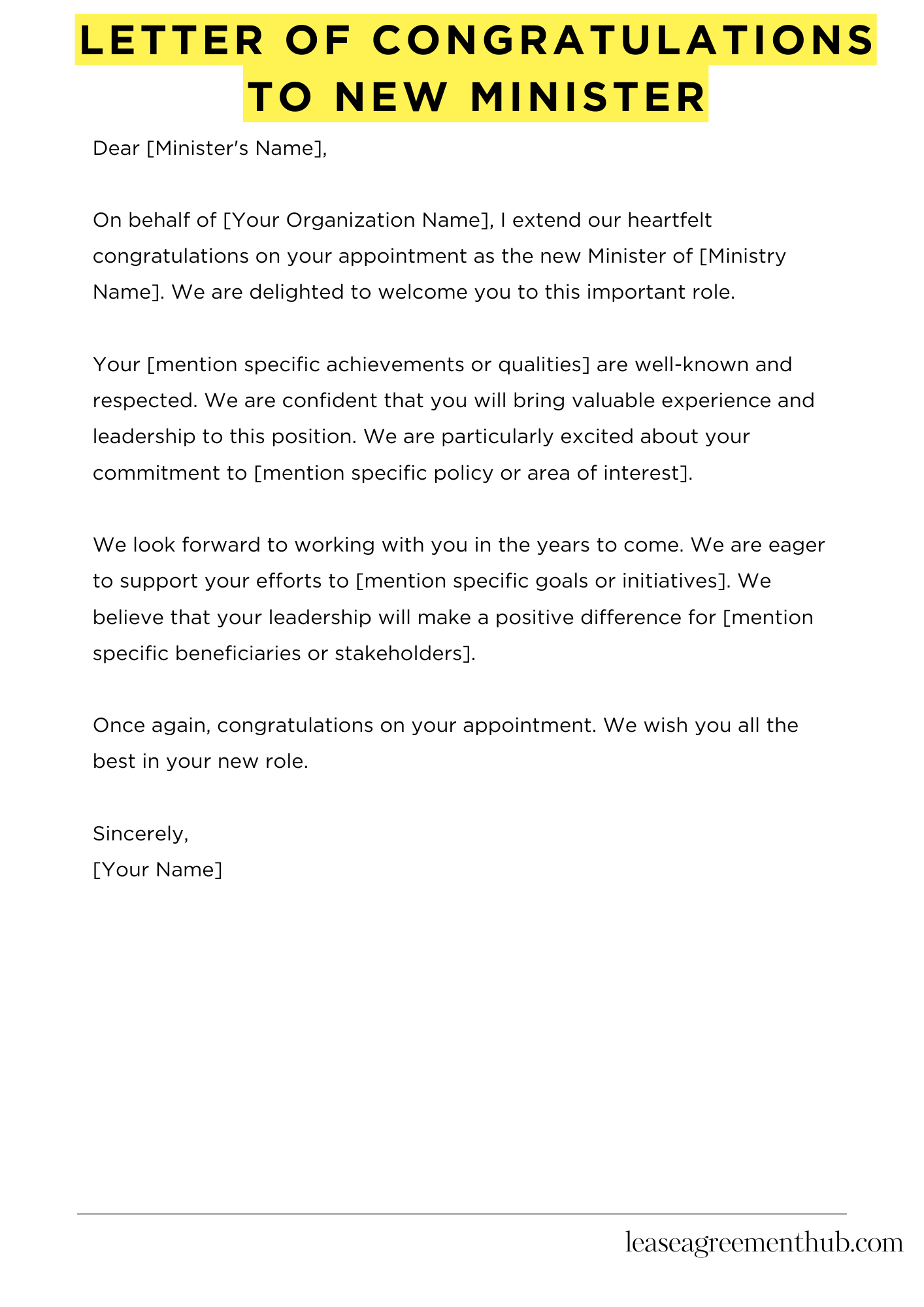
Letter of Congratulations to New Minister
Dear [Minister’s Name],
On behalf of [Your Organization Name], I extend our heartfelt congratulations on your appointment as the new Minister of [Ministry Name]. We are delighted to welcome you to this important role.
Your [mention specific achievements or qualities] are well-known and respected. We are confident that you will bring valuable experience and leadership to this position. We are particularly excited about your commitment to [mention specific policy or area of interest].
We look forward to working with you in the years to come. We are eager to support your efforts to [mention specific goals or initiatives]. We believe that your leadership will make a positive difference for [mention specific beneficiaries or stakeholders].
Once again, congratulations on your appointment. We wish you all the best in your new role.
Sincerely,
[Your Name]
How to Write a Letter of Congratulations to a New Minister
Congratulations are in order! A new minister has been appointed, and it’s time to send them a well-crafted letter of congratulations. This is a chance to extend your best wishes and offer your support for their new role. But how do you write a letter that is both sincere and impactful? Fear not, for this guide will equip you with the tools to pen a letter that will resonate with the newly appointed minister.
1. Start with a Formal Salutation
Begin your letter with a formal salutation. This is the first impression you’ll make, so it’s crucial to get it right. “Dear Minister [Last Name]” is a safe and respectful choice. You can also use “Dear Honorable [Last Name]” if you feel it’s appropriate.
2. Express Your Congratulations
The core of your letter is the expression of your congratulations. Make it clear that you are genuinely happy for the new minister and their appointment. You can use phrases like:
* “I was delighted to hear about your appointment as Minister of [Ministry Name].”
* “Please accept my heartfelt congratulations on your appointment.”
* “I am thrilled to see you take on this important role.”
3. Highlight the Minister’s Accomplishments
This is a great opportunity to acknowledge the new minister’s past achievements and highlight their qualifications for the role. Mention specific accomplishments, skills, or experiences that make them well-suited for the ministry. This will demonstrate your awareness of their expertise and show your respect for their capabilities.
4. Offer Your Support
Express your willingness to support the new minister in their endeavors. You can offer your assistance in any way you can, whether it’s providing information, connecting them with relevant contacts, or simply offering your encouragement. This gesture of support will be appreciated and will show your commitment to their success.
5. Express Your Expectations
While it’s important to be positive, you can also express your hopes for the future under the new minister’s leadership. Mention specific areas where you believe the ministry can make a positive impact or highlight the challenges you hope the minister will address. This demonstrates your engagement with the ministry’s work and your desire to see it thrive.
6. End with a Formal Closing
Conclude your letter with a formal closing. “Sincerely,” or “Best regards,” are both appropriate choices. Sign your name legibly, and include your title or position if relevant.
7. Proofread Carefully
Before sending your letter, take the time to proofread it carefully. Ensure there are no grammatical errors or typos. A well-written and error-free letter will reflect positively on you and your organization.
Related: