A complaint letter against a tenant is a formal document used by landlords to address issues caused by their tenants. This letter serves to outline specific problems, such as late rent payments, property damage, or violations of lease terms. Its main purpose is to communicate concerns clearly and provide a record of the issues for future reference.
In this article, we will provide various templates and examples of complaint letters against tenants. These samples are designed to help landlords easily draft their own letters. With these resources, writing an effective complaint letter becomes a straightforward task.
Whether you are dealing with minor issues or serious violations, having a solid template can save you time and effort. Our goal is to empower you with the tools needed to address tenant problems confidently. You will find the right format and wording to express your concerns effectively.
Complaint Letter Against Tenant
[Your Name]
[Your Address]
[Your Phone Number]
[Your Email Address]
[Date]
[Landlord’s Name]
[Landlord’s Address]
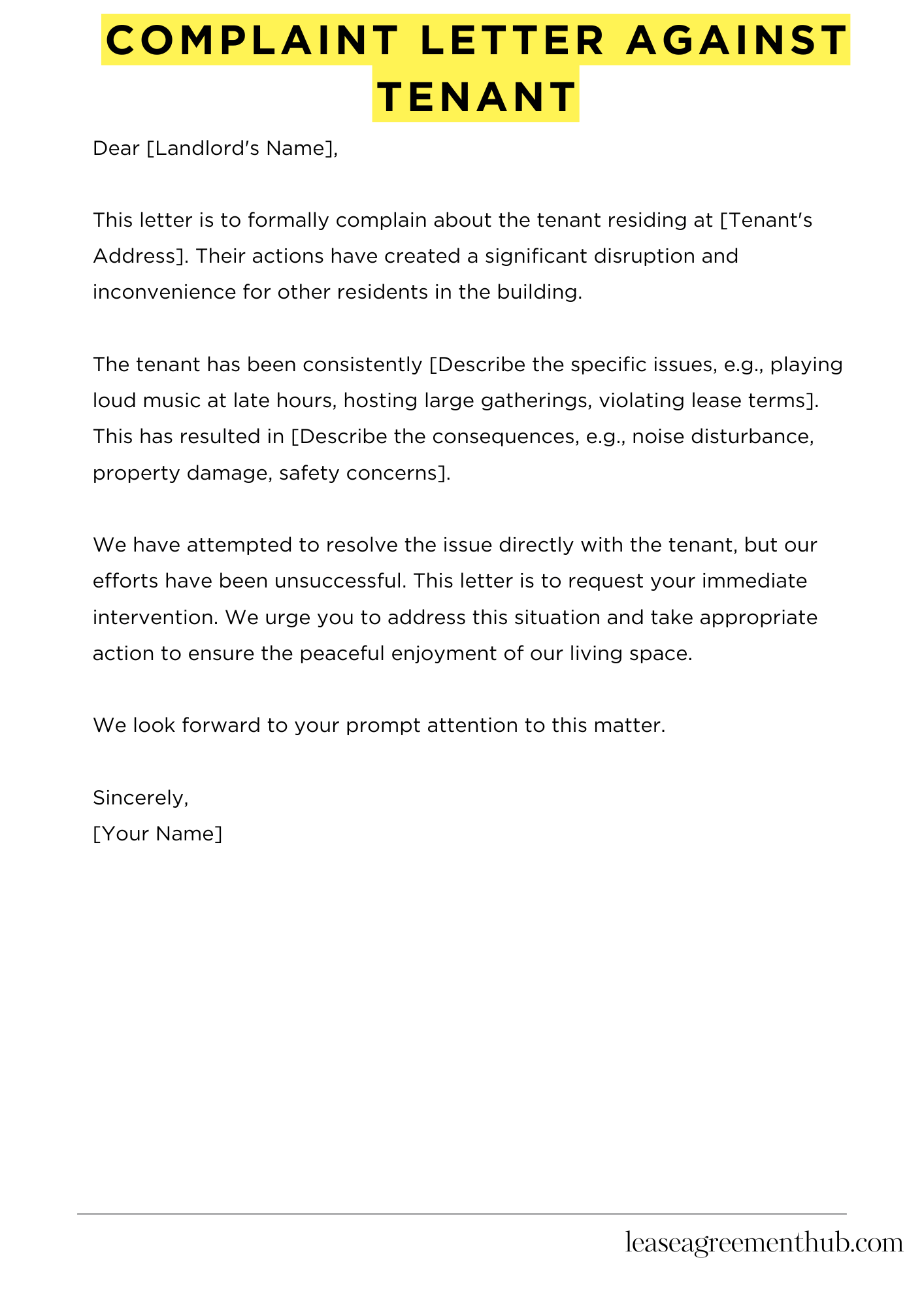
Dear [Landlord’s Name],
This letter is to formally complain about the tenant residing at [Tenant’s Address]. Their actions have created a significant disruption and inconvenience for other residents in the building.
The tenant has been consistently [Describe the specific issues, e.g., playing loud music at late hours, hosting large gatherings, violating lease terms]. This has resulted in [Describe the consequences, e.g., noise disturbance, property damage, safety concerns].
We have attempted to resolve the issue directly with the tenant, but our efforts have been unsuccessful. This letter is to request your immediate intervention. We urge you to address this situation and take appropriate action to ensure the peaceful enjoyment of our living space.
We look forward to your prompt attention to this matter.
Sincerely,
[Your Name]
How to Write a Complaint Letter Against a Tenant
Landlords have a right to expect their tenants to respect their property and follow the terms of the lease agreement. When tenants violate these terms, it’s essential to take action. One effective way to address tenant issues is by writing a formal complaint letter. This letter serves as documentation of the problem and provides the tenant with a clear understanding of the landlord’s expectations.
1. Gather Your Evidence
Before you start writing, make sure you have all the necessary information. This includes:
- The date and time of the incident(s)
- Specific details of the violation(s)
- Any witnesses to the violation(s)
- Photos or videos of the damage or violation(s)
- Copies of relevant lease clauses
Having this evidence will strengthen your case and make your complaint more persuasive.
2. Keep It Professional and Concise
Your complaint letter should be written in a professional and respectful tone, even if you’re frustrated. Avoid using accusatory language or personal attacks. State the facts clearly and concisely. Use short paragraphs and bullet points to make the information easy to read and understand.
3. Be Specific and Clear
Don’t leave any room for ambiguity. Clearly state the specific violation(s) that you’re addressing. For example, instead of saying “The tenant is not taking care of the property,” say “The tenant has left trash in the yard for two weeks, violating the lease agreement’s cleanliness clause.”
4. Outline the Consequences
Let the tenant know the potential consequences of their actions. This could include:
- Termination of the lease
- Legal action
- Financial penalties
Be sure to state these consequences in a neutral and factual manner.
5. Provide a Clear Call to Action
End your letter with a clear call to action. Tell the tenant what you expect them to do to rectify the situation. Set a reasonable deadline for them to take action. For example, you might request that they remove the trash from the yard within 24 hours.
Remember, a well-written complaint letter is a powerful tool. It can help resolve tenant issues quickly and effectively. By following these tips, you can ensure your letter is clear, concise, and persuasive.
Related: