A Letter of Introduction is a written communication that introduces one person to another. Its main purpose is to establish a connection, whether for networking, job opportunities, or personal introductions. This letter can help create a positive first impression and open doors for future interactions.
In this article, we will provide various templates and examples of Letters of Introduction. These samples will guide you in crafting your own letters with ease. Whether you need to introduce yourself or someone else, you will find useful formats to suit your needs.
Writing a Letter of Introduction can be simple and effective. With our provided samples, you can quickly create a letter that conveys your message clearly. Let’s explore these examples and make your introduction stand out.
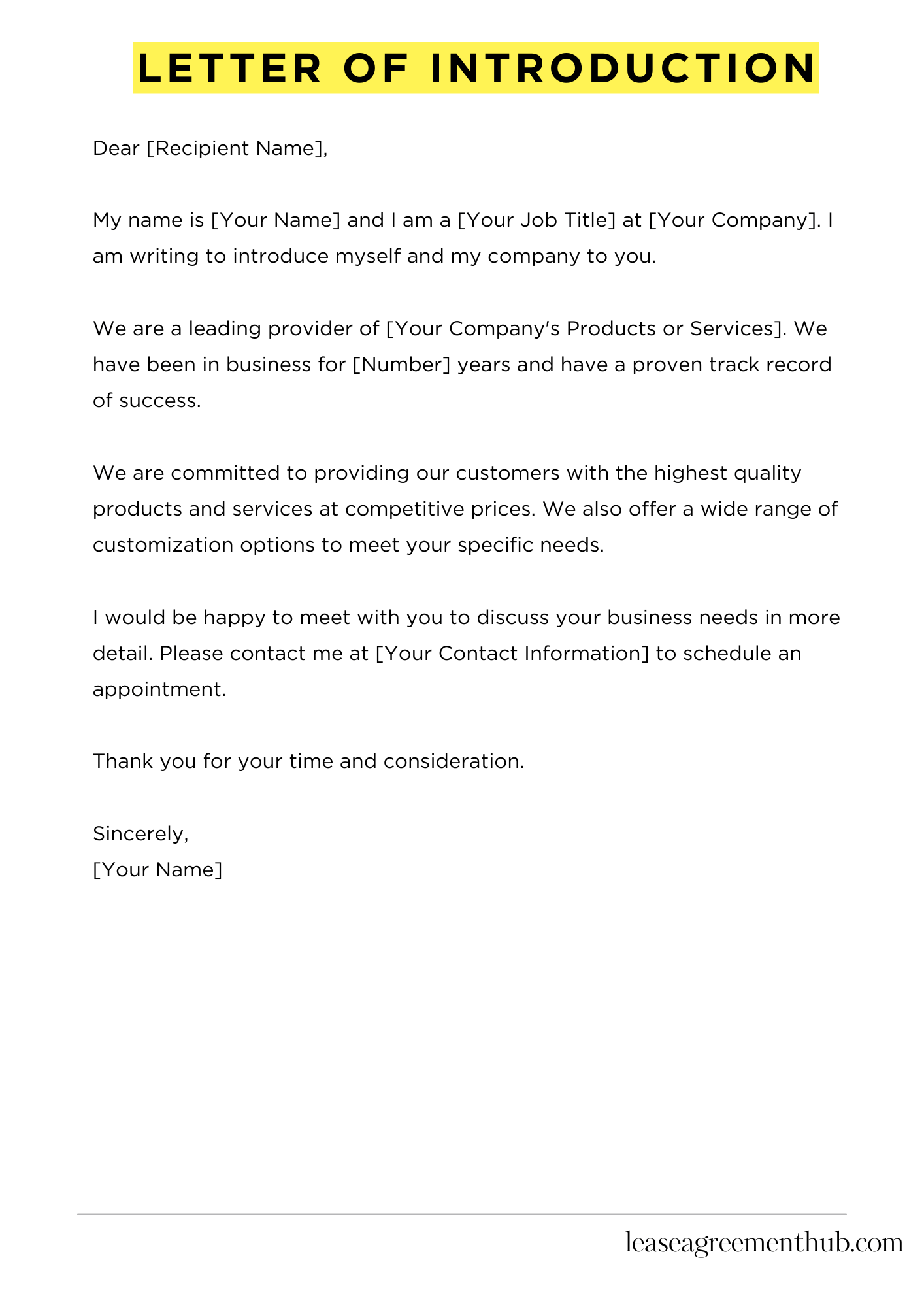
Letter Of Introduction
Dear [Recipient Name],
My name is [Your Name] and I am a [Your Job Title] at [Your Company]. I am writing to introduce myself and my company to you.
We are a leading provider of [Your Company’s Products or Services]. We have been in business for [Number] years and have a proven track record of success.
We are committed to providing our customers with the highest quality products and services at competitive prices. We also offer a wide range of customization options to meet your specific needs.
I would be happy to meet with you to discuss your business needs in more detail. Please contact me at [Your Contact Information] to schedule an appointment.
Thank you for your time and consideration.
Sincerely,
[Your Name]
How to Write a Letter of Introduction
A letter of introduction is a powerful tool for making a good first impression. It’s a chance to introduce yourself and your work to someone new, whether it’s a potential client, a prospective employer, or a new connection. A well-written letter of introduction can open doors and create opportunities. But a poorly written one can leave a negative impression. So, how do you write a letter of introduction that stands out?
1. Start with a Strong Opening
The first few sentences of your letter are crucial. They should grab the reader’s attention and make them want to read on. Begin by explaining how you know the person you’re writing to, or how you found out about them. For example, you might say, “I was referred to you by [Name of mutual contact],” or “I’ve been following your work on [Platform] for some time now.” You can also briefly mention your reason for writing. Keep it concise and clear.
2. Highlight Your Skills and Experience
After your opening, it’s time to showcase what you have to offer. This is your chance to highlight your relevant skills and experience. Tailor your letter to the specific person and situation. If you’re writing to a potential client, focus on your accomplishments and how you can help them. If you’re writing to a prospective employer, emphasize your qualifications and how they align with the job requirements. Be specific and use quantifiable results whenever possible.
3. Express Your Interest and Enthusiasm
Let the recipient know you’re genuinely interested in connecting with them. Express your enthusiasm for their work, their company, or the opportunity at hand. This shows that you’ve done your research and that you’re not just sending out generic letters. A genuine interest will make your letter more compelling and memorable.
4. Include a Clear Call to Action
Don’t leave the reader hanging. End your letter with a clear call to action. What do you want the recipient to do next? Do you want them to schedule a meeting, review your portfolio, or simply connect on LinkedIn? Make your request concise and easy to follow.
5. Proofread Carefully
Before you hit send, take the time to carefully proofread your letter. Check for any typos, grammatical errors, or awkward phrasing. A well-written letter is free of mistakes, and it shows that you pay attention to detail. It’s also a good idea to have someone else proofread your letter for you. A fresh pair of eyes can catch errors you might have missed.
Writing a letter of introduction doesn’t have to be daunting. By following these tips, you can create a compelling letter that will make a positive impact. Remember, a well-written letter can open doors and create opportunities. So take the time to craft a letter that showcases your best qualities and makes a lasting impression.
Related: